
Font size
 Worksheets
Cell respiration and photosynthesis
Total questions: 26
Worksheet time: 22mins
Select the correct order of cellular respiration
Glycolysis, Oxidative Phosphorylation, Citric Acid Cycle, Breakdown of Pyruvate
Citric Acid Cycle, Breakdown of Pyruvate, Glycolysis, Oxidative Phosphorylation
Glycolysis, Breakdown of Pyruvate, Citric Acid Cycle, Oxidative Phosphorylation
Glycolysis, Citric Acid Cycle, Oxidative Phosphorylation, Breakdown of Pyruvate
The process by which redox reactions are used to transfer energy to a hydrogen ion gradient is known as
Glycolysis
The electron transport chain
Citric acid cycle
Fermentation
The process by which NAD+ is regenerated in the absence of Oxygen
Glycolysis
Fermentation
Oxidative phosphorylation
Citric acid cycle
The process by which Acetyl-CoA is broken down to CO2 and energy is stored in ATP, NADH, and FADH2 is known as
Citric acid cycle
Oxidative Phosphorylation
Electron transport chain
Glycolysis
Which of the following is the final electron acceptor at the end of the Electron transport chain?
ATP
Oxygen
Carbon Dioxide
NADPH
________ occurs in the cytosol and ___________ occurs in the mitochondrial matrix
Glycolysis, the citric acid cycle
ATP synthase, glycolysis
The Citric acid cycle, ATP synthase
What is the primary function of the light reactions?
To produce Oxygen
To break down water
To produce glucose
To store light energy in ATP and NADPH
What does the cholorplast do with the H+ concentration gradient that it creates during the light dependent reactions?
It lets H+ flow through ATP Synthase to make ATP from ADP and P
It lets H+ flow out of the stroma into the thylakoid lumen
It lets H+ flow out of the thylakoid lumen into the stroma
It lets H+ flow through NADPH Synthase to make NADPH from NADP+
Atrazine is a chemical that blocks the electron from leaving photosystem II. What would be the immediate effect on the plant?
Prevents photon absorbtion
Blocks electron harvesting from water
Prevents ATP synthesis
Blocks CO2 absorbtion
Where is the oxygen produced during photosynthesis?
Between the chlorophyll membranes
In the stroma
On the cristae
In the thylakoid
In noncyclic electron flow, what is the initial electron donor? Where do the electrons end up?
Water; NADP+
Water; NADPH
O2; NADP+
O2; NADPH
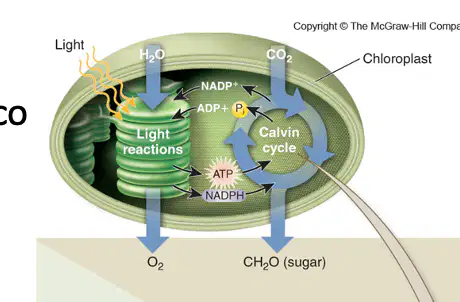
Why would a poison that inhibits RuBP production in the Calvin cycle also inhibit light reactions?
The light reactions would run out of O2
The light reactions would run out of G3P
The light reactions would run out of NADP+ and ADP
Tje light reactions would run out of NADPH and ATP
In the Calvin Cycle, the energy to convert 6CO2 to glucose comes from
Mitochondria
Light energy
ATP and NADPH
ATP only
Oxygen
The primary purpose of the Calvin Cycle is
To produce NADP+ for the light reactions
To absorb CO2 from the atmosphere
To transfer energy from the energy intermediates to glucose
To absorb light energy
The ATP used in the Calvin Cycle becomes part of Glucose
True
False
During the Calvin Cycle, the electrons from NADPH become part of
ADP
NADP+
G3P
Ribulose Biphosphate
What will happen to the light reactions if the Calvin Cycle is inhibited?
The light reactions will stop because they run out of NADP+ and ADP
The light reactions will stop because they run out of ATP and NADPH
The light reactions will continue as long as there is light available since they occur before the Calvin Cycle
What happens at the light harvesting/antenna complex of a photosystem?
Light is absorbed
An electron is energized
NADP+ is reduced
ATP is formed
What happens at the reaction center of a photosystem?
Light is absorbed
An electron is excited
NADP+ is reduced
Carbon fixation occurs
In photosynthesis, the pumping of H+ from an area of LOW to an area of HIGH concentration is...
Endergonic
Exergonic
Where do the electrons used in photosystem II come from?
Glucose
Photons
Water
NADPH
Where do the electrons in photosystem 1 come from?
Hydrogen
Photons
Photosystem II
CO2
•Jan Baptista van Helmont did an important experiment related to photosynthesis. He weighed a small willow tree and a pot of soil. Jan then planted the tree in the pot. Over the course of five years, he added only water to the pot. At the end of five years, he took the dry weight of the tree (dry weight, excludes water) and found that it had gained 74,400 g. He weighed the soil (dry weight), and it was only 57 g less.
Where did the additional 74,350 grams come from?
Still from the soil. Plants use nutrients in the soil to grow
From the air. Oxygen is taken in through the stomata of the plant and helps the plant grow
From the Glucose made by the plant during photosynthesis. Glucose is used to help the plant grow
From the air. CO2 is taken in through the stomata of the plant and helps the plant grow
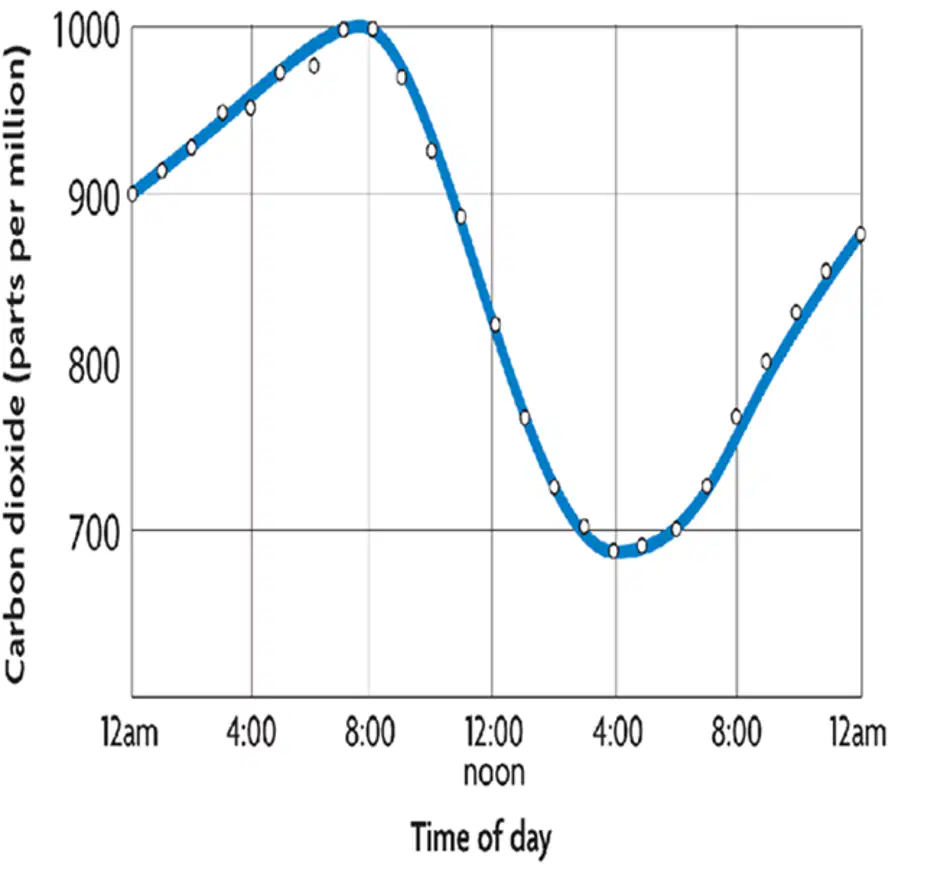
Biosphere 2 is a research facility designed to be an artificial, closed ecosystem. The closed nature of the biosphere allows precise monitoring of various factors like gasses and other ecosystem processes. The graph shows the amount of carbon dioxide in Biosphere 2 over a typical 24 hour period.
What is the relationship between the time of day and the amount of carbon dioxide in the research facility?
CO2 levels stay constant from 8am until 4pm because plants are exposed to sunlight during these hours
CO2 levels increase from 4pm to 12am because plants are exposed to sunlight during these hours
CO2 levels decrease from 8am until 4pm because plants are exposed to sunlight during these hours
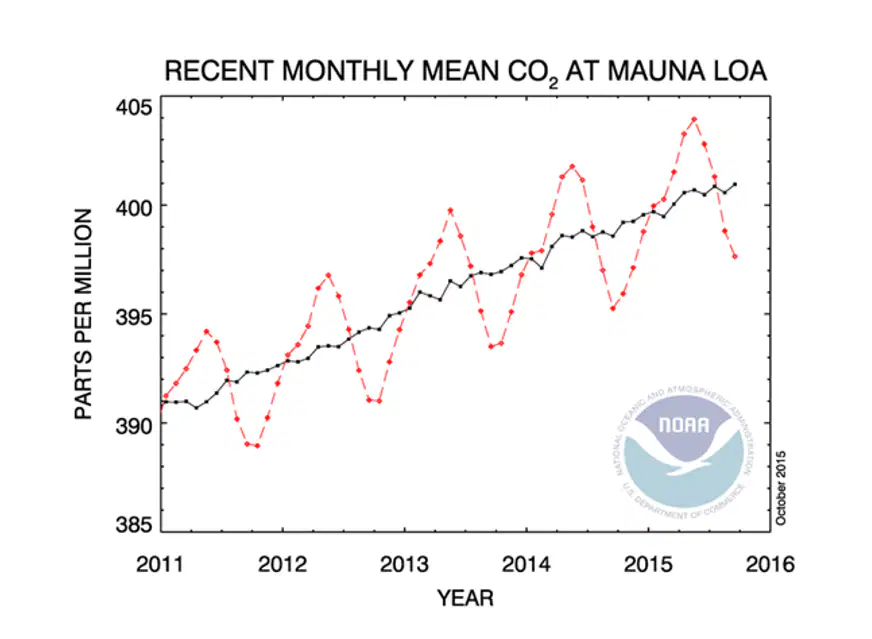
•One of the roles of the National Oceanic and Atmospheric Administration of the United States (NOAA) is to monitor concentrations of carbon dioxide in the atmosphere over time. The data below is from the NOAA Mauna Loa Observatory in Hawaii.
•In the graph showing Recent Monthly Means, why do the levels of CO2 fluctuate across each year? When is it higher and when is it lower?
CO2 levels fluctuate across each year because we burn less fossil fuels during the winter/summer
CO2 levels fluctuate across each year because CO2 levels are higher in the warmer weather
CO2 levels fluctuate across each year because plants are more active in warmer months and pull Carbon out of the air to do photosynthesis
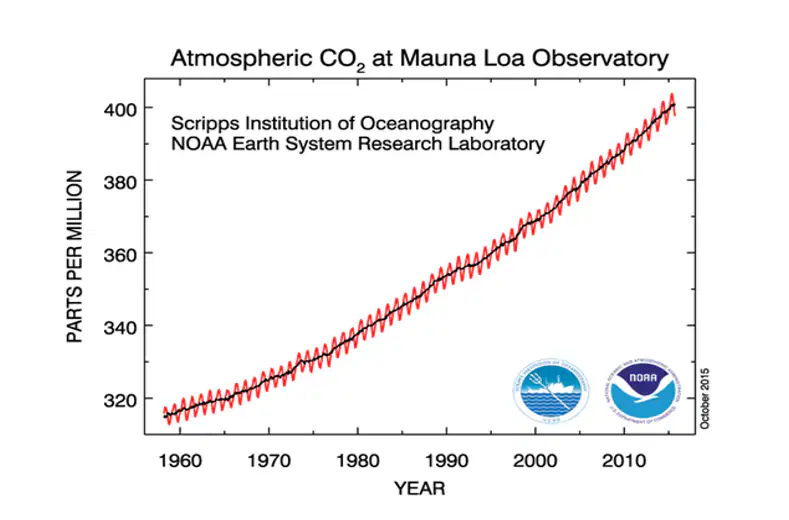
•Fossil fuels are long chains of carbon that formed from the remains of dead plants about 300 million years ago during the Coal Age Carboniferous Era. Use this information to explain the data in the graph showing carbon dioxide levels since measurements began in 1960. (choose more than 1)
CO2 levels have gone up because there are fewer plants to take in CO2
CO2 levels have gone up since 1960 because humans are burning more fossil fuels each year, which results in more CO2 in the atmosphere
CO2 levels have gone up each year because humans have increased their dependence on plastic. Plastic is made by burning fossil fuels, which releases CO2 into the atmosphere
CO2 levels have gone up because CO2 levels naturally fluctuate

