
 Worksheets
Unit 3a Review
Total questions: 71
Worksheet time: 39mins
What was banned in the Northwest Territory?
slavery
public education
religious freedom
How many people needed to live in a territory before it could apply to become a state?
5,000
60,000
100,000
The lasting impact of the Northwest ordinance of 1787 was...
that slavery would be made illegal forever after in the U.S.
that the U.S. was unable to compromise.
that we would be dragged into another war.
that it provided instructions on how the U.S. should add new states to the U.S. in the future.
Trial By Jury In Civil Cases
Fair & Speedy Trial By Jury In Criminal Cases
Due Process Of Law
Petition
The 1st amendment protects which of the following?
Freedom from unreasonable searches and seizures.
Freedom of religion, speech, press assembly and petition.
Right to trial by jury.
No quartering of soldiers.
The 2nd amendment protects which of the following rights?
Right to keep and bear arms.
Rights of accused persons (speedy and public trial).
Powers reserved to the states.
Other rights of the people.
The 3rd amendment protects which of the following rights?
Right of a trial by jury.
Freedom of religion, speech, press, assembly and petition.
No quartering of soldiers.
Right to keep and bear arms.
The 4th amendment protects which of the following rights?
Powers reserved to the states.
Freedom from unreasonable searches and seizures.
Freedom from excessive bail, cruel and unusual punishments.
Right to due process of law, freedom from self-incrimination, and double jeopardy.
The 5th amendment protects which of the following rights?
Right to due process of law, freedom from self-incrimination, and double jeopardy.
Rights of accused persons (speedy and public trial).
Other rights of the people.
Right to keep and bear arms.
The 6th amendment protects which of the following rights?
No quartering of soldiers.
Right to due process of law, freedom from self-incrimination, and double jeopardy.
Powers reserved to the states.
Rights of accused persons (speedy and public trial).
The 7th amendment protects which of the following rights?
Right of trial by jury.
No quartering of soldiers.
Rights of accused person (speedy and public trial).
No quartering of soldiers.
The 8th amendment protects which of the following rights?
No quartering of soldiers.
Powers reserved to the states.
Freedom from unreasonable searches and seizures.
Freedom from excessive bail, cruel and unusual punishments.
The 9th amendment protects which of the following rights?
Right of trial by jury.
No quartering of soldiers.
Freedom from excessive bail, cruel and unusual punishments.
Other rights of the people.
The 10th amendment protracts which of the following rights?
Freedom from excessive bail, cruel and unusual punishments.
Right to due process of law, freedom from self-incrimination, and double jeopardy.
Powers reserved to the states.
Right of trial by jury.
What is Double Jeopardy?
An order from a judge that authorizes police to search and seize property
Giving testimony that can be used against you in a court case
The concept that the government must follow clear rules and act reasonably as it carries out the laws
Putting a person on trial more than once for the same crime

What does the political cartoon represent?
3/5 Compromise: every 5 slaves = 3 people for representation & taxation in Congress
5/3 Compromise: every 3 slaves = 5 people for representation & taxation in Congress
3/5 Compromise: every 3 slaves = 5 people for representation in the slave trade taxes
10/8 Compromise: every 10 slaves = 8 people for representation in the Appalachian Mountains
What made people concerned about the weakness of the central (federal) government under the Articles of Confederation and caused the revision?
The Great Compromise
Constitutional Convention
The 3/5 Compromise
Shay's Rebellion
The delegates restructured the federal government by -
writing the Constitution
rewriting the AOC
writing the Second Treatise on Government
writing the Bill of Rights
What was the name of the Rebellion where, Farmers/soldiers rebelled after not being paid for fighting in the American Revolution and then lost their farms?
Shay's Rebellion
Slave Rebellion
American Revolution
Szechuan Chicken
Why did the South want to count slaves as people?
They wanted them counted as property
It gave them more representation in government
The South cared about the slaves
Batman said so
What did the Constitution replace?
Bill of Rights
The Emergency Exit Plan
Mayflower Compact
Articles of Confederation
Which group supported a strong government?
Anti-Federalists
Federalists
Who is considered the Father of the Constitution?
James Madison
George Washington
Pocahontas
Thomas Jefferson
Why was the Articles of Confederation Weak?
They had more power than the states
They couldn't raise taxes and were always broke
Franklin was the President
They didn't know how to make tacos
Check which of the following Congress COULD do under the Articles of Confederation? (Select all that apply)
Tax
Conduct foreign affairs
Print currency (money)
Control state commerce
Create an army
The Articles of the Confederation created what type of national government?
Weak
Strong
Which of the following people was the leader of the Convention?
James Madison
Benjamin Franklin
George Washington
Roger Sherman
An Anti Federalist believed...
There should be a weak central government
There should be a powerful central government
Who makes up our Congress?
The Senate and House of Representatives
The Supreme Court
The President and his crew
Why did the Anti-Federalists demand a Bill of Rights?
they wanted to keep the government small
they wanted a provision for Taco Tuesday
they wanted to keep the government big and strong
they wanted to make sure individual states rights were protected
How did Federalists and Anti-Federalists "compromise" to ratify (approve) the U.S. Constitution?
they added the Bill of Rights (first 10 amendments)
ensured due process of law
they outlawed cruel and unusual punishment
the Federalists threatened the Anti-Federalists with war
They thought the Constitution gave the national government too much power.
federalist
antifederalist
The Federalist Papers were a series of newspaper articles published in 1787 to 1788 to win support for the
construction of an interstate canal system
ratification of the United States Constitution
right of the colonies to rebel against Great Britain
right of a state to succeed from the Union
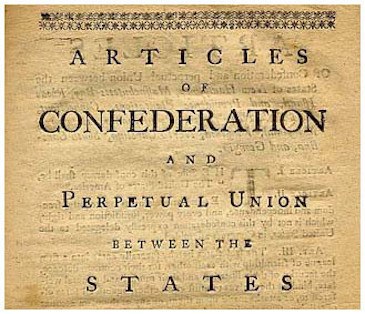
Federalists believed that the Articles of Confederation were a ________ and set up a ________ National Government.
Success, Strong.
Success, Weak.
Failure, Weak.
Failure, Strong.
The ___________ are for the ratification (approval) of the U.S Constitution.
Federalists
Anti-Federalists
Whiggs
Representatives
The ___________ are NOT for the ratification (approval) of the U.S Constitution.
Anti-Federalists.
Federalists.
Whiggs.
Supreme Court Justices.
What is the Lost State of Franklin?
Tennessee's first attempt at statehood
land taken away from Tennessee after the
Revolutionary War
territory Tennessee lost to North Carolina
territory North Carolina gave to Tennessee
Why did the state of Franklin fail?
The settlers disagreed about state boundaries,
The settlers disagreed about what territory
should be included in Franklin.
The settlers disagreed over control of the government.
_____ was clerk of the Watauga Settlement, the governor of the State of Franklin, and the first governor of Tennessee.
John Adams
John Sevier
James Robertson
Daniel Boone
_______ was formed by North Carolina settlers who were upset that their land had been abandoned by the state. The people then came together to form this state, which was located in present-day Northeast Tennessee.
State of Franklin
Fort Nashborough
Cumberland Settlement
Watauga Settlement
Who can override the President’s Veto?
Executive
Legislative
Judicial
Who can declare Actions Unconstitutional?
Executive
Legislative
Judicial
Who can Propose Laws?
Executive
Legislative
Judicial
Who can confirm appointments?
Executive
Legislative
Judicial
Who Makes Appointments?
Executive
Legislative
Judicial
Who can Declare War?
Executive
Legislative
Judicial
Who appropriates money?
Executive
Legislative
Judicial
Who can impeach and Remove the President?
Executive
Legislative
Judicial

The Supreme Court interprets the law
Federalism
Separation of Powers
Checks and Balances
Limited Government

"We the People of the United States…"
Popular Sovereignty
Republicanism
Federalism
Separation of Powers

"The powers not delegated to the United States… are reserved to the States respectively…"
Republicanism
Federalism
Separation of Powers
Checks and Balances

"The President… shall have Power, by which the Advice and Consent of the Senate, to make Treaties, provided two-thirds of the Senators present concur."
Separation of Powers
Checks and Balances
Limited Government
Individual Rights
A principle by which powers are divided among different branches of government to make sure no one has too much power.
Federalism
Popular Sovereignty
Separation of Powers
Individual Rights
Constitutional principle that recognizes people's fundamental rights
Popular Sovereignty
Checks and Balances
Separation of Powers
Individual Rights
The belief that he government is subject to the will of the people.
Separation of Powers
Individual Rights
Popular Sovereignty
Republicanism
Government with limited powers strictly defined by law- Rule of Law
Limited Government
Federalism
Republicanism
Checks and Balances
A system by which each branch of government limits power of other branches
Individual Rights
Checks and Balances
Federalism
Republicanism
The division of power between the National Government and the State Governments
Checks and Balances
Separation of Powers
Federalism
Individual Rights
favoring a republic with elected representation as the best form of government
Republicanism
Federalism
Separation of Powers
Checks and Balances

