
 Worksheets
Unit 2 Constitution Assessmentt
Total questions: 40
Worksheet time: 20mins
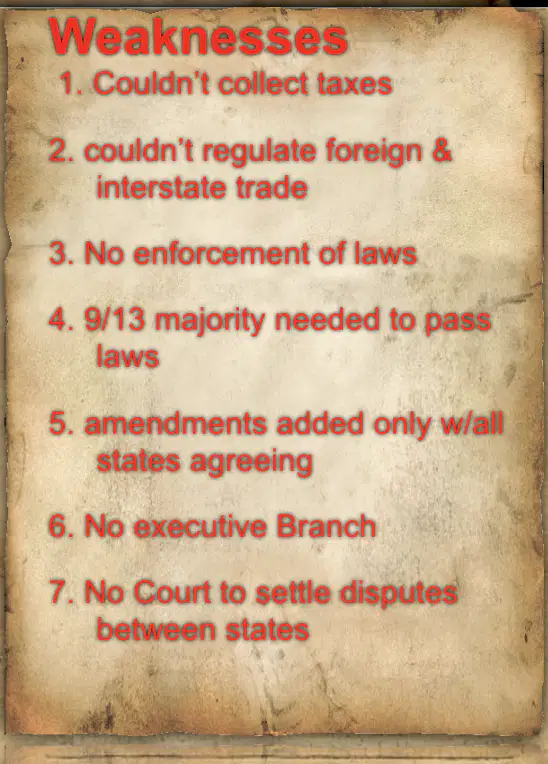
The Articles of Confederation ultimately failed because it...*
gave the federal government too much power.
wanted to crown a new king.
did not give enough power to the government to fix problems.
did not receive the approval of enough states.

What type of government divides the powers of government between the federal and state governments?*
sovereign
democratic
republican
federal

The United States government is divided into...*
two branches
three branches
four branches
seven branches

The framers designed a system of checks and balances to...
share power between the national and state governments
make it difficult but not impossible to amend the Constitution
make sure that the Constitution was the supreme law of the land
keep any one branch of the government from becoming too powerful
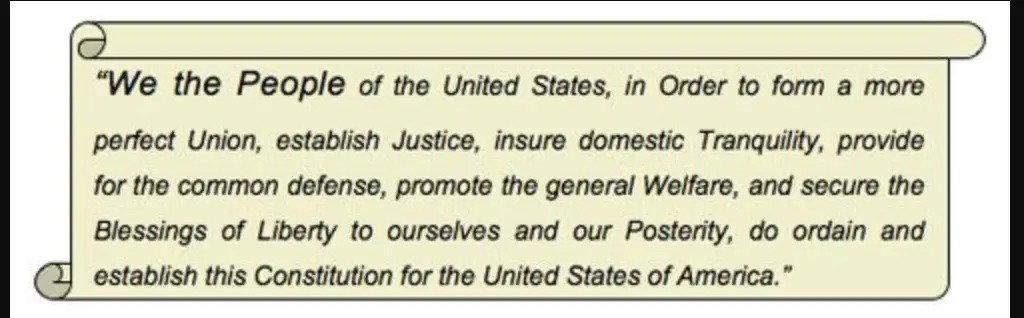
The Preamble...
states the purpose of the President
states the purpose of the Constitution
concludes the Constitution
influenced the War for Independence
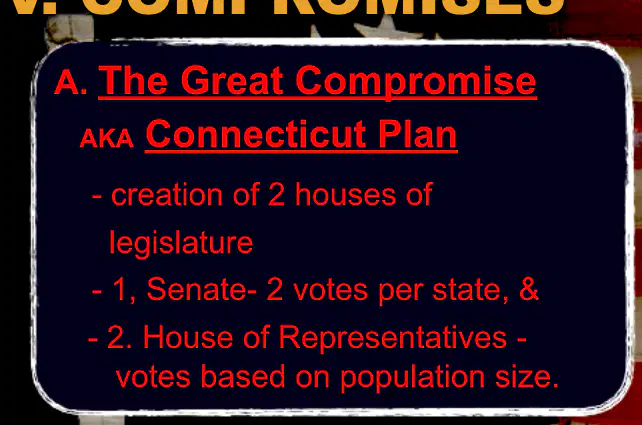
The Great Compromise was primarily related to ...
representation in Congress
election of the president
selection of the Supreme Court
checks and balances
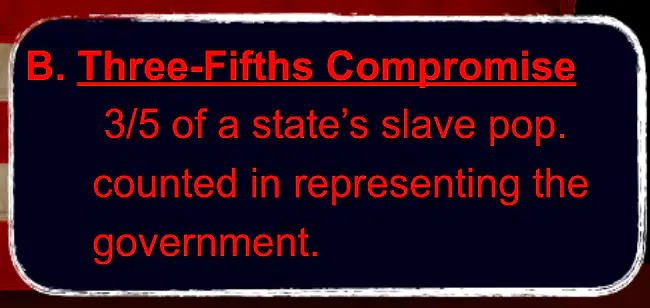
When the Constitution was written, for every five slaves three would be counted towards the population. What is the name of the compromise?
New Jersey Compromise
Virginia Compromise
Three-Fifths Compromise The Slave Compromise
The Slave Compromise

The judicial branch...
makes laws
interprets the laws
enforces the laws
vetoes laws

Who nominates Justices for the Supreme Court?
The President
The Senate
The Chief Justice
The Vice President

All appointments to the Supreme Court must be approved by the...
President Pro Tempore
Speaker of the House
House of Representatives
Senate

The supreme law of the land is...
a state constitution
a law passed by Congress
a US treaty
the United States Constitution
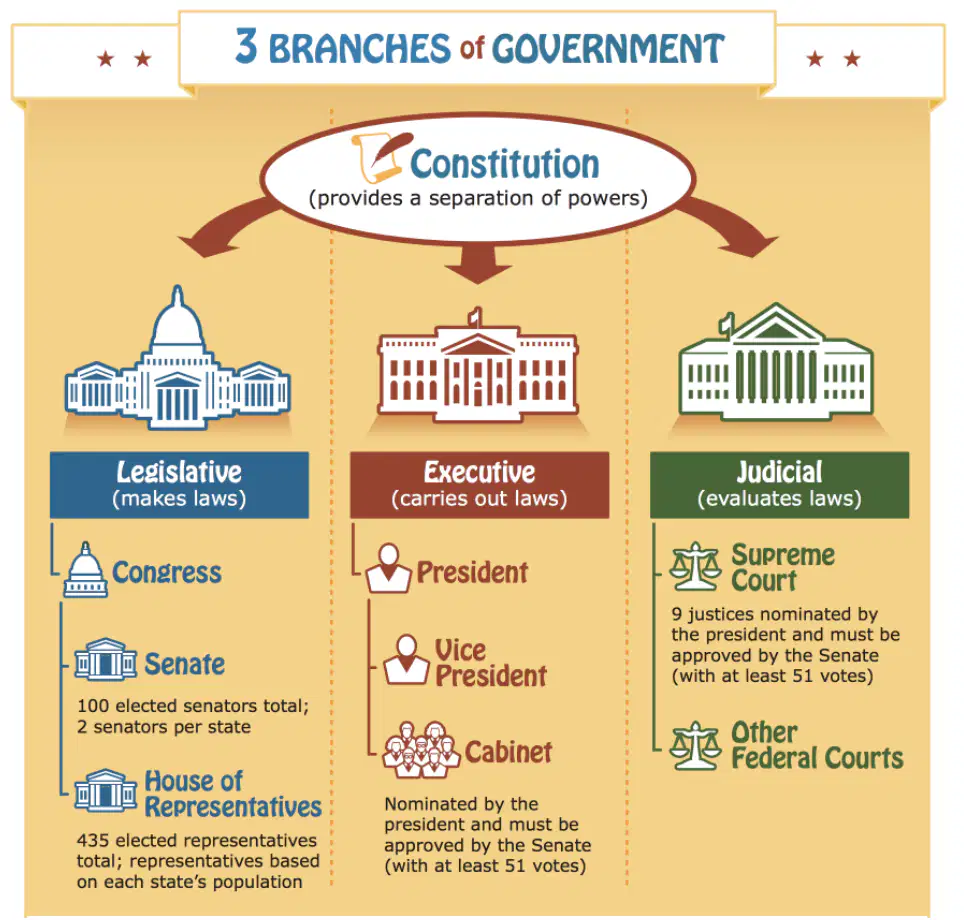
The President is the head of...
the legislative branch
the executive branch
the judicial branch
the federal branch

Treaties negotiated by the President must be approved by the...
Chief Justice
Cabinet
Senate
Secretary of State of State

The most important task of the executive branch is to...
resolve disputes involving the law
decide which laws are Constitutional.
change laws to fit changing needs.
enforcing and carrying out federal laws.
The Legislative branch of the government is called...
the cabinet
Congress
Supreme Court
the FBI
The number of Senators for each state is...
2
3
1
5
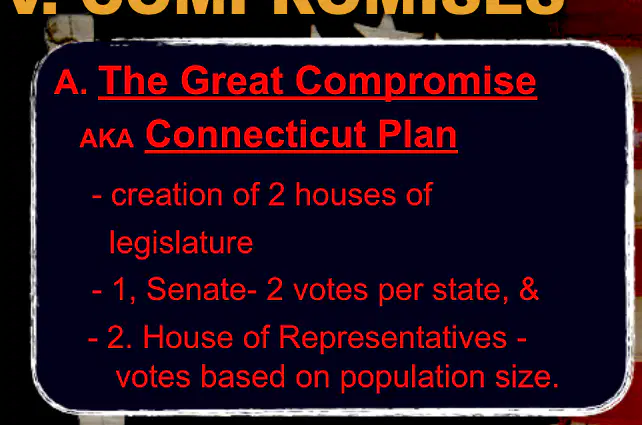
The number of representatives each state has in the House depends on...
the geographic size of the state.
when the state was admitted to the union.
the population of the state.
how rich the state is.

The Executive Branch has the power to check the Legislative Branch by...
vetoing laws.
passing laws over veto.
declaring laws unconstitutional.
controlling congressional salaries.

The President of the Senate is...
the President of the United States
the Vice President of the United States
the Speaker of the House
the President Pro Tempore
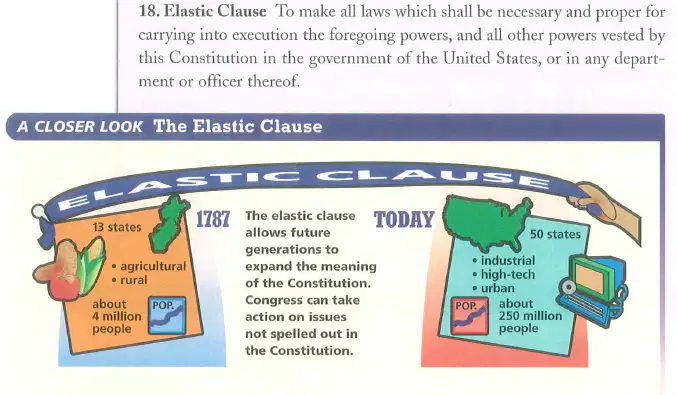
The "elastic clause" gives Congress the power to...
amend the Constitution as times change
declare actions of the president unconstitutional
veto decisions of the Supreme Court
pass laws needed to carry out its other powers

Congress can override the President's veto...
by waiting 10 days after the session ends
by two thirds vote in each house of Congress
by appealing to the Supreme Court
by a majority vote in both houses of Congress.
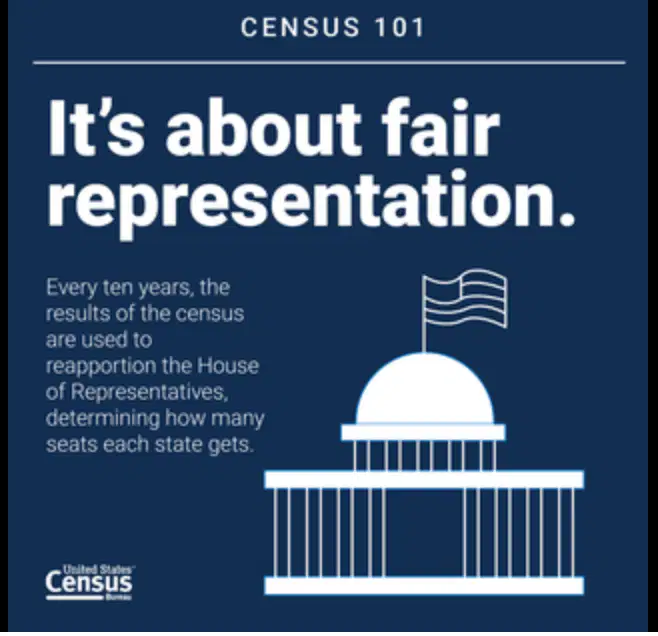
The Constitution requires that a census be taken...
every twenty years
every ten years
every four years
every twenty-five years

If the President dies, the Vice President...
becomes President Pro Tempore.
serves as President of the Senate.
becomes acting President until a replacement is found.
becomes President
The President is elected by... ( information from class video)
the state legislatures.
the electoral college.
the people.
the Senate.

According to the Constitution, the president must be at least...
twenty-five-years old and a citizen for seven years.
thirty-years-old and a citizen for nine years.
thirty-five-years and a natural born citizen.
forty-years-old and a citizen for thirty ve years.

The President is elected for a term of...
two years.
four years.
six years.
life.

According to the Constitution, a Senator must be at least...
twenty-five-years old ad a citizen for seven years.
thirty-years-old and a citizen for nine years.
thirty-five-years old and a natural born citizen.
forty-years-old and a citizen for thirty five years.
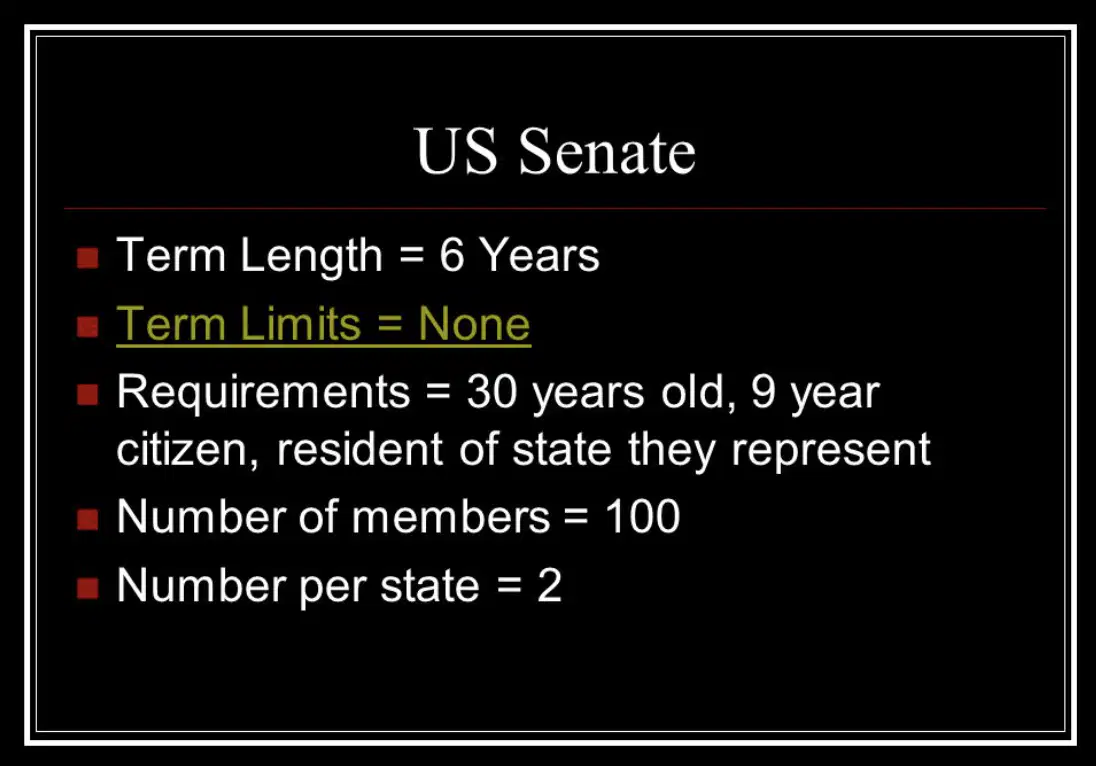
A United States Senator is elected for a term of...
two years.
four years .
six years.
life.
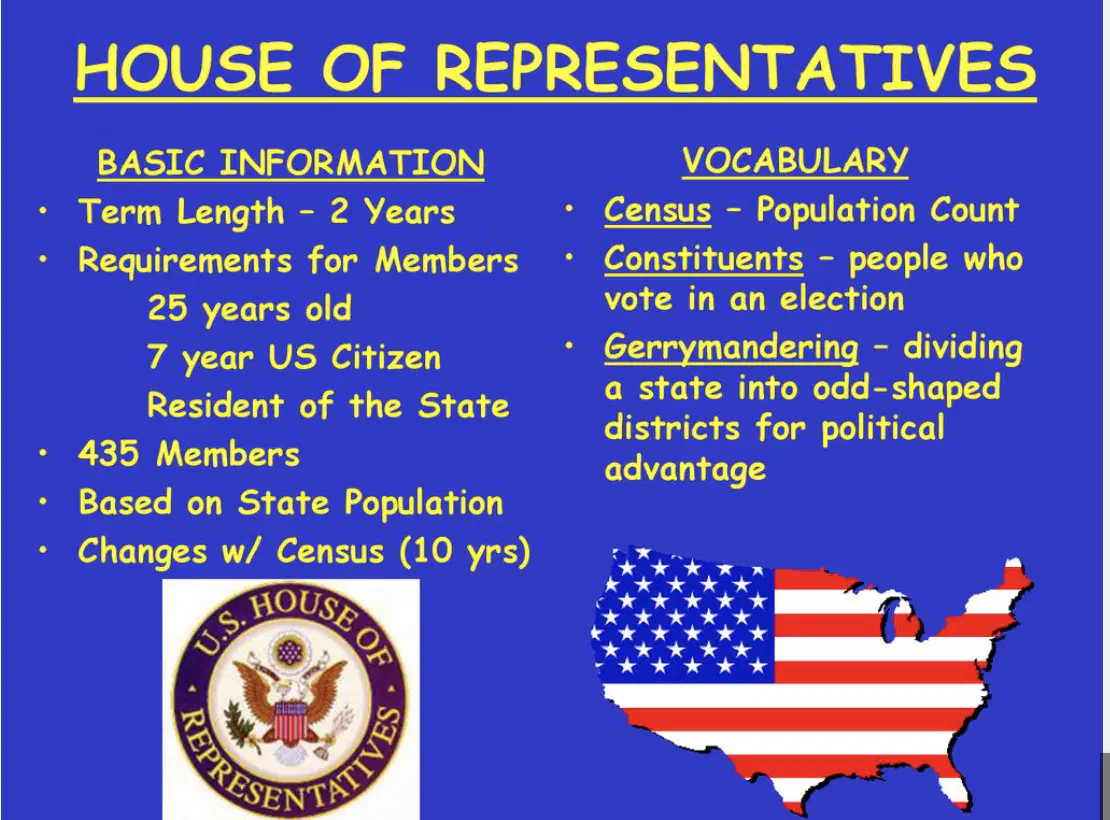
According to the Constitution, a representative must be at least...
twenty-five-years old and a citizen for seven years.
thirty-years-old and a citizen for nine years. .
thirty-five-years old and a natural born citizen.
forty-years-old and a citizen for thirty five years
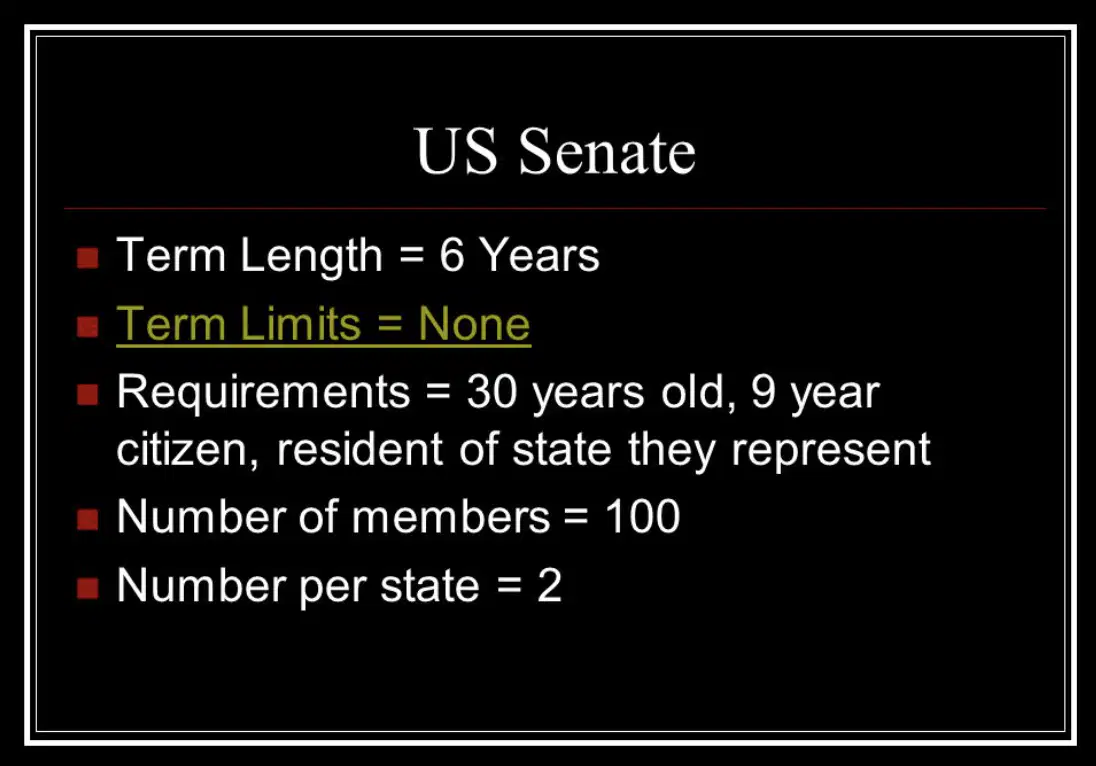
A United States Representative is elected for a term of*
two years.
four years.
six years.
life.

A person not born an American citizen cannot become...
a Senator.
A Representative.
President.
the Speaker.
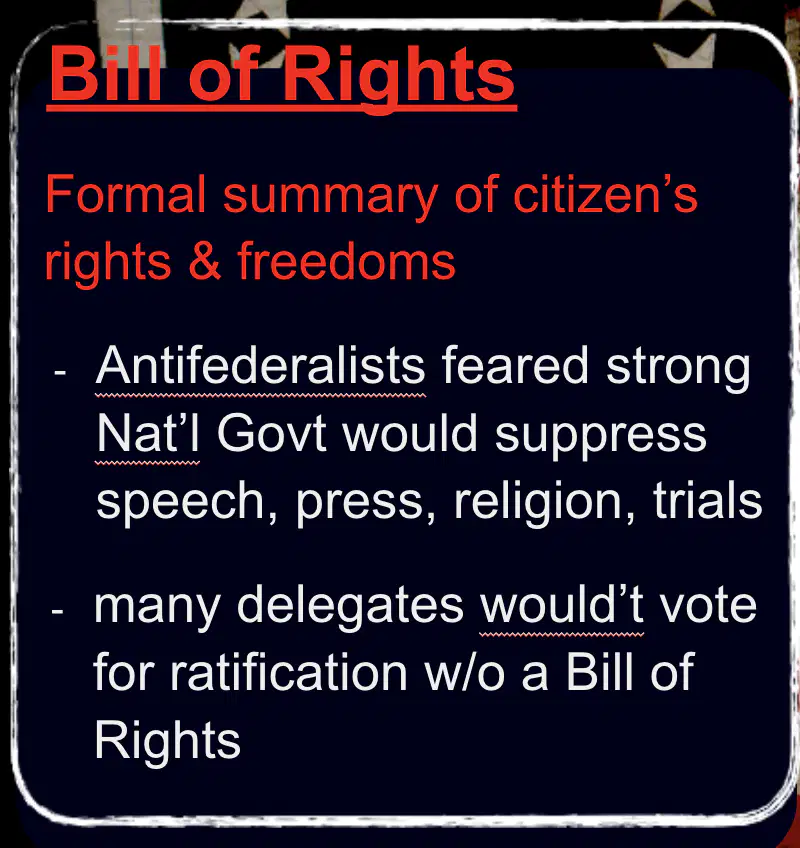
Several states refused to ratify the Constitution unless...
Amendments 11-27 were added
the Bill of Rights was added.
the Magna Carta was added.
the MayFower Compact was repealed.
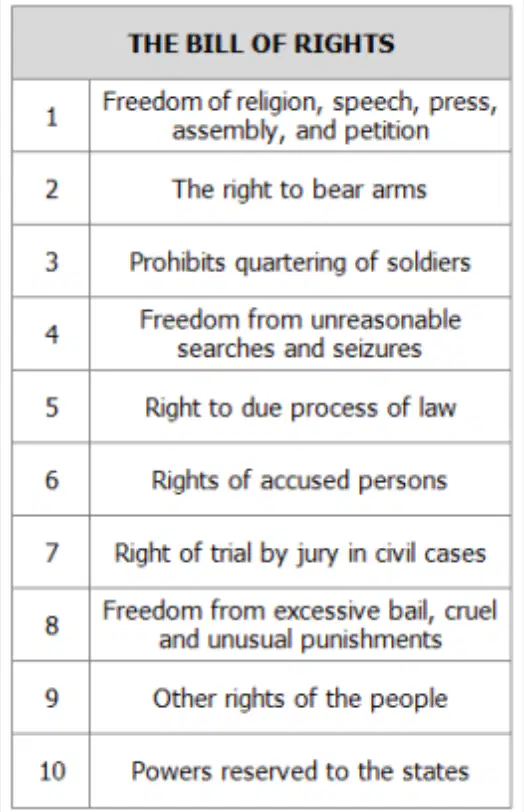
The Bill of Rights includes...
the first five amendments.
all of the amendments.
the first ten amendments.
Amendments 11-27
A person's property usually cannot be searched without...
a license.
a lawyer present.
a police officer present
a search warrant.
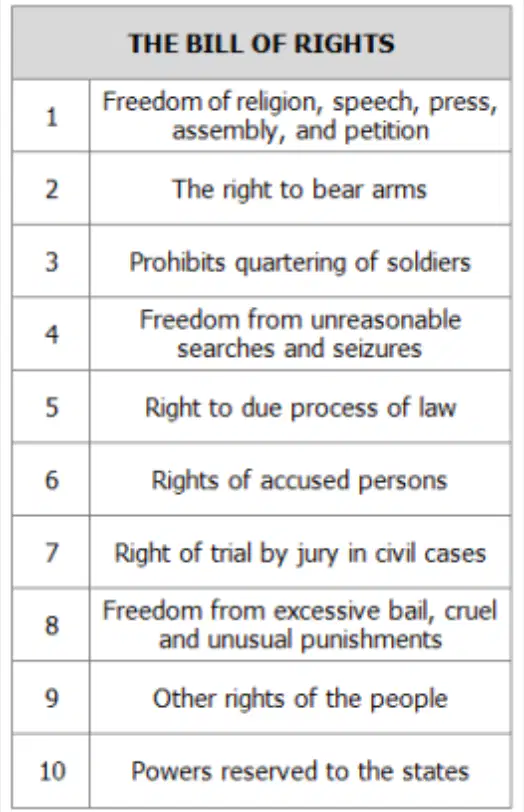
Amendment that gives Americans the right to bear arms...
Amendment 9
Amendment 2
Amendment 11
Amendment 15
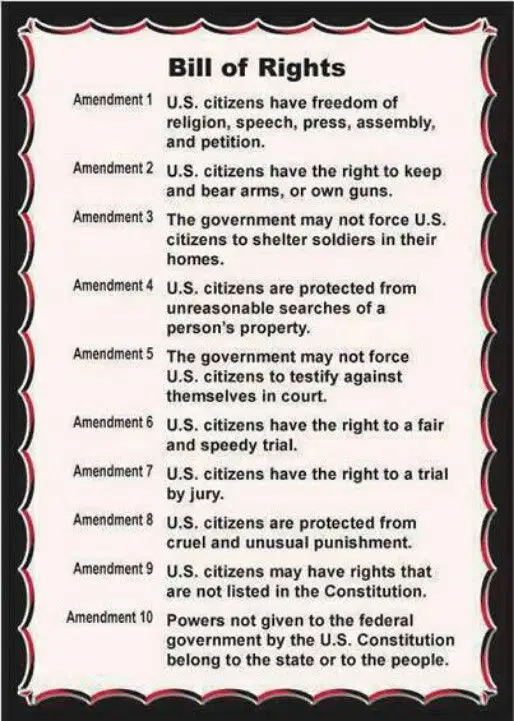
Amendment that safeguards against excessive bails, fines, and cruel and unusual punishment.
Amendment 7
Amendment 18
Amendment 9
Amendment 8
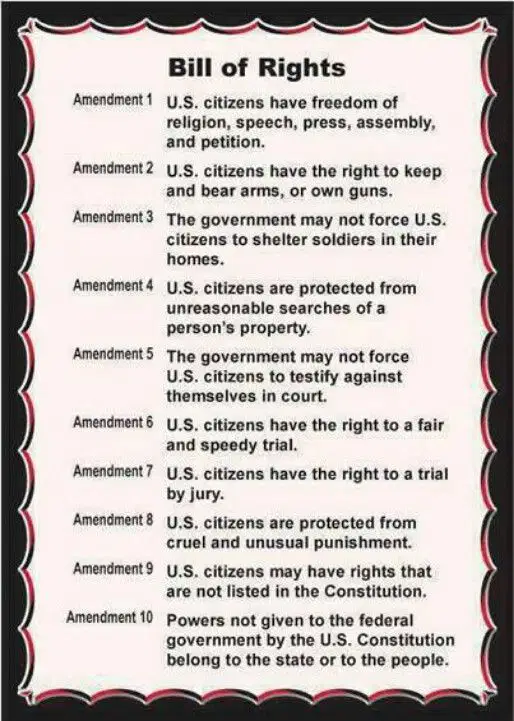
Amendment that protects freedom of religion, speech, the press, assembly, and the right to petition the government.
Amendment 4
Amendment 3
Amendment 2
Amendment 1
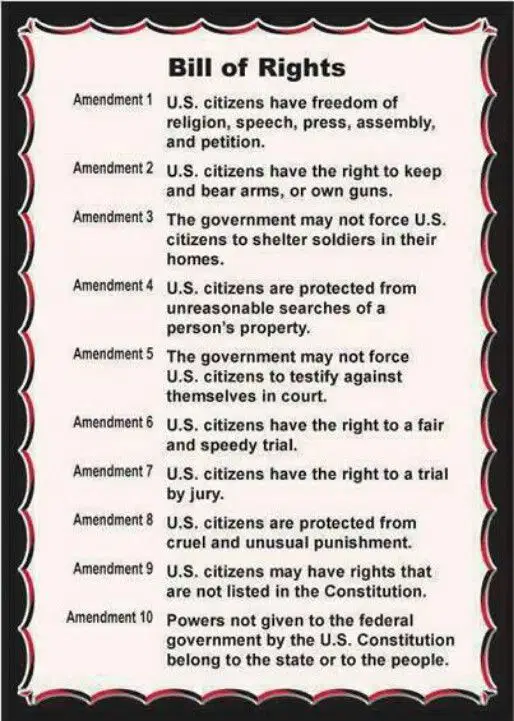
Amendment that guarantees the right to a speedy trial with, if needed, a court appointed lawyer.
Amendment 5
Amendment 6
Amendment 7
Amendment 8
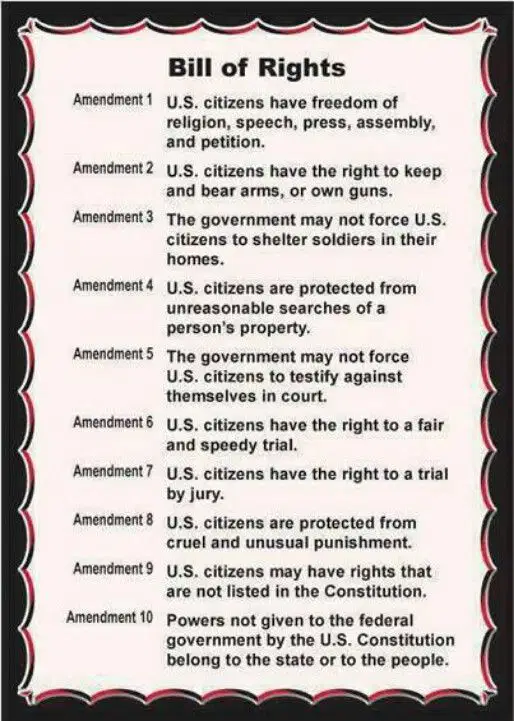
Amendment that prohibits quartering of troops in peacetime.
Amendment 1
Amendment 2
Amendment 3
Amendment 4

This diagram illustrates the...
system of checks and balances.
elastic clause.
federal system of government.
amendment process.

