
Font size
 Worksheets
Plants System
Total questions: 35
Worksheet time: 17mins

The leaves of a plant are arranged in this way so that they can
collect more rain water for the tree
give more shade to the rest of the tree
trap more sunlight to make food
transfer water to the stem of the tree

Plant A grows more healthily because its stem can climb up a support to spread the leaves out to get (a) and make food.

What are the functions of the roots? (Tick 2)
To take in and give out gases for the plant.
To absorb water and minerals from the soil.
To hold the plant firmly to the soil.
To make food for the plant.

What are the functions of the stem? (Tick 2)
To hold the leaves up so they can get light to make food.
To absorb water and minerals.
To support the plant.
To help the plant to take in and give out gases.
A plant is a (a) because it is made up of parts.

Daisy carry out an experiment to find out if the roots of a plant absorb water or not. Which two of the set-ups should she choose?
A and C
A and D
A and B
C and D

Ali took four identical plants, A, B, C and D, and removed some parts from each plant as shown in the table above.
Which plant will survive the longest?
A
B
C
D

Adam, Bel, Calvin and Darren made some observations about plants.
Whose observation is correct?
Adam
Bel
Calvin
Darren

What are found on the leaves to allow gases to be taken in and given out?
holes
tiny openings
veins
hair
Photosynthesis is _______________________.
how plants use sunlight to produce food
how plants release water to the air
how plants use sugars and oxygen to produce energy to grow

Besides food, what do green plants need for respiration?
Oxygen
Carbon dioxide
Sunlight
Water
Are plants systems and why?
Yes because they have different parts that work together
Yes because they have different parts that do not work together
No because only humans are systems
What are the three basic parts of plants?
Leaves, sunlight, minerals
Leaves, stems, roots
Water, roots, stems
Which of the following statements is not true?
The roots of some plants do not grow in soil
The roots of a plant carry water to different parts of the plant
The roots of a plants help to hold the plant firmly to the ground.
The roots of a plants take in water and dissolved minerals from the soil
The leaves, stem, and roots must work together for the plant to survive
True
False
Which statement below describes how flowers allow plants to reproduce?
flowers create seeds once they are pollinated
flowers absorb sunlight and carbon dioxide to create seeds
flowers absorb water and sunlight to create seeds
flowers are pollinated by absorbing sunlight and then create seeds
The shoot system consists of the following except:
upright stem
leaves
buds
roots
Most water enters a plant through
stem
root hairs
leaves
flower

How does water flow through a plant (from entry to exit)?
stem-root-leaves
leaves-stem-root
root-stem-leaves
root-leaves-stem
Plants get their water for photosynthesis from here
soil
air
river
pond
This green pigment absorbs energy from sunlight
chloroplast
chlorophyll
chromosome
chloramphenicol
What will happen to the plant if the roots are removed completely?
The plant cannot get water and mineral salts from the ground.
The plant cannot absorb sunlight to make its own food
The plant cannot produce any gas
The plant cannot get oxygen
Living things that makes its own food
Mammal
Plant
Bird
Reptile
Which of the following statements about the usefulness of plants is not true?
They make food and store it in various parts, providing food for us
They take in carbon dioxide during photosynthesis, keeping that air fresh
Plants do not respire all the time so they do not compete with humans for air
They take in water through their roots and lose it through their leaves, keeping the air humid
Which of the following would not be found in the transport system of a plant?
blood
mineral salts
food
water
The stem supports a plant and holds its leaves up. What other function does it have?
Absorbing water and minerals
Holding the plant firmly to the ground
Carrying food from the roots to other parts of the plant
Carrying water and minerals from the roots to other parts of the plant

Which part(s) of the plant and has transporting tubes to transport mineral salt, water and food?
S
P
Q
R

Students observed a plant left by a window over several days. The plant was watered daily. After three days, the plant began to grow towards the window as shown in the picture.
Which of the following best explains the student’s observations?
Heat from the Sun caused the plant to grow towards the window.
The plant is leaning towards the window to get fresh air.
The plant is responding to the stimulus of sunlight.
The plant is responding to water in the air and growing towards it.
Four of Mrs Singh's pupils made a statement each about the tubes in the stem of a plant.
Anna : The tubes carry food
Bee Choo : The tubes carry air
Chandra : The tubes carry water
Dave : The tubes carry nutrients
Which of the pupils was/were correct?
Anna only
Chandra only
Bee Choo and Dave
Anna, Chandra and Dave

Which of the following shows the correct change in the rate at which plants make food as the amount of light changes?
(1)
(2)
(3)
(4)
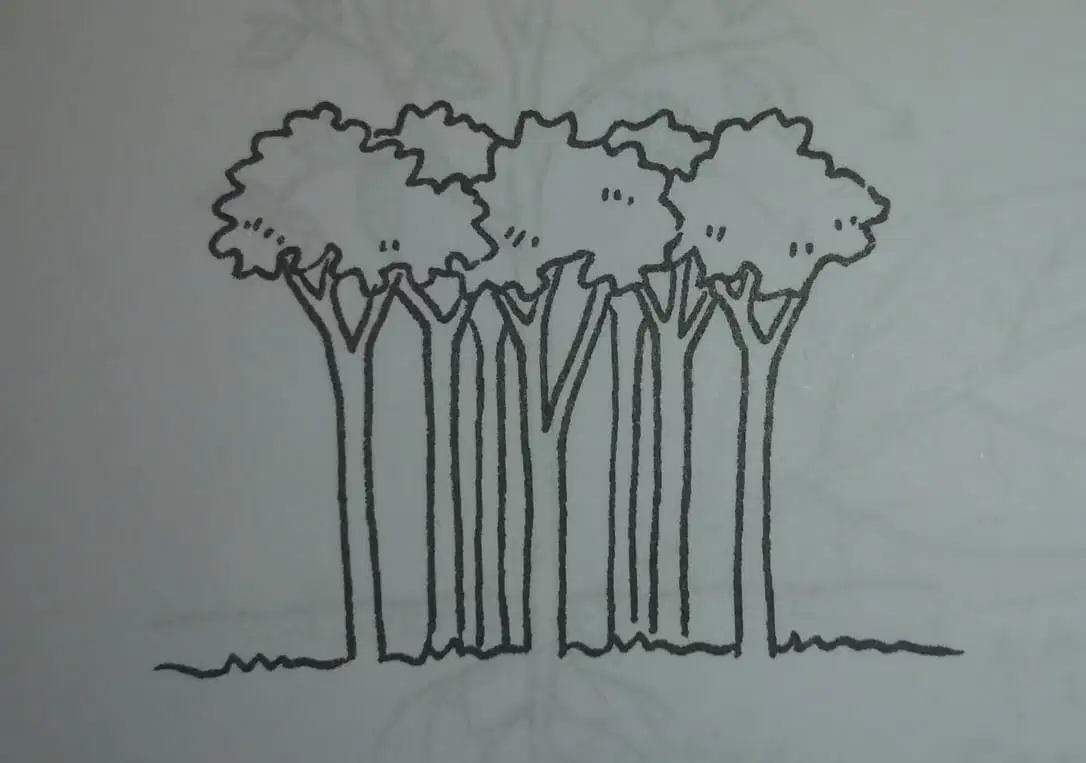
A pupil observed some trees in a forest.
Which of the following best explains why the trees grow very straight and tall?
The leaves can receive more air
The leaves can receive more water
The leaves can receive more sunlight
The leaves can receive more mineral salts

Raju tied a black plastic bag around the top pat of a plant. He placed it on the window sill and watered it every day.
After a few days, the plant died. Which of the following part(s) could not carry out its/their function and caused the plant to die?
stem
roots
leaves
flowers
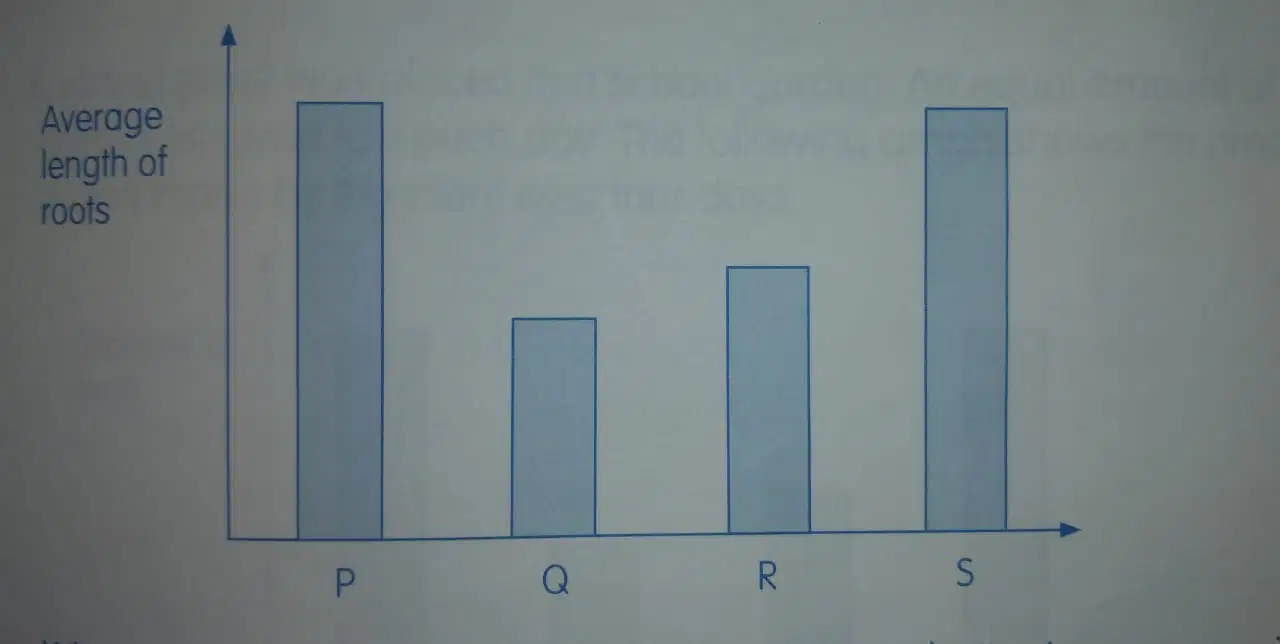
The graph below shows the average length of the roots in four plants, P, Q, R and S.
Which of the plants is/are more likely to survive better in an area with little rainfall?
P only
Q only
P and S only
Q and R only

