
Font size
 Worksheets
Atoms and Atomic Theory
Total questions: 43
Worksheet time: 40mins
All matter is made of _________.


Atoms are made up of ________________
energy
electrons
subatomic particles
gasses

The subatomic particles that make up an atom.
solid, liquid, gas
electrons, protons, nucleus
energy, protons, nucleus
electrons, protons, neutrons

__________ are negatively charged particles that are in the orbitals around the nucleus.
protons
nucleus
neutrons
electrons

A proton has a ___________ charge.
positive
negative
neutral
massive.
An electron has a _________ charge
positive
neutral
negative
massive
A neutron has _________ charge or is ________.
negative ... neutral
positive .... neutral
no .... negative
no ... neutral


The smallest part of any element. Made up of protons, neutrons and electrons.
Atom
AMU
Ion
Isotope

The negatively charged particles in an atom
Proton
Electron
Neutron
Electron Cloud
Which TWO of the following subatomic particles are inside the nucleus?
protons
electrons
neutrons
There are no subatomic particles in the nucleus of an atom.

How many atoms of Hydrogen are in H2O
1
2
3
more than 3
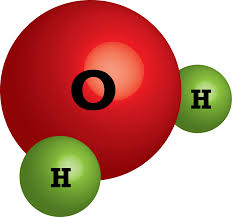
How many atoms of Hydrogen are in this compound?
1
2
3
4
All matter is made of _________.
The subatomic particles that make up an atom.
solid, liquid, gas
electrons, protons, nucleus
energy, protons, nucleus
electrons, protons, neutrons
What is the chemical symbol for Hydrogen
H
He
Hy
Hg
What is this subatomic particle that has positive charge?
Electron
Neutron
Proton
Megatron
All matter is made of what
energy
atoms
electrons
compounds
The positive particles of an atom are
electrons
positrons
neutrons
protons
The central region of an atom where its neutrons and protons are is its
nucleus
electron cloud
core
center
Particles in an atom that are neutral and have no charge are
negatrons
electrons
neutrons
protons
True or False: Neutrons have a negative charge
True
False
A particle that moves around the nucleus is a(n)...
Proton
Neutron
Electron
Quark
What subatomic particles would you find in the nucleus of an atom?
Protons only
Protons and Neutrons
Neutrons and Electrons
Protons and Electrons
What subatomic particle(s) would be found orbiting the nucleus?
Neutrons only
Electrons only
Protons and Neutrons
Protons and Electrons
Protons and electrons balance the charge of an atom.
True
False
Most of the mass in an atom is concentrated in the...
electrons
nucleus
protons
empty space
Electrons are___________
Extremely small even in comparison to protons.
part of the nuclues.
Super Positive, like cheerleaders!
very large
Anything that has mass and takes up space is called
heterogeneous
homogeneous
matter
density
An atoms overall charge is
positive
depends on its mood
neutral
negative

Atoms are made up of mostly
Protons
Neutrons
Electrons
Empty Space
Electrons move around the nucleus
very slowly
near the speed of light
they don't move

