wayground logo

Free Printable Worksheets

Font size

S
M
L
XL
Worksheets

Joint Movement

Total questions: 57

Worksheet time: 52mins

Name
Class
Date
1.
Identify the joint action being performed.
a)
Extension
b)
Flexion
c)
Abduction
d)
Adduction
2.
Identify the joint action being performed.
a)
Extension
b)
Flexion
c)
Abduction
d)
Adduction
3.
Identify the joint action being performed.
a)
Extension
b)
Flexion
c)
Abduction
d)
Adduction
4.
Identify the joint action being performed.
a)
Extension
b)
Flexion
c)
Abduction
d)
Adduction
5.
Identify the joint action being performed.
a)
Circumduction
b)
Lateral Rotation
c)
Medial Rotation
d)
Eversion
6.
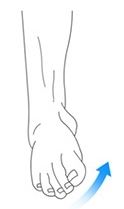
Identify the joint action being performed.
a)
Inversion
b)
Eversion
c)
Plantarflexion
d)
Dorsiflexion
7.

Supination

a)
b)
8.

Adduction means

a)

Increase the angle of a joint

b)

Decrease the angle of a joint

c)

Take a limb away from the body

d)

Return a limb towards the body

9.
Identify the joint action being performed.
a)
Inversion
b)
Eversion
c)
Plantarflexion
d)
Dorsiflexion
10.
What movement is occurring here?
a)
Eversion
b)
Flexion
c)
Dorsiflexion
d)
Plantarflexion
11.

Identify elevation.

a)
b)
c)
d)
12.

The movement shown is a person moving his leg outward. This movement is known as:

a)

abduction

b)

adduction

c)

rotation

d)

flexion

13.
Moving a part forward (thrusting the head forward).
a)
protraction
b)
retraction
c)
elevation
d)
supination
14.
Turning the hand so that the palm is upward or facing anteriorly (in anatomical position).
a)
supination
b)
pronation
c)
flexion
d)
dorsiflexion
15.

When kicking a football the knee

a)

Flexes

b)

Extends

c)

Abducts

d)

Adducts

16.
Identify the joint action being performed.
a)
Circumduction
b)
Lateral Rotation
c)
Medial Rotation
d)
Eversion
17.

Match the following

a)
1.

inversion

b)
2.

eversion

c)
3.

dorsiflexion

d)
4.

plantar flexion

e)
5.

circumduction

18.

Head Flexion

a)
b)
19.

Head Extension

a)
b)
20.

Hip Extension

a)
b)
21.

Hip Flexion

a)
b)
22.

Abduction

a)
b)
23.

Adduction

a)
b)
24.

Dorsiflexion

a)
b)
25.

Planterflexion

a)
b)
26.

Inversion

a)
b)
27.

Eversion

a)
b)
28.

Supination

a)
b)
29.

Pronation

a)
b)
30.

Retraction

a)
b)
31.

Protraction

a)
b)
32.
Turning the foot so the plantar surfaces faces medially.
a)
plantar flexion
b)
eversion
c)
inversion
d)
dorsiflexion
33.

Which movement is shown?

a)

Elbow Flexion

b)

Elbow Extension

c)

Medial Rotation of Shoulder

d)

Shoulder Abduction

e)

Shoulder Flexion

34.

Which movement is shown?

a)

Elbow Flexion

b)

Elbow Extension

c)

Medial Rotation of Shoulder

d)

Shoulder Abduction

e)

Shoulder Flexion

35.

Which movement is shown?

a)

Shoulder Extension

b)

Elbow Extension

c)

Medial Rotation of Shoulder

d)

Shoulder Abduction

e)

Shoulder Flexion

36.

Which movement is shown?

a)

Hip Extension

b)

Plantar Flexion

c)

Knee Flexion

d)

Knee Extension

e)

Hip Flexion

37.

Which movement is shown?

a)

Hip Extension

b)

Plantar Flexion

c)

Knee Flexion

d)

Knee Extension

e)

Hip Flexion

38.

Moving limbs AWAY from the body is called...

a)

Adduction

b)

Abduction

c)

Flexion

d)

Extension

39.

Moving limbs TOWARDS the body is called...

a)

Adduction

b)

Abduction

c)

Flexion

d)

Extension

40.

The following is NOT one of the 3 Joint Classifications..

a)

Cartilaginous

b)

Cartilage

c)

Fibrous

d)

Synovial

41.

The joints that allow the most movement are called

a)

Fixed

b)

Fibrous

c)

Cartilaginous

d)

Synovial

42.

Examples of a Ball & Socket Joint are found in the

a)

Shoulder

b)

Knee

c)

Hip

d)

Ankle

43.

A hinge joint allows

a)

A wide range of movements

b)

Circumduction

c)

Rotation

d)

Movement in only one direction (ie. backwards & forwards)

44.

An example of a Saddle joint is in the

a)

Knee

b)

Hip

c)

Thumb

d)

Vertebral column

45.

Which of the following is part of a Synovial joint

a)

Synovial membrane

b)

Joint cavity

c)

Ligament

d)

Cartilage

46.

When kicking a football the knee

a)

Flexes

b)

Extends

c)

Abducts

d)

Adducts

47.
This type of joint allows the your first two vertebrate to rotate as in shaking your head no
a)
condyloid
b)
gliding
c)
pivot
d)
saddle
48.
Carpals and tarsals (flat bones) are examples of this type of joint
a)
condyloid
b)
gliding
c)
hinge
d)
saddle
49.
Fibrous joints are?
a)
freely moveable
b)
partially moveable
c)
immovable
50.
Name this joint
a)
gliding
b)
saddle
c)
ball and socket
d)
condyloid
51.
Fibrous joints are?
a)
freely moveable
b)
partially moveable
c)
immovable
52.
Synovial fluid
a)
provides cushioning
b)
provides structure
c)
lubricates the joint
d)
provides support
53.
________ connects bone to bone.
a)
ligament
b)
tendon
c)
muscle
d)
meniscus
54.

What is the primary function of synovial fluid?

a)

To provide oxygen to joint tissues

b)

To allow movement between cartilage

c)

To connect bones together

d)

To produce red blood cells

55.

What is the role of cartilage in synovial joints?

a)

To connect muscles to bones

b)

To produce synovial fluid

c)

To reduce friction and absorb shock

d)

To bind bones together

56.

What is the place at which 2 bones meet?

a)
ligament
b)
joint
c)
bone
d)
organ
57.

What is the role of ligaments?

a)

To connect muscle to bone

b)

To connect bone to bone

c)

To contract and produce movement

d)

To protect internal organs