
 Worksheets
French Revolution Review
Total questions: 66
Worksheet time: 2hrs 42mins
Which French social class paid the majority of taxes?
Nobility
Merchants
Peasants
Clergy
Which estate made up the highest percentage of the population?
1st estate
2nd Estate
3rd Estate
Which estate held titles, paid little taxes, and had top
jobs in government, army and courts?
1st Estate
2nd Estate
3rd Estate

Which location is closest to the Battle of Waterloo?
Paris
Vienna
Madrid
Berlin
What jail did the people in France storm on July 14, 1789?
Fort Knox
The Bastille
Tower of London
Le Jail
What was the period of time called where 40,000 people were killed, including the people who helped to start the Revolution? The Reign of (a) .
Napoleon escaped from the Island he was in exile on and returned to power, but was later overthrown again.
True
False
Which landmark was raided by revolutionaries looking for weapons and ammunitions?
Versailles
The Bastille
The Louvre
The Musee d'Orsay
Which of these is NOT a cause of the French Revolution?
The 3rd estate was being heavily taxed
The 1st and 2nd estae did not pay any taxes
Poor harvests led to there not being enough food
The King gave the 3rd estate food when there wasn't enough
Who was the French military leader that procalimed himself emperor?
Napoleon Bonaparte
Robespierre
Louis XVI
Christopher Columbus
What machine was invented during the French Revolution that helped chop off people's heads?
Bastille
Guillotine
Roadrunner
Robespierre
What did the National Assembly vow in the Tennis Court Oath?
to behead the king
to prepare for war
to draft a constitution for France
to revolt
An estimated 40,000 people suspected of being traitors, were executed by the guillotine in one year during the French Revolution. This was known as...
The Execution
The Horror
The Reign of Terror
The Reign of Burt
This group comprised 97% of France's population before the revolution.
First Estate
Second Estate
Third Estate
In 1793 King Louis XVI and Queen Marie Antoinette were...
returned to the throne
deported to England
saved from Robespierre
executed
The great French empire that Napoleon created eventually fell after the unsuccessful invasion of Russia. Why was the invasion considered a great disaster for Napoleon?
There was a massive air attack by the Russians that wiped out most of Napoleons army
Russia's scorched-earth policy and cold winter wiped out most of Napoleons army
The Battle of the Bulge wiped out most of Napoleons army
The newly formed United States allied with Russia to wipe out most of Napoleons army

Leader of the committee of Public Safety
who enforces policies of the Reign of
Terror
Louis XVI
Robespierre
Napoleon
Klemens von Metternich

What event restored monarchies and the balance of power to Europe after the Napoleonic Wars?
Congress of Vienna
Parliament
League of Nations
Estates General
What was the Great Fear?
A period of peasants rioting and ransacking noble homes.
A period where religious extremists proclaimed the end of the world.
A company of soldiers which raided villages during the Napoleonic Wars.
A period where nobles publicly executed peasants to scare them out of revolting.
Which intellectual movement had the greatest influence on the goals of the French Revolution?
Romanticism
The Enlightenment
The Renaissance
Futurism
Which of the following was not a goal of the Congress of Vienna
Kings Restored to Power
Balance of Power
A new map of Europe (France weaker)
An alliance of all members against Russia
Which of the following was NOT one of Napoleon's big mistakes?
Invasion of Russia
Peninsular War
Continental System
Louisiana Purchase

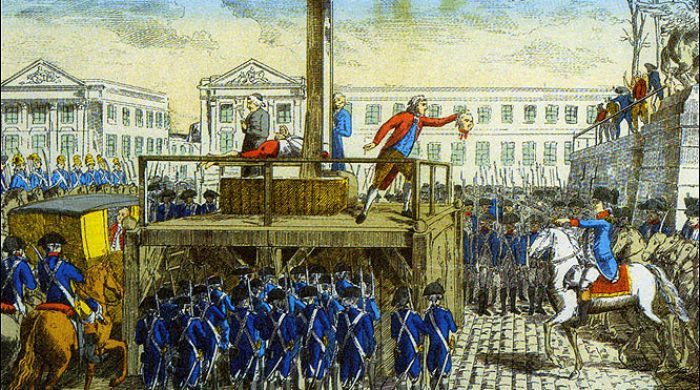
Who is shown beheaded in this painting?
King Louis XVI
Queen Marie Antoinette
Maximilien Robespierre
Napoleon Bonaparte
Which of these were examples of the policy of de-Christianization in France? [mark 3]
Notre Dame was converted to a "temple of reason"
The Catholic calendar was replaced
The new Republican Calendar eliminated Christian holidays like Christmas & Easter
The punishment for "monopolizing" was death
Many citizens joined political clubs like the Mountain
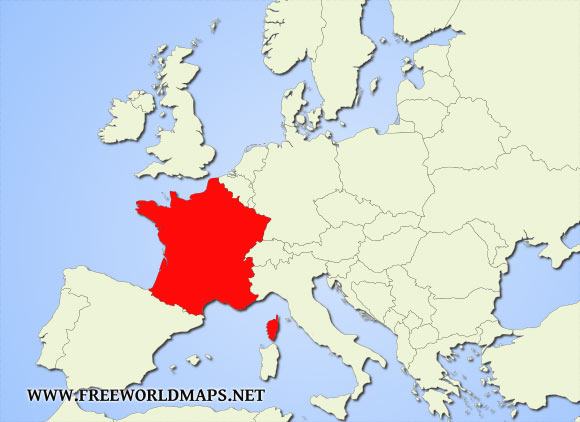
What country is highlighted on this map?
England
France
Germany
Canada
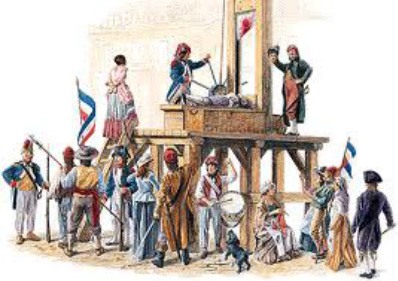
T/F: Only members of the clergy & nobility were killed during the Reign of Terror.
TRUE
FALSE
A government by the people.
Popular Sovereignty
Constitution
Limited Government
Democracy
Who did Napoleon make peace with upon taking over?
The Directory
The Catholic Church
Austria
Great Britain
What tactic did the Russians use as they retreated?
hide and seek
guerrilla warfare
scorched earth
massive bombing
This is a strong feeling of pride and devotion to one’s country.
Guillotine
Bastille
Nationalism
Jacobins
This is a member of a radical political club during the French Revolution.
Jacobins
Bastille
Guillotine
Reign of Terror
These were dissenting groups of people who struggled for power.
suffrage
Factions
bourgeoisie
Guerilla Warfare
What was the slogan of the French Revolution?
Love, Live, Peace
Liberty, Equality, Fraternity
Life, Liberty, Property
After Waterloo and Napoleon’s defeat, diplomats and heads of state (of many countries) got together from September 1814 to June 1815 to create a lasting peace. Where did they meet?
Congress of Versailles
Congress of Paris
Congress of London
Congress of Vienna
These were hit-and-run raids that took place in Spain against the French.
suffrage
guerilla warfare
factions
bourgeoisie
A wave of violence swept across the country called the
Great Awakening
Sad Snowman
Bourne Supremacy
Great Fear
Nationalism is all about
breaking away from culture and values
staying away from a common identity
identifying to a common language and national symbol
In 1803 Napoleon sold the Louisiana Purchase to who?
The French
Spanish
America
Japan
Sudden takeover of a government
estate
guillotine
coup d'etat
monarchy
type of government with a king or queen in control
estate
guillotine
coup d'etat
monarchy
The ________ was developed by Napoleon to block British trade making Europe self-sufficient.
100 Days
Reign of Terror
Continental System
Peninsular Campaign
Tactic used by the Russians to defeat France when Napoleon invaded:
Scorched Earth Policy
Blockades
Continental System

