
Font size
 Worksheets
Cell Transport
Total questions: 25
Worksheet time: 15mins
What is the correct description of the relationship between osmosis and diffusion?
Osmosis is a type of diffusion that pertains to just solute molecules and occurs across a cell membrane with the use of energy.
Osmosis is a type of diffusion that requires extra energy on the part of the cell, whereas diffusion happens freely.
Osmosis is a type of diffusion that pertains to just water molecules and occurs across a cell membrane without the use of energy.
Osmosis is not directly related to diffusion. Osmosis involves the movement of liquids. Diffusion involves movement of gasses.
The main purpose of moving materials inside and outside the cell through the cell membrane is to create balance. What term do biologists use for “balance” in a cell?
mitosis
photosynthesis
homeostasis
cellular respiration
The sodium-potassium pump regulates the amount of sodium and potassium inside of cells, particularly nerve and muscle cells. In this process, an ATP molecule is used for energy, causing three sodium ions to be pumped out and exchanged for two potassium ions, which are pumped in by a membrane protein. Both ions go against their concentration gradients. The sodium-potassium pump is an example of:
Active transport
Diffusion
Phagocytosis
Passive transport
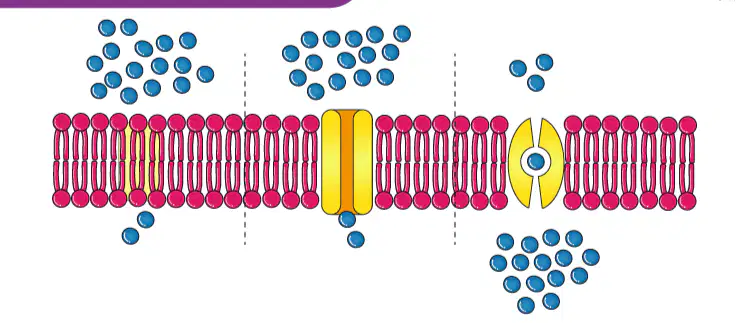
In the image on the right, the cell is taking in substances through membrane proteins, without any energy of its own. The substances naturally follow their concentration gradient. However, they must go through the protein channels, because they are too large to squeeze through the cell membrane. This process is called:
Osmosis
Endocytosis
Active transport
Facilitated diffusion
This component of the plasma membrane is used for cellular identification and communication inside living organisms.
Carbohydrates
Protein channel
Phospholipid bilayer
Cholesterol
This component of the plasma membrane provides a pathway for large molecules to cross.
Protein channel
Cholesterol
Phospholipid bilayer
Carbohydrate chain
This component of the plasma membrane helps with strength and flexibility, so the cell doesn't fall apart.
Cholesterol
Protein channel
Phospholipid bilayer
Carbohydrate chain
When water moves equally into and out of a cell it is in which type of solution?
Hypertonic
Hypotonic
Isotonic
A cell is placed in a solution with 90% salt. The cell contains only 10% salt. The type of solution the cell has been placed in is:
Hypertonic
Hypotonic
Isotonic
A cell is placed in a solution containing 20% glucose. The cell contains 25% glucose. What will happen to the size of the cell?
A plant cell contains 60% water. If a plant cell is placed in 100% water, it will:
Swell and eventually explode because there is no cell wall present
Swell, but then stop when the cell wall prevents further expansion
Shrink
Remain the same size
When a person is in a hospital, they never receive 100% pure water in an IV. This is because 100% water could cause their cells to:
explode
shrink
reproduce uncontrollably
disintegrate
A person who gets stranded in a lifeboat in the ocean should never drink salt water because it would cause their cells to:
explode
shrink
reproduce
get cancer
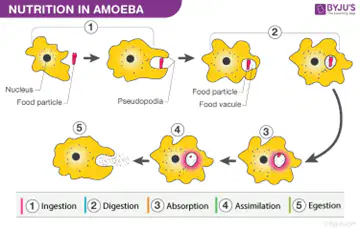
The photo shows food being brought into the cell. What type of transport is this?
Osmosis
Facilitated diffusion
Endocytosis
Exocytosis
The movement of water across a semi-permeable membrane from an area of high-water concentration to an area of low water concentration is called:
Osmosis
Diffusion
Active transport
Hypotonic
The movement of substances across a semi-permeable membrane into and/or out of a cell without the use of energy is called:
Passive transport
Osmosis
Active transport
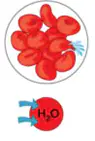
In the picture of blood cells, water has been moving into the cells until they burst. Into what type of solution have these cells been placed?
Hypertonic
Hypotonic
Isotonic
Homeostasis

In the picture of a plant cell, water has been leaving the cell causing the cell to shrink. What type of solution is the cell in?
Hypertonic
Hypotonic
Isotonic
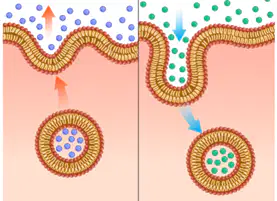
The picture illustrates what types of transport?
Endocytosis and exocytosis
Endocytosis and facilitated diffusion
Exocytosis and osmosis
Pinocytosis and facilitated diffusion
What macromolecule is not in a cell membrane's make up?
Lipids
Carbohydrates
Nucleic acids
Proteins
A hydrophobic substance when placed in water will:
Not dissolve and form a separate layer on top
Dissolve completely into the solution
Turn the water solution into a solid
Turn the water solution into a gas
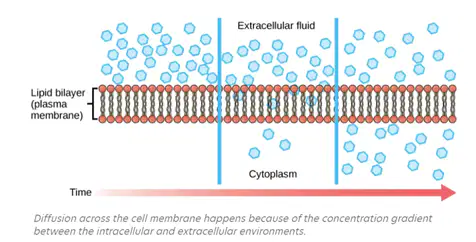
Which direction are the molecules moving over time in the image?
From low to high concentration
From high to low concentration
When water moves equally into and out of a cell it is in which type of solution?
Hypertonic
Hypotonic
Isotonic
Unlike animal cells, plant cells have cell walls that make them rigid. Which organelle, other than the cell wall, also plays a vital role in providing rigidity to plant cells?
Nucleus
Chloroplast
Central vacuole
Endoplasmic reticulum
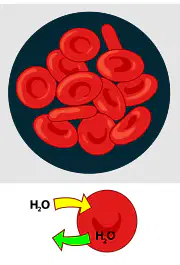
The diagram on the right shows the concentration of water inside and outside of the cell, identify the tonicity of the solution outside the cell.
Equilibrium
Isotonic

