
 Worksheets
Cell Review
Total questions: 40
Worksheet time: 28mins
____ is credited with being the first scientist to observe cork cells.
Leewenhoek
Shleidon
Hooke
An organism made of only one cell is called _____ .
Eukaryotic
Mutlicellular
Monocellular
Unicellular
Cell theory states that...
cells are the basic building block of life
cells are cool
cells are microscopic
cells cannot be destroyed
What type of organisms does the cell theory apply to
bacteria
multicellular organisms
plants and animals
all of the above
Which do BOTH prokaryotes and eukaryotes contain?
nucleus
mitochondria
ribosomes
cell wall
Prokaryotic cells do not have…….
membrane bound organelles
cell membrane
DNA or RNA
life

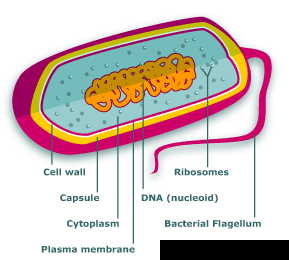
Which organelle is the site of photosynthesis?
Cell Wall
Chloroplasts
Cytoplasm
Cell Membrane
Which organelle produces proteins?
Ribosomes
Lysosomes
Nucleus
Vacuoles
Which cell parts are not present in animal cells?
cell membrane & cytoplasm
nucleus & chloroplasts
cell wall & chloroplasts
ribosomes & mitochondria
Which organelle is the location of DNA (genetic material)?
mitochondria
ribosomes
nucleus
Endoplasmic Reticulum
Which organelle is controls the activities of the cell?
nucleus
mitochondria
cell membrane
cytoplasm
Which part of the cell provides structural support?
Cell Membrane
Cell Wall
Cytoplasm
Nucleus

The organelle where lipids are synthesized along with proteins and other materials that are exported from the cell:
Endoplasmic Reticulum
Golgi Apparatus
Vacuoles & vesicles
Nucleus

The organelle that modifies, sorts, and packages proteins and other materials from the ER for storage in the cell or release from the cell:
Endoplasmic Reticulum
Golgi Apparatus
Vacuoles and Vesicles
Ribosome

The organelles that store materials like water, salts, proteins, and carbohydrates, and the other one that stores and moves materials between cell organelles, as well as to and from the cell surface:
Cytoskeleton
Lysosomes
Chloroplast
Vacuoles and Vesicles

The organelle that breaks down lipids, carbohydrates, and proteins into small molecules that can be used by the rest of the cell:
Lysosome
Cytoskeleton
Golgi Apparatus
Chloroplast

The organelle that helps the cell maintain its shape and is also involved in movement:
Mitochondrion
Lysosome
Cytoskeleton
Cell Membrane

The organelle that converts the chemical energy stored in food molecules into compounds that are more convenient for the cell to use:
Cell Wall
Cell Membrane
Mitochondrion
Centrioles

The organelle that regulates materials entering and leaving the cell, as well as supporting and protecting it:
Cell Wall
Cell Membrane
Centrioles
Cytoskeleton

The organelle that organizes cell division:
Nucleus
Centrioles
Cytoskeleton
Ribosome
Which type of biological macromolecule is the main component of the plasma membrane?
carbohydrate
lipid
protein
nucleic acid

Define plasma membrane
lipid that helps minimize effects of temperature
only on the outer surface of the plasma membrane and are attached to proteins or lipids; form distinctive cellular markers
flexible boundary of a cell that separates a cell from its surroundings
may extend partway into the plasma membrane, cross the membrane entirely, or be loosely attached to its inside or outside face
when some molecules can cross the membrane while others cannot.

When the concentration of solutes on both sides of a membrane is the SAME, the solution is


