
Font size
 Worksheets
Unit 2 - Chemistry of Life Practice Questions
Total questions: 20
Worksheet time: 15mins
Which statement best explains why most biological macromolecules contain carbon?
Carbon can share electrons with up to four different atoms and form three types of bonding patterns
The chemical and physical characteristics of carbon-containing molecules change as they move through the carbon cycle
Carbon exists across the universe and is produced in the interior of stars during their life cycles
The long chains formed by carbon can be combusted with oxygen as a source of energy
Which of the following correctly explains how biological elements bond?
Carbon forms 2 bonds, Hydrogen forms 2 bonds, Oxygen forms 1 bond
Carbon forms 1 bonds, Hydrogen forms 4 bonds, Oxygen forms 2 bond
Carbon forms 4 bonds, Hydrogen forms 2 bonds, Oxygen forms 1 bond
Carbon forms 4 bonds, Hydrogen forms 1 bond, Oxygen forms 2 bonds
Trees are typically able to transport water from their roots to their stems and leaves. Which statement describes the property of water that most supports the transportation of water to all parts of a tree?
Water has strong attractions to itself and many other molecules.
Water can absorb large amounts of energy with minimal temperature changes.
Water dissolves fewer substances than any other liquid.
Water forms a crystalline structure when it freezes.
Which property of water is most responsible for plants being able to transport water from their roots to their leaves?
The attraction between molecules.
A capacity to dissolve many substances.
The ability to form a low-density crystalline structure when frozen.
A capacity to absorb large amounts of energy as temperature increases
A student makes a Venn diagram to compare the functions of carbohydrates and lipids.Which cellar function of carbohydrates and lipids should be placed in the shared section of the Venn diagram?
Structural support of cell walls
Hormone production
Energy storage
Catalyst for chemical reactions
Which statement correctly describes how a protein is formed?
A monosaccharide bonded to a side chain is broken apart
A nitrogenous base, a sugar, and a phosphate group combine to form a new molecule
A molecule containing glycerol bonded to three fatty acids is broken apart
Amino acids are bonded together in a long chain to form a new molecule
Which of the following biomolecules typically contains both nitrogen and phosphate?
Lipids
Nucleic Acid
Protein
Carbohydrate
Match the following macromolecules to the elements they contain.
Carbohydrate
C, H, O
Lipid
C, H, O
Protein
C, H, O, N
Nucleic acid
C, H, O, N, P
Which of the following reactions describes how starch is broken into glucose molecules?
Dehydration synthesis removes a molecule of water
Hydrolysis adds a molecules of water
Dehydration synthesis adds a molecule of water
Hydrolysis removes a molecule of water
Match the following monomer to the correct polymer.
Monosaccharide
Polysaccharide
Protein
Polypeptide
Nucleotide
DNA
Fatty acid and glycerol
Triglyceride
Match the following macromolecules to their correct function.
Carbohydrate
First source of energy
Lipid
Insulation and long-term energy storage
Protein
Cellular functions and structure
Nucleic Acid
Genetic information storage and transfer
Match the following macromolecules to the correct example.
Carbohydrate
Glucose, Starch, Glycogen
Lipid
Triglyceride, Phospholipid, Steroid
Protein
Amino Acid, Peptide, Polypeptide
Nucleic Acid
DNA, RNA
Enzyme
Protease, Lipase, Amylase
Match the following macromolecules to the correct picture.

Carbohydrate

Lipid
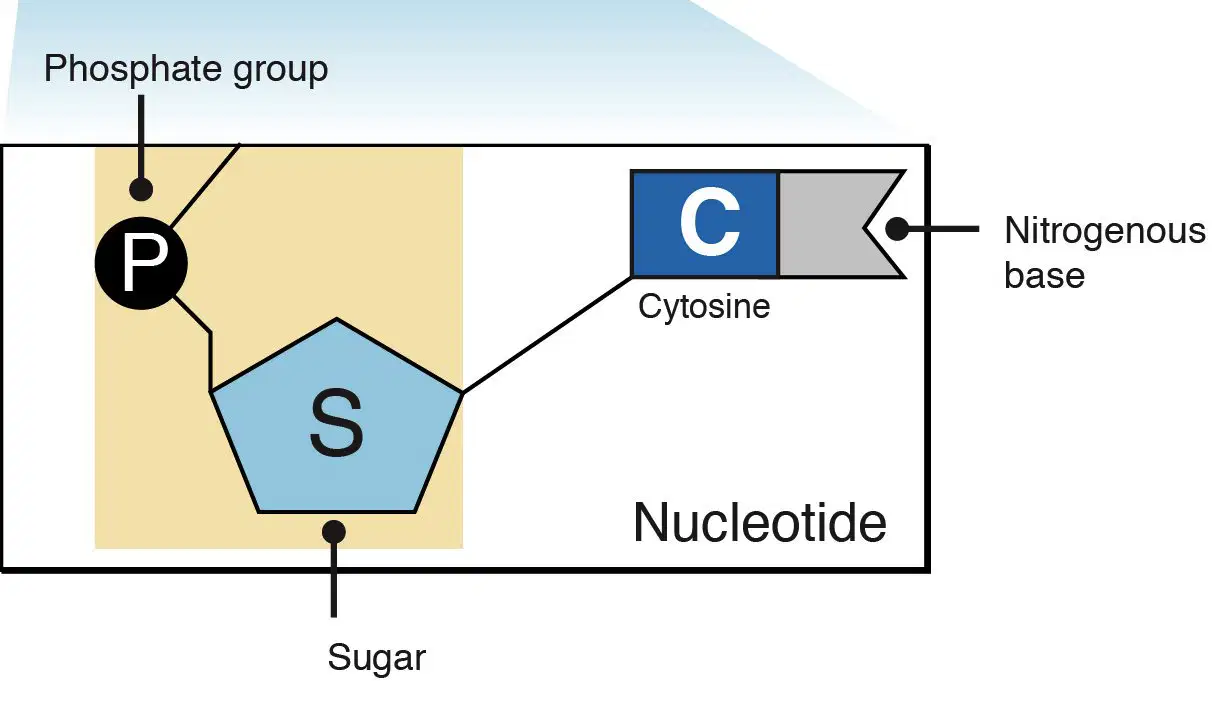
Nucleic Acid
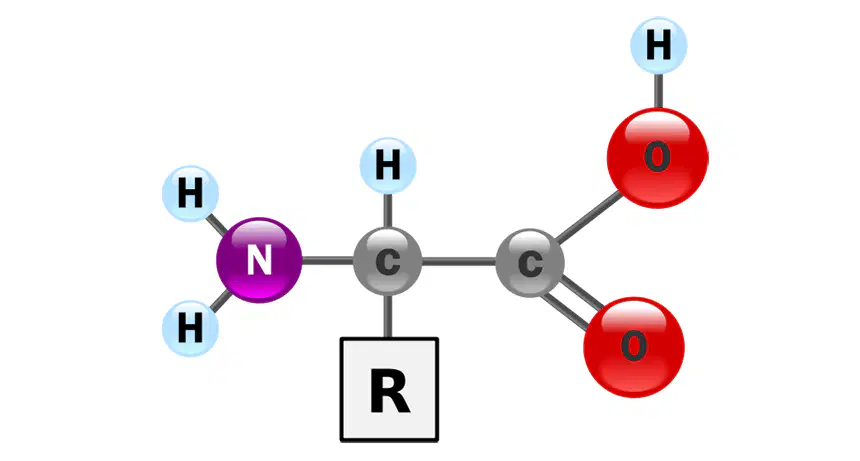
Protein
Which statement best describes a relationship between enzymes and a simple biological reaction?
Enzymes will increase the amount of substrate formed during a biological reaction.
Enzymes will decrease the amount of substrate formed during a biological reaction.
A reaction rate can be increased when the specific enzyme for a biological reaction is present.
A reaction rate can be decreased when multiple enzymes for a biological reaction are present.
For an enzyme to be able to catalyze a reaction, the active site must -
Cause the enzyme to be destroyed in the reaction
Have a complementary shape to the substrate
Increase the activation energy level
Be occupied by an inhibitor
Enzymes are proteins that have a three-dimensional shape that is specific to a particular substrate. Enviromental condition can change the shape of the protein.
What is the most likely result if the shape of the enzyme changes?
The product made from the enzyme and the substrate will be changed
The substrate will change its shape to match the enzyme
The enzyme will no longer be able to catalyze the reaction with the substrate
The enzyme will be able to bind to more diverse substrates than before
What will cause an enzyme to become denatured?
Change in temperature only
Change in pH only
Change in temperature or pH
How do enzymes work to speed up a chemical reaction?
Enzymes increase activation energy of the chemical reaction.
Enzymes decrease activation energy of the chemical reaction.
Enzymes allow active sites to adhere to substrates.
Enzymes promote dehydration synthesis and hydrolysis.
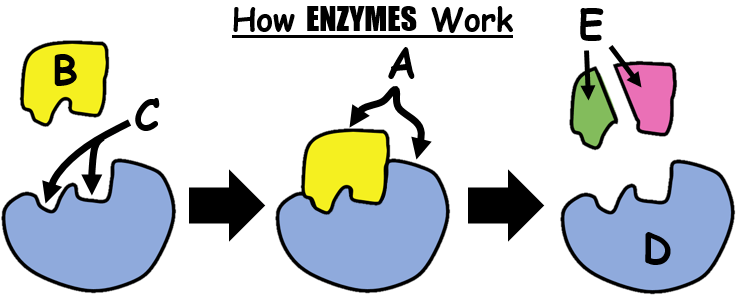
Identify what is labeled with the letter C
active site
enzyme
substrate
products
Which part of an atom is involved in chemical bonds?
proton
neutron
electron
nucleus

