
 Worksheets
Astronomy Unit Test Practice
Total questions: 69
Worksheet time: 1hrs 5mins
The stars in the night sky look as if they are slowly moving because
the Earth is moving.
they rotate around the Sun.
Planets are much_____ than stars.
bigger
smaller
Which planet is closest to the Sun?
Jupiter
Mars
Mercury
Venus
Which of these is NOT large and gaseous?
Saturn
Earth
Uranus
Neptune
What is the LARGEST planet in our solar system?
Jupiter
Uranus
Saturn
Mars
This planet is often called the red planet. It is one of the closest planets to Earth. People wonder if there is life on this planet.
Mars
Venus
Saturn
Mercury
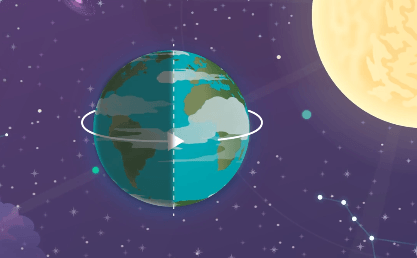
What causes different points on the globe to receive light at different times, explaining the day and night cycle of Earth?
the rotation of the lamp
the sun rotating around the Earth
the rotation of the globe
the sun revolving around the Earth
Which planet will take the longest amount of time to orbit the sun?
Jupiter
Mars
Uranus


Approximately how much time passes between the new moon and the full moon?
one month
two weeks
3 days
24 hours

The moon...
orbits Earth
orbits the sun
has no gravity
has life


1. What is gravity?
A type of rock
A type of plate boundary
When two objects are attracted to each other.
The force that keeps objects in motion
The _______ of the Earth causes the position and length of the shadow to change.
rotation
revolution
stationary position
tilt
Day and night is caused by the _____________ of earth on its axis.
revolution
orbit
rotation
friends

A student wants to build a
model showing what causes the day and night cycle on Earth. What should she demonstrate in her
model?
Earth orbits around the Sun causing day and night
Earth rotates once every year causing day and night.
Earth rotates once a month causing day and night
Earth spins once every 24 hours causing day and night
Which of the following is
caused by Earth’s rotation?
The changes in the Phases of the Moon
The rotation of the Moon on its axis
Seasonal changes on Earth
The way the Sun appears to move across the sky

Look at the diagram below. It is 12:00 pm at point X.
What will happen in 12 hours at point X?
Point X will be in daylight.
Point X will be in darkness.
Point X will orbit once around the Sun
Point X will make one complete rotation.

Identify the phase
New moon
Waning crescent
Full moon
Waxing gibbous
What is the largest planet?
Mars
Jupiter
Earth
Venus
Which answer correctly orders the planets from the sun?
Mercury, Earth, Mars, Jupiter, Venus, Saturn, Uranus, Neptune
Jupiter, Saturn, Uranus, Neptune, Earth, Venus, Mars, Mercury
Mercury, Venus, Earth, Mars, Jupiter, Saturn, Uranus, Neptune
Mercury, Venus, Earth, Mars, Saturn, Jupiter, Uranus, Neptune
Which planets are the terrestrial planets?
Mercury, Venus, Earth, Mars
Jupiter, Saturn, Uranus, Neptune
Mercury, Venus, Earth, Saturn
Jupiter, Mercury, Venus, Earth
Which planets are the gas giants?
Mercury, Venus, Earth, Mars
Jupiter, Saturn, Uranus, Neptune
Mercury, Venus, Earth, Saturn
Jupiter, Mercury, Venus, Earth
Which planet is the smallest planet?
Mercury
Neptune
Saturn
Jupiter
Which planet is tipped on its side?
Neptune
Jupiter
Saturn
Uranus
What is a star?
A hot ball of burning gases that gives off light
A ball of rocky material that orbits a planet
A ball of rock or gas that orbits a star
A big, yellow dot
The sun provides the Earth with…
Heat and light
Light and darkness
Heat and cold temperatures
Light and cold temperatures
What is a planet?
A hot ball of gas
A body that orbits around another planet
Something that can produce its own light
A large body in space that orbits a star
How many planets are in our solar system?
9
8
10
7
The inner planets have ________ surfaces.
gas
no
rocky
liquid
The outer planets are made of ________.
rock
water
gas
ice
What do all the planets do?
orbit around the Sun
spin once a year
dance
have water
Which is Earth's natural satellite?
Venus
Mars
the moon
Sun
Which is the best description of the Sun?
It's a huge ball of hot gases.
It orbits around the planets.
It's the largest planet.
It has a rocky surface.
Which describes the Moon?
the star at the center of our solar system that is made of gases
Earth's natural satellite that has a rocky surface with craters
the third planet from the Sun that has a rocky surface with water
The Earth has seasons. Which motion of the Earth causes seasons?
roatation
rotate
revolution
rebates
Day and night are caused by which motion of the Earth?
revolution
rotation
revolve
remiss
It takes this long for the Earth to rotate once on its axis.
1 week
1 year
365 days
24 hours
The Earth _________________________ around the sun.
rotation
rotates
revolves
relation

What season would be experienced in the Northern Hemisphere?
Summer
Winter
Spring
Fall
What season would be experienced in the Southern Hemisphere?
Summer
Winter
Spring
Fall


It is closer to Earth than the other stars.

Constellations are stars that appear to be in a pattern.



