
 Worksheets
Unit 2B The State (Qin Dynasty-China)
Total questions: 65
Worksheet time: 49mins
Shi Huangdi ruled using which philosophy?
Buddhism
Confucianism
Legalism
Daoism
Which of these is NOT a part of Legalism?
strong leader and army
harsh punishments
strict laws
treat others with respect
The Han Dynasty was marked by _____________ governments based on the ideas of __________________.
harsh, Legalism
harsh, Confucianism
stable, Legalism
stable, Confucianism
Emperor Wudi ruled during which of these dynasties?
Han
Qin
Shang
Zhou
children’s respect for their parents and elders
Confucius
filial piety
bureaucracy
Daoism
Legalism
philosophy of Laozi that puts people in touch with the forces of nature
Confucius
filial piety
bureaucracy
Daoism
Legalism
powers that govern the natural rhythms of life and must be balanced
I Ching
yin and yang
Qin Dynasty
Shi Huangdi
autocracy
What did the Legalists believe that rulers should do?
offer advice to people
educate and train lawyers
reward and punish behaviors
encourage criticism of government
What is one way that Shi Huangdi prevented criticism of his rule?
by exiling noble families
by jailing political opponents
by limiting what people could read
by regulating when people could gather
How did Emperor Qin help reform the economy of ancient China?
He established a central bank
He only gave government positions to the rich people
He established a standard system of currency and measurements
He helped the poor
By ______ BC the QIn controlled the area between the Huang He and Chiang Jang RIvers.
321 BC
221 BC
121 BC
200 AD
What does Qin Shihuangdi mean?
First Dragon
Emperor for Eternity
First Qin Emperor
none of these
What year did Emperor Qin die?
221 BC
210 BC
206 BC
200 BC

China's civilization developed between which two rivers?
Yin and Yang
Chang Jiang and Yangtze
Shang and Zhou
Huang He (Yellow River) and Yangtze (Long River)

Which of the following was meant to protect Shi Huangdi in death?
the Great Wall of China
Confucian scholars
an army of terra cotta warriors
canals and irrigation systems
How did the Han government differ from the Qin government?
The Han lowered taxes and appointed Confucian scholars as advisors.
The Han used legalism to control the people.
The Han used warlords to control the warring states.
The Han burned books and censored anything that went against the government.
How did Shi Huangdi unite China?
He appointed Confucian scholars as advisors to the government.
He conquered warring states and centralized power using Legalism.
The Zhou rulers were corrupt and lost their mandate.
By creating treaties with other states.
The Qin Empire ended after Shi Huangdi died due to revolts over heavy taxes, forced labor, and cruel policies.
True
False
After the Emperor of Qin died,
rebellions broke out.
the emperor's son ruled.
the emperor's wife ruled.

Which is the Plateau of Tibet?
A
B
C
D

Which letter is the Gobi Desert?
A
B
C
D

Which is the Yangtze River
A
B
C
D

Which is the Yellow River?
A
B
C
D

Which is the Pacific Ocean?
A
B
C
D
What is the name given to the scale we use to represent different governments?
Liberty-Order Scale
Liberty-Freedom Scale
Freedom and Order Scale
All of the following are characteristics of governments on the left side of the scale EXCEPT
Most Freedom
Most Order
Most in Power
Democracies
Which of the following are characteristics of the state? (Click all that apply)
Body of People
Defined living space
Ruled with territory
Political Organizations
Name of the theory for those people who willing came together to form a state
Coercive
Force
voluntaristic
willing state formation
What is the coercive theory of state formation?
People willingly give up their rights to the government in exchange for protection, order, peace
people willingly decide to join together to create a state
People are forced to join together by one group towards another group to exploit them for labor
People make the decision not to join together because they don't see the benefits
All of the following are characteristics of governments on the right hand side of the scale EXCEPT?
most order
most freedom
one in power
Which side of the scale would you find Democracies?
Left Side
Middle
Right Side
Can float between all three
What type of governments would you find in the middle of the scale?
Democracies
Oligarchy
Autocracy
Theocracy
Which type of governments are on the right part of the scale?
Democracies
Oligarchies
Autocracy
Theocracy
Which type of government would you find on the far right of the scale?
Anarchy
Direct Democracy
Junta
Dictatorship
Which of the following would be an example of the type of government you would find in the middle of the scale?
Anarchy
Direct Democracy
Junta
Dictatorship
Identify the following type of government: This government requires that it's citizens propose and vote on all laws.
Direct Democracy
Representative Democracy
Junta
Theocracy
Identify the government: This type of government is ruled by one person, who makes all the decisions, and citizens live in fear of talking poorly of their leader.
Anarchy
Direct Democracy
Representative Democracy
Dictatorship
Identify the government: This government is ruled by a King, who inherited the throne from his father.
Anarchy
Direct Democracy
Monarchy
Junta
Identify the government: This country is ruled by God, led by a religious leader.
Theocracy
Monarchy
Representative Democracy
Anarchy
When Did The Han Dynasty Rule Ancient China
206 BC to 220 AD
510 BC to 245 BC
251 AD to 430 AD
650 AD to 790 AD
What Organization Founded Under The Han Dynasty Which Ran The Chinese Government For Over 2000 Years
Feudal System
Democracy
Civil Service
Communal Represintation
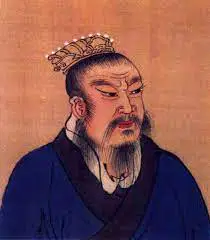
Which of the following phrases describes Daoism?
Give harsh punishments to those who disobey laws.
Lead by example.
Rule as little as possible.
Set clear laws.
Which of these describes a ruler who followed Legalism?
a ruler who believed in few rules and laws
a ruler who allowed people to write their own laws
a ruler who severely punished people who break laws
a ruler who ruled as little as possible
The Zhou claimed that they had the Mandate of Heaven, which they believed was
the majority of votes in an election.
permission from the people to rule.
a divine right to rule China.
a set of laws written by the first Zhou king.
According to the Mandate of Heaven, what was the meaning of disasters such as earthquakes and floods?
They meant that a dynasty needed to spend more money on the environment.
They meant that taxes would be raised to pay for disaster relief.
They meant that Heaven no longer gave a dynasty the right to rule.
They meant that Heaven was telling a dynasty to protect its people.
According to Confucianism, society worked well when
those in authority were kind, honest, wise, and faithful.
people followed basic rules in their relationships with others.
people respected and obeyed those who were above them in status.
all of the above
According to Daoism, people gained happiness by
following many laws and social rules.
working to achieve fame.
living in harmony with nature.
having many possessions.
According to the Dao De Jing, the best rulers were those who
ruled the least.
passed many laws.
governed harshly.
controlled forces of nature.
According to Hanfeizi, what should rulers do to create peace and order?
share power with the people
have absolute power
create few laws
live in agreement with the way of nature
Which belief system wanted the government to stay out of people's lives?
Confucianism
Daoism
Legalism
Which belief system believed that people were bad by nature and needed to be controlled?
Confucianism
Daoism
Legalism
"The universe is a balance of opposites" is a belief of which system?
Confucianism
Daoism
Legalism
Which philosophy would be placed on the left side of the liberty-order scale?
Confucianism
Legalism
Daoism
Which philosophy would you place in the middle of the liberty-order scale?
Legalism
Confucianism
Daoism
Which philosophy would you place on the right side of the liberty-order scale?
Daoism
Confucianism
Legalism

