
NEW
Font size
 Worksheets
Road to Revolution
Total questions: 58
Worksheet time: 44mins
To refuse to do business with a person, group, or company.
To trade goods illegally.
Store
Cannister
Swindle
Smuggle
The First Continental Congress called for INDEPENDENCE.
True
False
The head Monarch during the Road to Revolution.
King James I
King George III
Queen Elizabeth I
Lord Walton III
What act taxed almost all printed materials in the colonies?
Sugar Act
Intolerable Acts
Stamp Act
Quartering Act

What event is this artwork depicting?
French and Indian War
American Revolutionary War
Boston Massacre
Join Or Die Cartoon
"I am not a Virginian, I am an American" implies that....
Colonies are more important than country.
The Crown should rule the colonies.
People don't like Virginia as a colony.
A unite country is more important than individual colonies.
The Proclamation of 1763 declared that colonial settlers could not go __________________ of the Appalachians Mountains.
North
South
East
West
What is another name for the coercive acts (laws that punished Massachusetts)?
Intolerable Acts
Quartering Acts
Committee of Correspondence
Sons of Liberty
Once blood was shed on the battlefields of Massachusetts, delegates decided to meet in Philadelphia to debate the ideas of reconciliation and independence. This group of delegates was known as the _____________.
1st Continental Congress
Congressional Congress
2nd Continental Congress
House of Burgesses
What British General ordered troops to march on Lexington and Concord?
Gage
Walton
Burgoyne
Sanford
Name 3 items that King George III placed taxes on...
Tea
Sugar
All paper products
All of the Above
Who created the image known as the Bloody Massacre?
William Shepard
Paul Revard
Paul Revere
Paul Simon
Taxes on all imported goods such as paint, paper, lead, glass, and tea.
Tea Act
Stamp Act
Intolerable Acts
Townshend Acts
Approx. how many British soldiers were killed or wounded at the battle of Concord?
200
300
400
150
Imposed as a punishment for the Boston Tea Party
Tea Act
Stamp Act
Intolerable Acts
Townshend Acts
Dressed up as Mohawk Indians and dumped tea in the Boston Harbor
Loyalists
Patriots
Sons of Liberty
Parliament
Who would have said this?
We must organize ourselves as the Sons of Liberty and protest the actions of the British!
John Adams
Samuel Adams
Byron Leftwitch
Kelsey Cunningham of Massachusetts
A cause of the Boston Tea Party
Stamp Act
Intolerable Acts
Tea Act
Townshend Acts
According to Thomas Paine, how did trading policies create tension between Great Britain and the colonies?
By introducing indentured servitude to the middle colonies
By requiring colonists to enlist in the military
By limiting the amount of farmland each colonist could have
By preventing colonists from buying and selling products with most other foreign countries
Influenced by the lack of voice in Parliament, this man started the Sons of Liberty.
John Adams
Samuel Adams
This Boston lawyer defended the soldiers after the Boston Massacre.
John Adams
Samuel Adams
Ben Franklin
George Washington
"Don't fire unless fired upon. If they want a war, let it begin here!" This was said at...
The Boston Massacre
Concord
Concord and Boston
Lexington
Who would have said this?
Those bumpkins in America deserve no voice among us!
A Virginia resident farmer
A member of the British Navy
A member of the British royalty
A member of the British Parliament
What were the first battles of the Revolutionary War?
Open defiance of authority
Boycott
Rebellion
Repeal
Propaganda
Who would have said this?
Men, to your posts! We must hide the cache of weapons before the British arrive!
A minuteman in Concord
A member of Parliament
A loyalist in Boston
A business owner in Philadelphia.
Which of the following was NOT covered under the Coercive/Intolerable Acts of 1774?
Tax on paper goods
British troops ordered to live among the colonists
Ban on town meetings
Close harbor until all tea is paid for from the Boston Tea Party
A representative...
Delegate
Spokesperson
Keynote speaker
Bumpkin
At the First Continental Congress, the delegates vowed to support...
George Washington
People in Massachusetts
Soldiers in the militias
Declare war on Britain
The First Continental Congress brought together delegates from the colonies. There, they viewed themselves as...
Americans
Leaders
Pennsylvanians
Continentals
Abuser of power...King George III was viewed as this.
Monarch
Obtuse
Tyrant
Dictator

This was the natural boundary established by the Proclamation of 1763.
Pontiac's Line
French and Indian Line
Quebec Mountains
Appalachian Mountains
Who was the author of "The Plain Truth"?
Benjamin Franklin
Thomas Paine
King George III
James Chalmers
The primary author of the Declaration of Independence was...
Samuel Adams
Thomas Jefferson
John Adams
Robert Frost
According to the Declaration of Independence, all people are endowed by their creator with certain...
unalienable rights
responsibilities
privileges
rights and responsibilities
"Everything that is right and reasonable pleads for separation. Tis' time to part!" was said by...
James Chalmers
Benjamin Franklin
Thomas Paine
Samuel Adams
All 56 signers of the Declaration of Independence committed the crime of...
murder
insincerity
insubordination
treason
The Battle of Bunker Hill was actually fought on...
Breeds Hill
Charleston Hill
Boston Hill
Concord Hill
Although the British were able to win the battle of Bunker Hill, you can consider the American loss as a _________________ victory for the Americans.
hard fought
moral
fundamental
irregular
Stong economy
British Weakness
British Strength
American Strength
American Weakness
Knowledge of the land
British Strenght
British Weakness
American Strength
American Weakness
The 2nd Continental Congress appointed ___________ to lead the new continental army.
Paul Revere
General Gage
General Howe
George Washington
A volunteer fighting group that is organized to defend their community is a...
Militia
Platoon
Brigade
Army
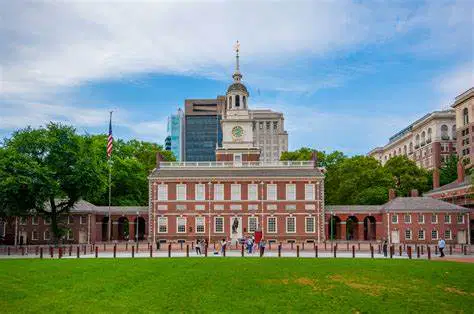
Location of the 2nd Continental Congress and the signing of the Declaration of Independence.
Philadelphia State House
The Old North Church
Independence Hall
Liberty Center
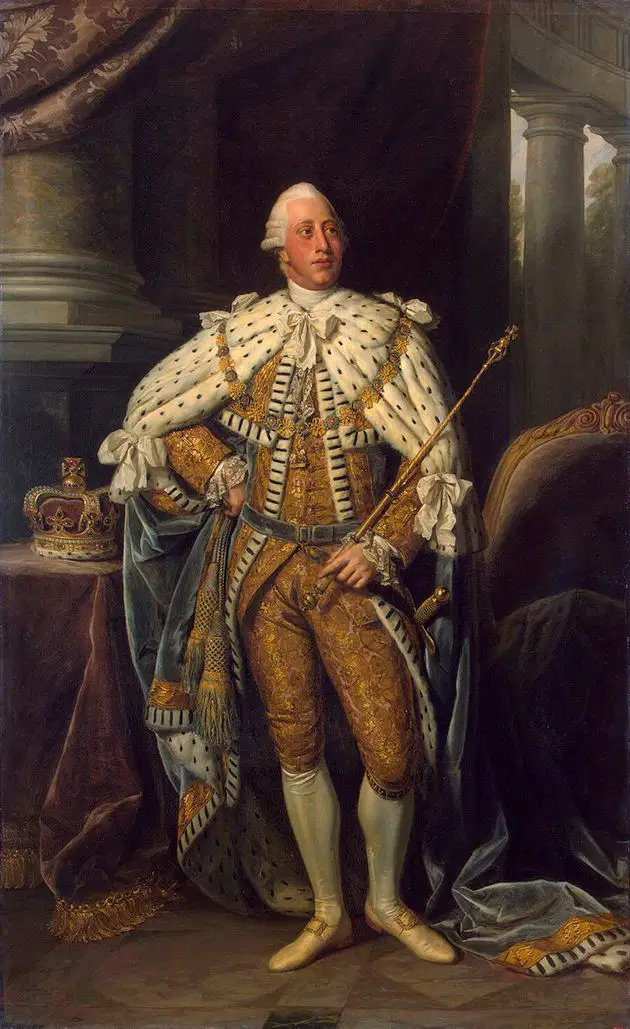
Viewed as a tyrant by 1/3 of colonial Americans.
King Henry VIII
Louis IX
King James I
King George III
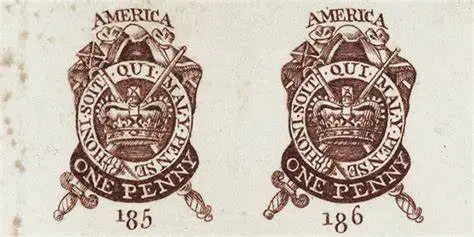
What act required these when purchasing printed materials?
Townshend Acts
Stamp Act
Quartering Activity
Intolerable Acts
Why did Thomas Paine write Common Sense?
To convince Americans to fight for independence against the British
Ask for peace
Support reconciliation with Great Britain
Ask for a loan to pay back debt.
The unalienable rights stated in the Declaration of Independence are...
Life, Liberty, and Justice
Liberty, Justice, and the American Way
Life, Liberty, and the Pursuit of Prosperity
Life, Liberty, and the Pursuit of Happiness
To take away or remove.
Peal
Repeal
Revenge
Rebel
The First Continental Congress urged members to ...
Return back to their colonies to prepare for an upcoming war.
To settle back in their colonies and wait for instructions from Congress.
Attack British soldiers.
Support all laws of the British to support them.
The First Continental Congress' main goal was to...
Punish people in Boston.
Support British policy.
Protect Boston and have the Intolerable Acts repealed.
Wait to see what King George III wants them to do.

