
 Worksheets
Matter & Its Interactions
Total questions: 88
Worksheet time: 1hrs 28mins


Which term describes when a substance is changed from a liquid to a gas?
Condensation
Evaporation
Filtration
Precipitation
Tim has two beakers of liquid at room temperature. He places both beakers on a hot plate. The liquid in Beaker A boils before the liquid in Beaker B.
Which statement explains why the liquid in Beaker A boils before the liquid in Beaker B?
Beaker A has a lower boiling point
Beaker B has a higher freezing point
The liquid in Beaker A has less mass
The liquid in Beaker B has a lower density
Sand and salt are placed in the bottom of a beaker filled with water. The beaker is heated, and the water is stirred.
What will happen to the salt and sand?
The sand and salt will settle to the bottom.
The sand and salt will dissolve in the water
The salt will dissolve, and the sand will settle
The sand will evaporate, and the salt will dissolve.
Sherry wants to dissolve rock salt in a glass of water at room temperature.
Which process will speed up the time it takes for the salt to dissolve?
Add hot water to the glass
Add cold water to the glass
Pour the water into a larger container
Pour the water into a smaller container
A mixture of sand, salt, and iron fillings is stirred into a beaker of water. The mixture is then allowed to settle.
What will separate the iron fillings from the mixture?
Magnetism
Filtration
Flotation
Sifting

Sammy poured oil and water into a glass and mixed the liquids. He let the liquids sit in the glass for 8 hours and the 2 liquids separated as shown in the picture.
What happened to the 2 liquids?
The oil is more dense than water, and it dissolved in the water
The oil is less dense than water, and it dissolved in the water
The oil is more dense than water and cannot dissolve in water
The oil is less dense than water and cannot dissolve in water
Colton and his brothers put some raisins, hazelnuts, almonds, and peanuts in a bowl to make a snack for their movie. What does this snack represent?
a solution
a new element
a new compound
a mixture
Which is NOT a method used for separating mixtures?
sifting
flotation
filtration
dissolving
Which of the following represent physical changes?
fruit ripening
milk turing sour
chopping wood
mixing food color and water
melting butter
Which of the following represent chemical changes?
chopping wood
milk turning sour
breaking a pencil
fruit ripening
roasting a marshmellow
Carrie and Amanda live on a farm and do lots of chores to help their parents.
Which chore is an example of a chemical change?
chopping wood
burning leaves
boiling water
cutting the grass
David added 15 g of ice to a 55 g container. After the ice melted, what was the total weight of the container?
50 g
15 g
55 g
70 g

Lisa was at the fair and noticed people walking around with these 8 differently shaped balloons filled with helium gas.
Which is the best conclusion Lisa could make about gases after she observed these balloons?
Gases take the shape and size of their containers
Gases have definite shapes and sizes
Gases have definite shapes and volumes
Gases' sizes and shapes do not change

A scientist uses an instrument to study the small particles in a piece of matter. The diagram shows what the scientist sees.
What state of matter is the scientist most likely observing?
gas
solid
liquid
vapor

A scientist uses an instrument to study the small particles in a piece of matter. The diagram shows what the scientist sees.
What state of matter is the scientist most likely observing?
gas
solid
liquid
vapor

A scientist uses an instrument to study the small particles in a piece of matter. The diagram shows what the scientist sees.
What state of matter is the scientist most likely observing?
gas
solid
liquid
plasma
dissolve
facts or information, gathered by observation or experimentation
a plan you make before making or building something
to break down and mix evenly with a liquid in such a way that it isn't possible to tell it apart from the liquid anymore
an experiment carried out to answer a testable question, in which only one variable is changed at a time
solution
something seen or noticed
a characteristic of something, such as texture, shape, or color
the mixture that is formed when a solute has dissolved in a solvent
a form in which material can exist, such as solid, liquid, or gas

What is happening?
Condensation
Evaporation
Freezing
Which one has the most energy?
A chair
Orange juice
Air in a balloon


Angelik has three basketballs that all have the same mass. She knows that one basketball has a mass of 5 grams. To find out the mass of all of her basketballs, she adds them together:
5+5+5= 15 grams
Why is this correct?
The mass of the group is always EQUAL to the sum of each object or part.
The mass of the group is always LESS than the sum of each object or part.
The mass of the group is always MORE than the sum of each object or part.
The mass of the group is always GREATER than the sum of each object or part.

Jayden has a banana. He uses a balance and measures the mass of the banana to be 50 grams. Jayden cuts the banana into 5 pieces. He puts the 5 pieces on the balance.
What will Jayden most likely write down as the total mass of the 5 pieces of banana?
50 grams
10 grams
5 grams
100 grams
Which object has more mass?


What does salt, lemonade, helium, and rocks have in common?
They are all in the same state of matter.
They are all soluble.
They are all made of atoms.
They all went through a chemical change.
Which of the following are correct? Select all.
To change from a solid to a liquid, I must use evaporation.
To change from a liquid into a gas, I must use evaporation.
To change from a liquid into a gas, I must use condensation.
To change from a solid into I liquid, I must use heat to melt it.
To change from a gas into a liquid I must use condensation.
The temperature at which a liquid turns to a gas is
called the freezing point
called the boiling point
100 degrees Celsius
the same for an amorphous or a crystalline solid

In the image, the same atoms are REARRANGED during a chemical reaction, illustrating the Law of Conservation of Matter. Which below correctly states this law?
Matter is created but not destroyed.
Matter is destroyed but not created.
Matter is never created or destroyed, just changed.
Matter cannot change form.

A mixture in which the composition is NOT uniform throughout is called a _____ mixture.
Heterogeneous
Homogeneous
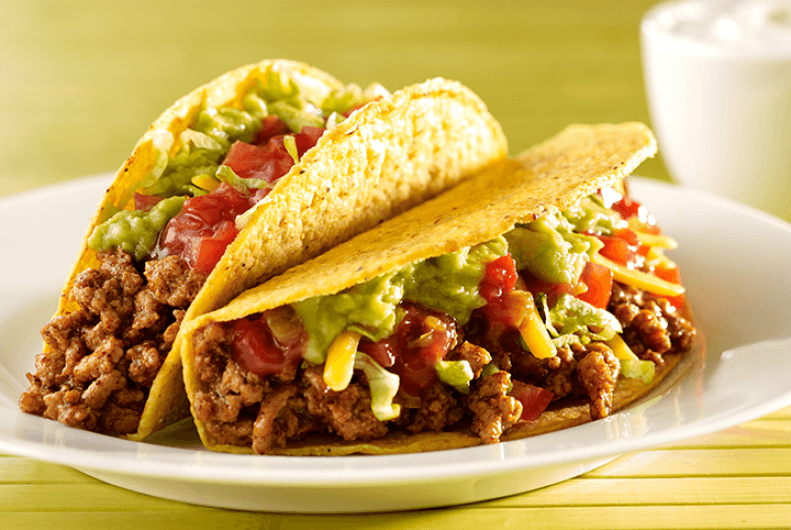
A Taco is an example of a
Homogeneous Mixture
Heterogeneous Mixture
Mrs. Scobel begins grading papers. She writes on it with a marker. Then, she accidentally tears the paper in half. So, she ends up crumpling the paper into a ball and throws it away. Which are examples of physical changes?
Writing with marker
Tearing it in half
Crumpling it up
All of the above
What is the definition of a chemical change?
Neither the appearance of a substance or its identity change
The appearance of a substance changes but its identity does not
A new substance is formed and the change is irreversible
No new substance is formed
Is a change in size evidence for a physical or chemical change?
Physical Change
Chemical Change
Is a change in state (solid, liquid, or gas) evidence for a physical or chemical change?
Physical Change
Chemical Change
True or False: Chemical changes cannot be reversed.
True
False
True or False: Baking a cake is an example of a chemical change.
True
False
Is gas being released a sign of a physical or chemical change?
Physical Change
Chemical Change
Select all that are evidences of a chemical change.
Light Released
New Substance
Gas Released
Temperature Change
State Change
Sugar and water
Homogeneous
Heterogeneous
Oil and water
Homogeneous
Heterogeneous

Cookies and cream ice cream would be classified as
Homogeneous mixture
Heterogeneous mixture
8. What is the difference between a heterogeneous mixture and a homogeneous mixture?
You cant see the parts in a heterogeneous mixture, but you can in a homogeneous mixture.
You can see the parts in heterogeneous mixture, but you cant see them in a homogeneous mixture
When you have something that does not dissolve it is referred to as being
insoluble
a rock
a solid
a nail
The conservation of matter states that
all matter is made up of particles
the amount of matter changes in a closed system.
matter has weight and takes up space.
the amount of matter stays the same in a closed system.

When 25ml of sugar dissolves in 150ml of water,
what is the new weight of the solution?
175ml
100ml
125ml
25ml

An oreo cookie has a mass of 20 grams. It gets crushed into crumbs for a recipe.
What is the mass of the crumbs?
15 grams
25 grams
20 grams

If each letter cube has a mass of 3 grams, what is the total mass
of the cubes that spell out "cage"?
9 grams
20 grams
12 grams
3 grams

250 grams of iron and sand are separated
using a magnet to pull out the iron.
The mass of the sand is 150 grams.
What is the mass of the iron?
250 grams
it is impossible to determine
100 grams
150 grams
When ice melts, the water has the same _________ as the
temperature
state of matter
shape
mass

How are particles in a solid formed?
loosely packed
tightly packed together
very loosely packed


If reaction starts with 20g of reactants, it will produce ---
a total of 40g of product
a total of 10g of product
a total of 80 g of product
a total of 20g of product
Matter cannot be _______ or destroyed.
created
found
moved
bought

