
 Worksheets
Structure of Matter Pre Test Assessment
Total questions: 13
Worksheet time: 4mins
Name
Class
Date
1.

Which of these is the smallest particle to retain properties of an element?
a)
an atom
b)
a molecule
c)
a proton
d)
an electron
2.
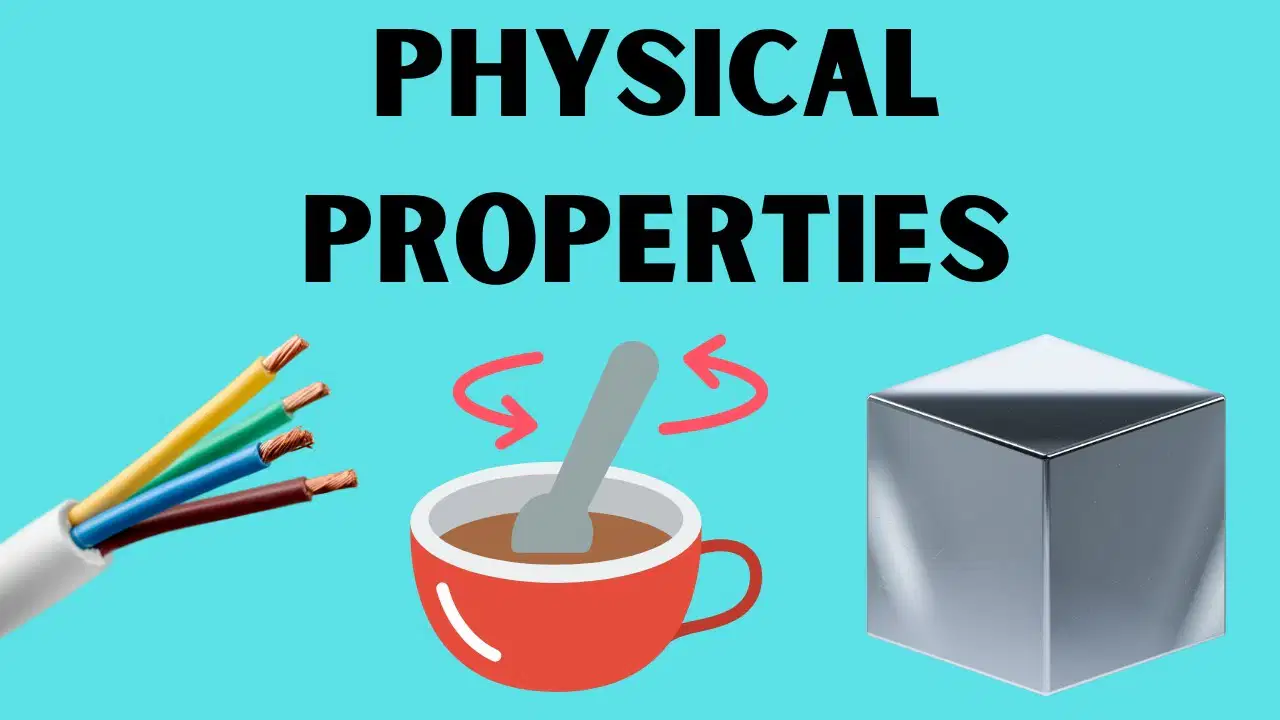
What makes physical properties different from chemical properties?
a)
physical properties appear only after a chemical change occurs
b)
physical properties relate to elements rather than compounnds
c)
physical properties describe elements in the solid state rather than in the liquid or gas state
d)
physical properties can be observed without attempting to change the identity of the substance
3.
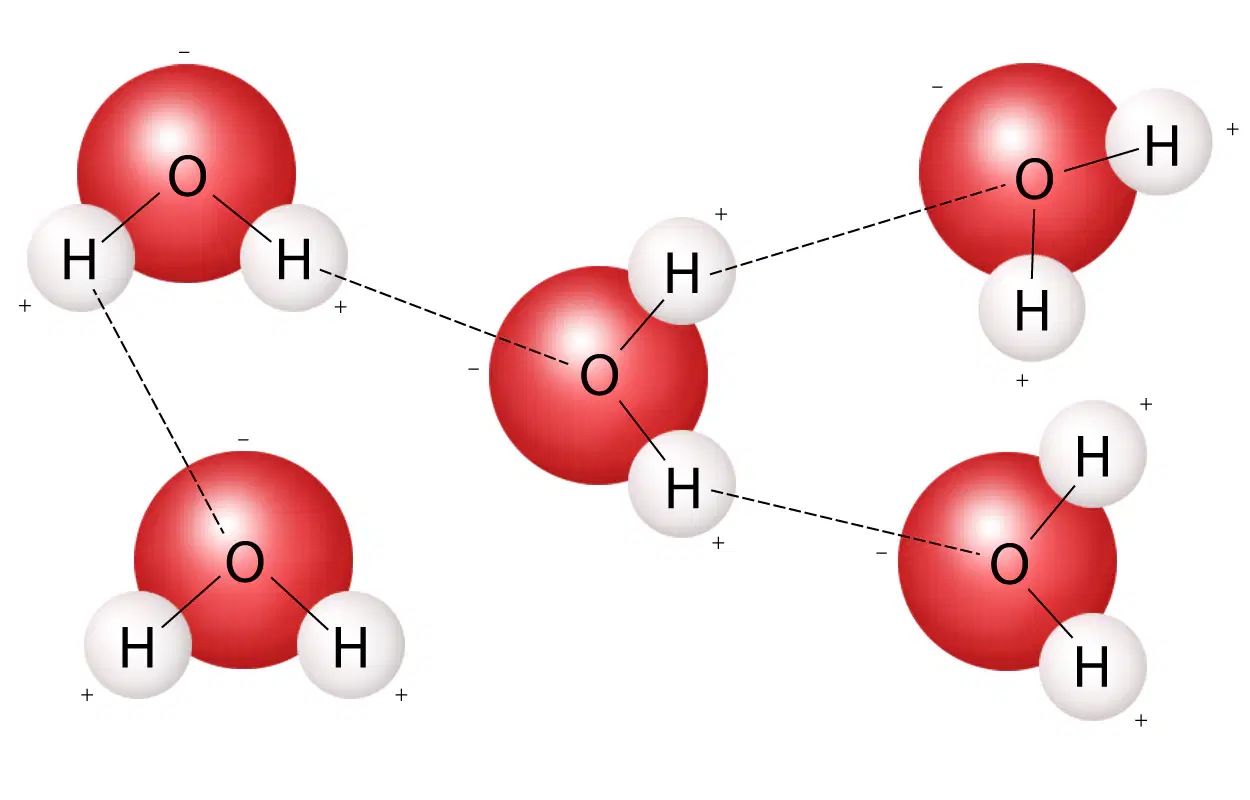
A water molecule is made up of one oxygen and 2 hydrogen atoms. Why is water considered a pure substance?
a)
Each water molecule is identical
b)
Water can be broken down by physical means
c)
Water molecules are made up of different types of atoms
d)
Water can be combined with other substances by physical means
4.

Each element has a unique name. How else can an element be represented?
a)
by its mass
b)
by its state of matter
c)
by its chemical symbol
d)
by an identification number
5.

Which of these substances is likely to be formed of particles with a repeating crystalline structure?
a)
salt
b)
glass
c)
honey
d)
nitrogen
6.
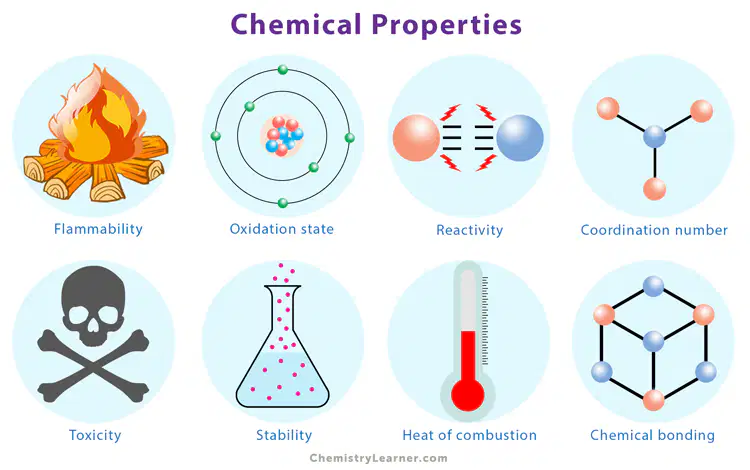
Which statement describes a chemical property of an object?
a)
The object is white in color
b)
The object has a powdery texture
c)
The object's density is 2.11 g/cm3
d)
The object reacts with acid to form water
7.
The following is info provided for 4 minerals: MINERAL 1 is FELDSPAR with a MASS (G) of 16 and a VOLUME (ml) of 4. MINERAL #2 is GALENA with a MASS of 9 and a VOLUME of 1. MINERAL #3 is GARNET with a MASS of 12 and a VOLUME of 3. MINERAL #4 is QUARTZ with a MASS of 10 and a VOLUME of 2. Based on this information, which mineral has the greatest density?
a)
feldspar
b)
galena
c)
garnet
d)
quartz
8.
Which statement describes a chemical property?
a)
A particular substance evaporates at 30 degrees celsius
b)
A 2 ft long metal bar has a mass of only 176 g
c)
A certain heavy metal turns to liquid at room temperature
d)
A metal is added to a beaker of water and the beaker explodes
9.

All of these statements about elements, atoms, and compounds are true except
a)
Compounds are smaller than atoms
b)
Atoms cannot be broken down into smaller substances
c)
Elements and compounds form the basis of all materials on Earth
d)
Elements consist of one type of atom and can combine to form compounds
10.
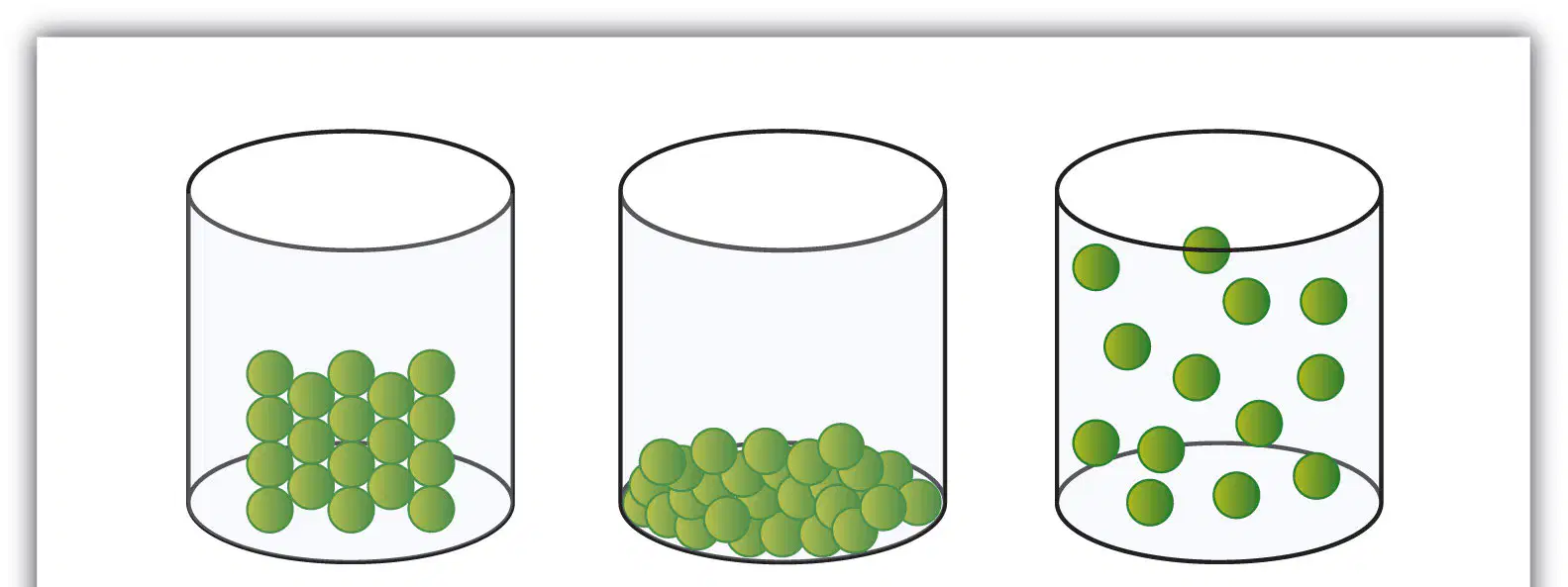
Which of the following describes objects that are formed of molecules very close together with little room to move or are made up of molecules with repeating crystalline patterns?
a)
colloid
b)
gas
c)
liquid
d)
solid
11.
Which of the following describes objects that are formed of molecules that can slide easily past each other?
a)
colloid
b)
gas
c)
liquid
d)
solid
12.
Which of these is a way in which elements and compounds are similar?
a)
Elements and compounds are both pure substances
b)
Elements and compounds are both listed on the periodic table
c)
Elements and compounds are both made up of different kinds of atoms
d)
Elements an compounds cab both be broken down by physical changes
13.
Which type of substance is always made up of 2 or more different types of atoms joined by chemical bonds?
a)
mixture
b)
element
c)
compound
d)
pure substance
100 %

