wayground logo

Free Printable Worksheets

NEW

Font size

S
M
L
XL
Worksheets

Unit 2: Road to Revolution and the Revolutionary War

Total questions: 53

Worksheet time: 37mins

Name
Class
Date
1.

What was the French and Indian War fought over?

a)
Cultural differences
b)

Territorial disputes with the Ohio River Valley

c)
Trade disputes
d)
Religious conflicts
2.

What did the Treaty of Paris 1763 do?

a)
The Treaty of Paris 1763 granted France control over Canada and all its territories in North America.
b)
The Treaty of Paris 1763 established a new trade agreement between France and Britain.
c)
The Treaty of Paris 1763 resulted in the independence of Canada from Britain.
d)
The Treaty of Paris 1763 ended the Seven Years' War and resulted in France ceding Canada and all its territories in North America to Britain.
3.

What was the Proclamation of 1763?

a)
A British law that encouraged American colonists to settle west of the Appalachian Mountains.
b)
A French law that prohibited American colonists from settling west of the Appalachian Mountains.
c)
A British law that allowed American colonists to settle anywhere in North America.
d)
A British law that prohibited American colonists from settling west of the Appalachian Mountains.
4.

What were the 3 parts of the Treaty of Paris 1763?

a)
France ceded Canada and all its territories east of the Mississippi River to Britain, France ceded Louisiana to Spain, and Spain ceded Florida to Britain.
b)
France ceded Canada and all its territories east of the Mississippi River to Britain, France ceded Louisiana to Britain, and Spain ceded Florida to France.
c)
France ceded Canada and all its territories east of the Mississippi River to Spain, France ceded Louisiana to Britain, and Spain ceded Florida to Britain.
d)
France ceded Canada and all its territories west of the Mississippi River to Britain, France ceded Louisiana to Britain, and Spain ceded Florida to Britain.
5.

What were the outcomes of the Albany Congress?

a)
The outcomes were the adoption of the Albany Plan of Union and the establishment of the idea of colonial independence.
b)
The outcomes were the adoption of the Albany Plan of Union and the establishment of the idea of British control over the colonies.
c)
The outcomes were the adoption of the Albany Plan of Union and the establishment of the idea of Native American alliances.
d)

The outcomes were the adoption of the Albany Plan of Union and the establishment of the idea of colonial unity - though the colonies did not accept it

6.

Who was the author of the Albany Plan of Union?

a)
George Washington
b)
Benjamin Franklin
c)
Thomas Jefferson
d)
John Adams
7.

What was the purpose of the Join or Die political Cartoon?

a)
To advocate for British rule over the American colonies
b)
To promote division among the American colonies
c)
To encourage unity among the American colonies
d)
To discourage communication and cooperation among the American colonies
8.

What was the act that lowered the tax on Molasses to try to convince the colonists to pay it?

a)
Sugar Act
b)
Townshend Acts
c)
Stamp Act
d)
Tea Act
9.

What Act required colonists to provide housing, food and supplies for British Soldiers in the colonies?

a)
Quartering Act
b)
Food Act
c)
Supply Act
d)
Housing Act
10.

What Act taxed paper in the Colonies and was heavily protested and eventually repealed?

a)
Sugar Act
b)
Stamp Act
c)
Tea Act
d)
Townshend Acts
11.

What Act created a hidden tax on imported items from England?

a)
Tea Act
b)
Stamp Act
c)
Townshend Acts
d)
Sugar Act
12.

What Acts were put as a punishment for the citizens of Boston for the Boston Tea Party?

a)
Intolerable Acts
b)
Repressive Acts
c)
Punitive Acts
d)

Townshend Act

13.

Which group used violence to enforce colonial boycotts including using the Hillsborough Treat and tar and feathering?

a)
Loyalists
b)
Daughters of Liberty
c)
Patriots
d)
Sons of Liberty
14.

Which group peacefully protested and participated in boycotts using pamphlets and writings?

a)
Prohibition Movement
b)

Women for Freedom

c)

Daughters of Liberty

d)
Women's Suffrage Movement
15.

Propaganda was heavily used after this event in March of 1770, it was a conflict between Patriots and British soldiers in Boston.

a)
Boston Riot
b)
Boston Rebellion
c)
Boston Uprising
d)
Boston Massacre
16.

What is Propaganda?

a)
A form of communication used to manipulate or influence an audience's beliefs or actions.
b)
A type of advertising
c)
A method of educating the public
d)
A form of entertainment
17.

Which event was a protest on the Tax on Tea where men dressed up as Mohawk Natives and dumped crates of tea in the harbor

a)
Boston Tea Party
b)
Mohawk Tea Protest
c)
Harbor Tea Dumping
d)
Tea Rebellion
18.

What was the Continental Congress?

a)
A gathering of European leaders
b)
A convention of delegates from the Thirteen Colonies
c)
A trade agreement between the Thirteen Colonies
d)
A meeting of Native American tribes
19.

Where did the Continental Congress meet?

a)
New York City, New York
b)
Boston, Massachusetts
c)
Philadelphia, Pennsylvania
d)
Washington, D.C.
20.

What was the Olive Branch Petition?

a)
The Olive Branch Petition was a declaration of war against Britain by the American colonists.
b)
The Olive Branch Petition was a peace treaty signed between Britain and the American colonists.
c)
The Olive Branch Petition was a document written by British officials to declare their surrender to the American colonists.
d)
The Olive Branch Petition was a final attempt by the American colonists to avoid going to war with Britain during the American Revolution.
21.

What was basically a break up letter from the 13 Colonies to England?

a)
Constitution
b)
Bill of Rights
c)
Magna Carta
d)
Declaration of Independence
22.

Who was the primary Author of the Declaration of Independence?

a)
George Washington
b)
Benjamin Franklin
c)
John Adams
d)
Thomas Jefferson
23.

What did the Committee of Five do?

a)
They wrote the Constitution.
b)
They negotiated the Treaty of Paris.
c)

They wrote the Declaration of Independence.

d)
They established the Bill of Rights.
24.

The concept of life, liberty and the pursuit of happiness is called what?

a)
Bill of Rights
b)
Constitution
c)
Emancipation Proclamation
d)

Unalienable Rights

25.

What is the significance of July 4th, 1776?

a)
United States gained its independence from France
b)
United States declared war on Great Britain
c)
United States signed a peace treaty with Great Britain
d)
United States declared its independence from Great Britain
26.

Who wrote "Common Sense" and "American Crisis"?

a)
George Washington
b)
Benjamin Franklin
c)
John Adams
d)
Thomas Paine
27.

What did Common Sense do?

a)
Common Sense advocated for American independence from Britain.
b)
Common Sense supported British rule in America.
c)
Common Sense called for a monarchy in America.
d)
Common Sense promoted British colonialism in America.
28.

Why did George Washington read Common Sense to the Continental Army?

a)
To inspire and motivate the Continental Army
b)
To teach the Continental Army military tactics
c)
To entertain the Continental Army during their downtime
d)
To educate the Continental Army on the principles of democracy
29.

What were the conditions of the Valley Forge encampment?

a)
Mild and relaxing
b)
Pleasant and enjoyable
c)
Comfortable and easy
d)
Harsh and challenging
30.

What did Von Steuben do for the Continental Army at Valley Forge?

a)
He trained and drilled the Continental Army.
b)
He designed the uniforms for the Continental Army.
c)
He served as a spy for the British.
d)
He provided medical care for the soldiers.
31.

The Battle of Saratoga was known as the ______ for the Revolutionary War

a)
decisive moment
b)
end point
c)
starting point
d)
turning point
32.

Why did the Proclamation of 1763 anger colonists?

a)

It stopped them from moving west across the Appalachian Mountains

b)
It restricted trade with Native American tribes.
c)
It granted more power to the colonial governors.
d)
It increased taxes on imported goods.
33.

The Patriots storage of weapons in Massachusetts resulted in the....

a)

Battle of Bunker Hill

b)
World War II
c)

Battle of Trenton

d)

Battle of Lexington and Concord

34.

What battle is this quote describing "Shot heard around the world"

a)
Battle of Bunker Hill
b)
Battle of Lexington and Concord
c)
Battle of Gettysburg
d)
Battle of Waterloo
35.

What famous quote from Bunker Hill helped the American defenders?

a)
Don't fire until you see the whites of their eyes.
b)
Shoot first, ask questions later.
c)
Fire at will!
d)
Don't shoot until you see the red of their coats.
36.

Why did the Continental Army cross the Delaware River for the Battle of Trenton?

a)
To negotiate a peace treaty with the Hessian troops
b)
To retreat from the advancing British forces
c)

To ask for help from a nearby town

d)
To launch a surprise attack on the Hessian troops stationed in Trenton, New Jersey.
37.

What was the Battle of Yorktown?

a)
A naval battle between the American and British fleets during the War of 1812.
b)
A battle fought between the American and British armies during the Civil War.
c)

The last battle of the Revolution fought between the Continental Army and the French VS. The British Redcoats and Hessians

d)
A failed attempt by the American forces to capture the city of Yorktown during the American Revolutionary War.
38.

What is Traditional Warfare?

a)
The use of unconventional military tactics and weapons to engage in combat.
b)
The use of diplomatic negotiations and peace treaties to resolve conflicts.
c)
The use of economic sanctions and trade restrictions to weaken the enemy.
d)

The use of conventional military tactics and weapons to engage in combat. Fought in an open field in strict lines

39.

What is Guerilla Warfare?

a)
A strategy that focuses on diplomatic negotiations and peaceful resolutions.
b)
A form of irregular warfare using tactics such as ambushes and hit-and-run attacks.
c)
A type of warfare that involves large-scale battles and organized military units.
d)
A method of warfare that relies heavily on the use of nuclear weapons.
40.

After what Battle did the French decide to ally with the Continental Army/United States?

a)
Battle of Trenton
b)
Battle of Bunker Hill
c)
Battle of Yorktown
d)
Battle of Saratoga
41.

How did the French support the Revolutionary War Effort?

a)

They gave supplies to the Native Americans.

b)

They sent troops to fight alongside the British forces.

c)
They provided intelligence and strategic support.
d)

They provided military assistance, financial aid, weapons and supplies.

42.

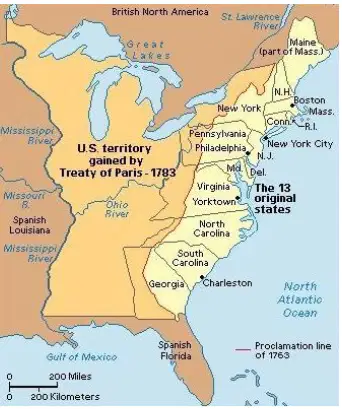
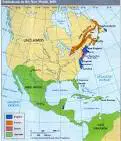
Which Map shows the new borders of the United States after the Treaty of Paris 1783?

a)

b)

c)

43.

Which founding father accidentally started the French and Indian War and eventually became the Commander In Chief of the Continental Army during the Revoltuionary War?

a)
Benjamin Franklin
b)
George Washington
c)
John Adams
d)
Thomas Jefferson
44.

Who was the King of England during the Revolutionary War?

a)

King John

b)

King Henry

c)
King George IV
d)
King George III
45.

Who created the Albany Plan of Union, drew the Join or Die Political Cartoon, and was one of the Committee of Five who wrote the Declaration of Independence?

a)
Benjamin Franklin
b)
John Adams
c)
Thomas Jefferson
d)
George Washington
46.

Who was the leader of the Sons of Liberty in Boston?

a)
John Adams
b)
Thomas Jefferson
c)
Samuel Adams
d)
George Washington
47.

Who was one of the leaders of the Daughters of Liberty who wrote pamphlets encouraging participating in the colonial boycotts and plays ridiculing british officials?

a)
Abigail Adams
b)
Martha Washington
c)
Betsy Ross
d)
Mercy Otis Warren
48.

Who wrote to her husband reminding him to "Remember the ladies...." as the Second Continental Congress met?

a)
Dolley Madison
b)
Abigail Adams
c)
Eleanor Roosevelt
d)
Martha Washington
49.

Who was the first killed at the Boston Massacre and often called the first casualty of the American Revolution

a)
John Adams
b)
Paul Revere
c)
Samuel Adams
d)
Crispus Attucks
50.

Which Patriot represented the British Soldiers at their murder trials after the Boston Massacre and was also a part of the Committee of Five who wrote the Declaration of Independence

a)
George Washington
b)
Benjamin Franklin
c)
John Adams
d)
Thomas Jefferson
51.

This man gets branded a "turncoat" or a traitor for his actions against the Continental Army

a)
John Adams
b)
George Washington
c)
Thomas Jefferson
d)
Benedict Arnold
52.

Who is known as the Father of the US Navy?

a)
George Washington
b)
Thomas Jefferson
c)
John Paul Jones
d)
Benjamin Franklin
53.

Who was the Frenchman who came to help with the Revolutionary War?

a)
Louis XVI
b)
Jean-Jacques Rousseau
c)
Napoleon Bonaparte
d)
Marquis de Lafayette