
 Worksheets
Motion and Newton Practice
Total questions: 183
Worksheet time: 4hrs 5mins


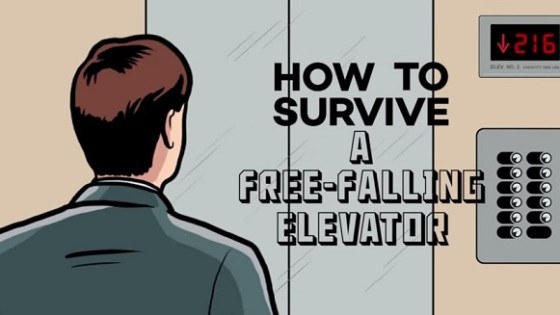
What is the force on a 1000 kg elevator that is falling freely at 9.8 m/sec2
102.04 n
9,800 n
980 n
103 n


The distance traveled by an object in a certain amount of time
any change in speed or direction
m/s2
m


running 10 m/s
running 10 km
running 10 m/s quickly
running 10 m/s south
Acceleration can be: _______________.
Choose all that apply.
Speeding up
Traveling at a constant speed
Slowing Down
Changing directions

A ____________ is a push or a pull on an object.
friction
force
magnet
gravity
What is the unit to MEASURE force?
Kilogram
Meter
Joule
Newton
This type of force resists motion between two surfaces that are pressed together
Gravity is a force that...
Pushes objects away from Earth
Pulls objects towards Earth
depends on where it is located
depends on temperature of the object
depends on the amount of matter in the object
What is inertia?
An object that is accelerating
Gravitational force
An objects tendency to stay at rest or in motion
An unbalanced force
Newton's First Law States........
Objects at rest tend to stay at rest unless acted on by an outside force.
Objects accelerate often and it is difficult to know when or how they will accelerate.
Objects in motion tend to stay in motion unless acted on by an outside force.
Both A & C
Newton's second law states.....
If there is more mass then there is more acceleration
An object at rest wants to be in motion
Force = Mass x Acceleration
The force exerted on an object is not related to mass or acceleration
Newton's third law states.......
For each action there is a larger reaction associated with it.
None of these choices
For each action there is an equal and opposite reaction.
For each action there is a smaller reaction associated with it.

Which law explains why the man continues moving after the bicycle is stopped by an obstacle?
Newton's 1st Law
Newton's 2nd Law
Newton's 3rd Law
Newton's Law of Gravity

Which law explains how much more force the larger rock will require to move than the smaller rock?
Newton's 1st Law
Newton's 2nd Law
Newton's 3rd Law
Newton's Law of Gravity
Which object has greater inertia?


If a person hits a softball and a bowling ball with the same force, will they both accelerate at the same rate? Why or why not? Explain your answer.
What net force is needed for a 1600 kg automobile to accelerate at a rate of 2.0 m/s2?
F=ma
A baseball accelerates downward at 9.8 m/s2. With negligible air resistance and a net force of 1.4 N, what is the baseball’s mass?
(Hint) F = ma
What force does a car’s engine exert in a car that has a mass of 3,000 kg and is accelerating at 2 m/s2 ?
F=ma
Newton's Second Law can be expressed as
v = d / t
F = ma
E = mc2
m1v1 = m2v2
What Unit do we Measure Force in?
Newtons
Volts
Kilograms
Joules
According to __________, the acceleration of an object is equal to the net force acting on the object divided by the object's mass.
Newton's First Law
Newton's Third Law
Inertia
Newton's Second Law
Newton's second law of motion describes acceleration as force divided by __________.
speed
inertia
mass
direction
F= mass * acceleration
A 20 kg bike accelerates at 10 m/s2. what is the force acting upon it?
25 Newtons
200 Newtons
20 Newtons
10 Newtons
An object of mass 10 kg is accelerated upward at 2 m/s2. What force is required?
20 N
5 N
2 N
0 N
When force is 20 N, mass is 5 kg, what is acceleration?
F = ma
25 m/s2
100 m/s2
5 m/s2
4 m/s2

Will it take more force to push an empty shopping cart or a shopping cart that is full?
The empty shopping cart
They will take the same amount of force
The full shopping cart
Depends on what is in the full shopping cart
An object accelerates 8 m/s2 when a force of 40 newtons is applied to it. What is the mass of the object?
4 kg
20 kg
0.2 kg
5 kg
Can you calculate force, mass, and acceleration of an object using Newton's 2nd Law of Motion?
Yes, it's easy for me.
No, I don't get it at all!
I kind of understand how to but could use some more practice :)

Are the forcing acting on the object balanced or unbalanced? The car is drifting.
balanced
unbalanced

Are the forces acting on the objects balanced or unbalanced? The truck takes a while to come to a complete stop.
balanced
unbalanced

Are the forces acting on the object balanced or unbalanced? Arnold and Helga take off from the start line
balanced
unbalanced

Are the forces acting on the object balanced or unbalanced? Mario is running fast but STEADY. His speed is 10 mi/hr.
balanced
unbalanced
Newton's 1st Law is also called the Law of ...
Friction
Inertia
Unbalanced forces
Newtons

How do you find the net force of this image.
Add up all the arrows
Add a green arrow and the orange arrow.
Subtract all the arrows.
Add the green arrows and subtract the orange arrow.

What is the Overall Net Force and which side has a greater Net Force?
12, Right
0, Both are balanced
12, Both are balanced
0, Left
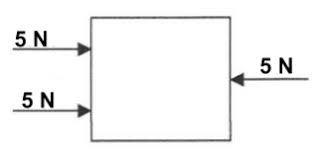
Is the Net Force balanced or Unbalanced?
Balanced
Unbalanced
8 N to the left , and 4 N to the right. Find the net force. Is this balanced
12 N Right No
12 N Right Yes
4 N Left Yes
4 N Left No
You and your friend, are playing tug of war. Your friend pulls with a force of 55 N, to the rights. You pull with a force of 65 N, to the left. What is the net force on the rope?
20 N, to the left
20 N, to the right
10 N, to the right
10 N, to the left


Any push or pull on an object...
force
velocity
inertia
momentum
An object of mass 10 kg is accelerated upward at 2 m/s2. What force is required?


In the picture, the balloon releases air in one direction and the car moves in the other direction. Which law explains this?
Newton's 1st Law
Newton's 2nd Law
Newton's 3rd Law
Newton's 9th Law
An object's resistance to changing motion is called...
gravity
acceleration
inertia
mass
Velocity measures ____________________ and _______________________.
speed and direction
inertia and friction
gravity and mass
speed and mass
Newton's First Law says that "Objects in motion stay in motion and objects at rest stay at rest unless..."
acted on by an unbalanced force.
gravity happens.
nothing else happens.
acted on by a balanced fore.
A rollercoaster heading down a hill is _____________.
at rest
slowing down
accelerating
velocity
A car traveling 65 mph is an example of its ________.
force
speed
acceleration
velocity

What will be the effect on the boy in the picture if the driver stops quickly?
Because of inertia he will remain in the same position.
He will be pushed back into the car seat.
He will move from one side of the car seat to the other.
He will move forward pressing against the seatbelt.
Which of Newton’s Laws explains a rocket’s movement during launch?
Newton's First Law of Motion
Newton's Second Law of Motion
Newton's Third Law of Motion
Newton's Fourth Law of Motion


The 2 objects have the same average speed over the 7 seconds. Why?
Both objects traveled the same distance in the same amount of time.
The graph for Object B is steeper at the end of the time.
Object B has sections of zero speed while Object A is never stopped
The final position on the graph for Object A is much greater.

What is happening in section C?
going down a hill
speed is increasing
speed is decreasing

What is occurring at E?
It is traveling at a constant speed
there is no change in motion

At which position is the object accelerating the fastest?
c
k
neither because they are slowing down, which isn't acceleration

How Far did object A travel from 0-7 seconds?
1 meter
2 meters
3 meters
4 meters
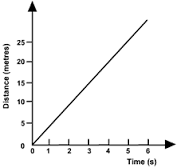


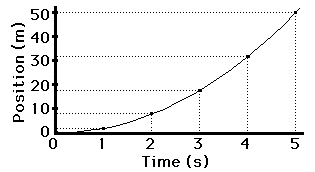

The object described by this graph is ---.
moving backward at constant velocity.
moving forward at constant velocity.
moving forward and slowing down.
moving backward and slowing down.

Which line shows an object moving with the highest velocity?
red
blue
green
purple

Which line shows the highest acceleration?
red
blue
green
purple
Which graph shows an object moving backwards?


Which graph shows an object getting faster?


The graph shows 3 tigers moving - which tiger is starting at the farthest point?
A
B
C
The graph shows 3 tigers moving - which direction is tiger A moving?
Constant Positive Velocity
Constant Negative Velocity
No motion, no velocity
The graph shows 3 tigers moving - which direction is tiger B moving?
Constant Positive Velocity
Constant Negative Velocity
No motion, no velocity
The graph shows 3 tigers moving - which direction is tiger C moving?
Constant Positive Velocity
Constant Negative Velocity
No motion, no velocity
The graph shows 3 tigers moving - what is happening at the intersection of tiger A and tiger B?
tigers stop moving togerher
tigers at the same place at the same time
tigers are colliding and changing direction

Rank these in order of FASTEST to SLOWEST.
B, A, D, C
D, A, B, C
C, D, A, B
A, C, D, B

Velocity is different from speed because...
Velocity is distance/time. Speed is displacement/time.
Velocity is speed in a certain direction and can be positive or negative.
Speed is velocity in a certain direction. Both can only be positive.
Velocity is how much speed changes over time.

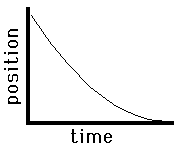
The slope of this position vs time graph is?
Constant
Increasing
Decreasing
0

The slope of this position vs time graph is...
Constant
Increasing
Decreasing
0
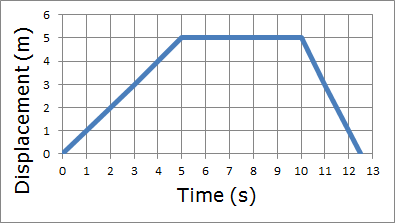
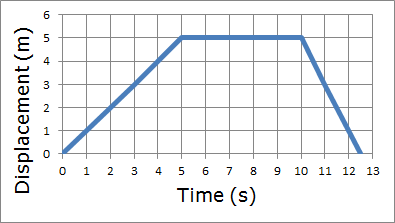

What relationship is this graph?
inverse
inverse-square
square
direct
A student completes an experiment but finds that there is no relationship between variable t and variable x. Which graph would the student have found?


From this graph, identify the independent variable (IV) and dependent variable (DV).
x and t are both dependent variables.
x and t are both independent variables.
x is the independent, t is the dependent variable.
t is the independent, x is the dependent variable.

The velocity as a function of time of a moving object is presented by the graph above. The object moves in one dimension and at time t = 0 x0 = 0. Which of the following graphs the best represents the displacement as a function of time for the same time intervals?


How many times does the object change the direction is it going in, based on this graph?
0
1
2
3

How many times is this object at rest?
0
1
2
3
Between which time intervals does the object speed up/increase velocity?(velocity moves away from 0 m/s point)
0-10 sec and 40-55 sec
15-30 sec and 40-55 sec
0-10 sec and 30-40 sec
15-30 sec and 30-40 sec
Between which time intervals does the object slow down/decrease velocity?(velocity move towards 0 m/s point)
0-10 sec and 40-55 sec
15-30 sec and 40-55 sec
0-10 sec and 30-40 sec
15-30 sec and 30-40 sec

An object moves at a constant velocity and then stops
An object speeds up and then moves with constant velocity
An object slows down and then stops
An object speeds up and then stops

An object moves with constant velocity and the speeds up
An object slows down, stops, and then moves at a constant velocity
An object slows down, stops turns around, and then speeds up
An object slows down, stops, and then speeds up without turning around

An object moves with constant velocity and the speeds up
An object slows down, stops, and then moves at a constant velocity
An object slows down, stops turns around, and then speeds up
An object slows down, stops, and then speeds up without turning around

An object is at rest initially and then slows down
An object is at rest initially and then speeds up
An object moves at a constant velocity and then slows down
An object moves at a constant velocity and then speeds up
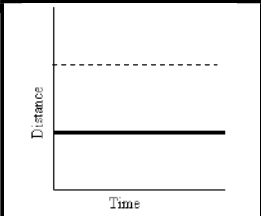
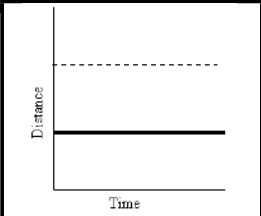
What does the solid line on this graph represent?
Constant speed
Acceleration
At rest
deceleration

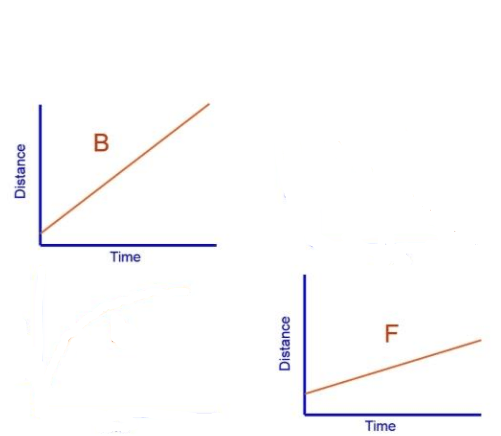


What is happening between 4 and 5 seconds?
The object is slowing down in a negative direction (away from origin).
The object is slowing down in a positive direction (away from origin).
The object is slowing down in a negative direction (back to origin).
The object is speeding up in a negative direction (back to origin).

Which answer best describes the motion above?
Moving forward at a constant speed
Moving forward with a positive acceleration
Moving forward with a negative acceleration
Which image shows an object speeding up in the backwards direction?


Which answer best describes the motion above?
Slowing down moving backwards
Slowing down moving forward
Speeding up moving backward
Slowing down moving forward
Which graph or graphs show an object slowing down, stopping, and then speeding up in the opposite direction? Select all correct answers


Which graph below matches this p-t graph?


Which graphs below represent a negative acceleration?


Which three graphs go together?


A + or - sloped line in quadrant 1 of a v-t graph is showing an object...
moving away from the origin
moving toward the origin
stopped
A + or - sloped line in quadrant 4 of a v-t graph is showing an object...
moving away from the origin
moving toward the origin
stopped
Which image shows an object slowing down in the backwards direction?
Which 2 graphs show a ball tossed up into the air and caught at the same height from which it was thrown?

Which v-t graph represents this motion?



Describe the object's motion after starting at 3 m.
The object slowed down for 2 seconds, then sped up for 3 seconds, then slowed again for 5 seconds.
The object moved to the right for 2 seconds, then moved to the left for 3 seconds, then moved right for 5 seconds and ended at 0m.
The object moved to the left for 2 seconds, then moved to the right for 3 seconds, then moved back to the left and ended at 0m.

Describe the motion of this object.
The object is standing still at 3 m.
The object is traveling at a constant velocity of 3 m/s to the right.
The object is moving at a constant velocity of 3 m/s to the left.

Describe the motion of this object.
The object starts by moving at 1 m/s to the right, then stops for 3 seconds, then it turns around and moves to the left at 0.75 m/s for another 3 seconds.
The object stays at 1 m for 3 seconds, then it jumps to 0 m and stays for 3 seconds. Finally is jumps to -0.75 and stays there for 3 seconds.
The object starts by moving at 1 m/s to the left, then stops for 3 seconds, then it turns around and moves to the right at 0.75 m/s for another 3 seconds.
Which of the following show an object moving in the negative direction?


Use the graph above and pick the most accurate description of the object's motion
object is moving at constant speed
object is speeding up
object is at rest
object is slowing down

Use the picture above to choose the most accurate description of the object's motion
object is at rest
object is slowing down
object is moving at a constant speed
object is speeding up

Use the picture to choose the most accurate description of the object's motion
object is moving at constant speed in the positive direction
object is speeding up in the negative direction
object is speeding up in the positive direction
object is slowing down in the negative direction

Use the picture above to choose the most accurate description of the object's motion
object is speeding up in the positive direction
object is slowing down in the positive direction
object is speeding up in the negative direction
object is slowing down in the negative direction

Which of the following velocity time graphs matches the position time graph above?


Which of the following velocity time graphs matches the position time graph above?

Which of the following velocity time graphs matches the position time graph above?

Displayed above is an acceleration time graph. Select all of the graphs below which match the acceleration displayed.


Which acceleration time graph matches the graph above?


Which acceleration time graph matches the graph above?

Which of the following graphs could match the acceleration time graph above?


Which of the following cases would lead to an object slowing down?
positive acceleration, positive velocity
positive acceleration, negative velocity
negative acceleration, positive velocity
negative acceleration, negative velocity
The slope of the velocity-time graph tells us the
acceleration
displacement
velocity
direction of travel
The slope of the position-time graph tells us the
acceleration
displacement
velocity
direction of travel

Which position time graph matches the velocity time graph displayed above?


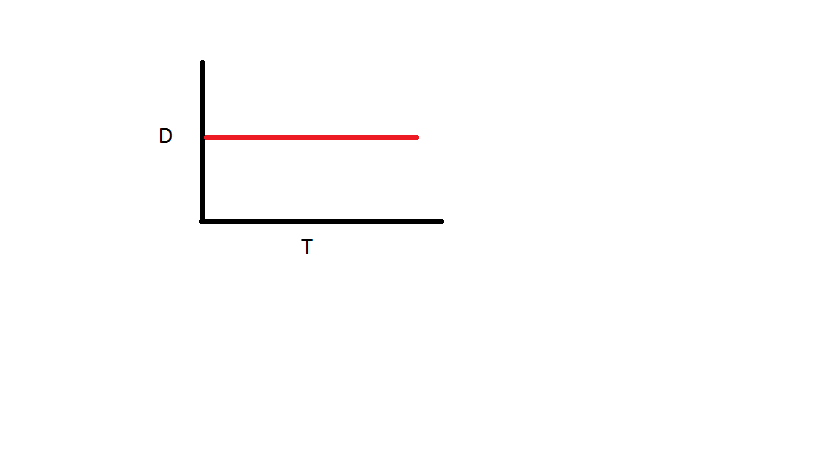
In the position vs. time graph, what type of motion does the line represent?
No motion
Constant velocity
Acceleration
Deceleration
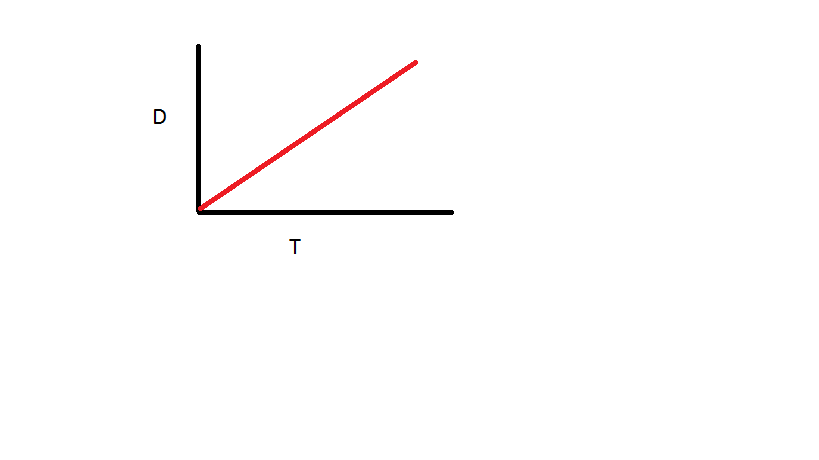
In the position vs. time graph, what type of motion does the line represent?
Acceleration
No motion
Deceleration
Constant Velocity

Select the graphs that would have the acceleration displayed above



