wayground logo

Free Printable Worksheets

Font size

S
M
L
XL
Worksheets

GIU GRADE 5

Total questions: 142

Worksheet time: 2hrs 31mins

Name
Class
Date
1.

Sometimes the heat just changes the size of the mineral crystals in this type of rock.

a)

Sedimentary

b)

Igneous

c)

Metamorphic

2.

This rock is formed in layers.

a)

Sedimentary

b)

Igneous

c)

Metamorphic

3.

Fossils are often found in this rock.

a)

Sedimentary

b)

Igneous

c)

Metamorphic

4.

This rock is changed by heat and pressure.

a)

Sedimentary

b)

Igneous

c)

Metamorphic

5.

These rocks usually have wavy lines.

a)

Sedimentary

b)

Igneous

c)

Metamorphic

6.

This rock may be formed from magma that hardens.

a)

Sedimentary

b)

Igneous

c)

Metamorphic

7.

This rock is often found near water.

a)

Sedimentary

b)

Igneous

c)

Metamorphic

8.

This rock may be formed from lava.

a)

Sedimentary

b)

Igneous

c)

Metamorphic

9.

You would most likely find this rock near a volcano.

a)

Sedimentary

b)

Igneous

c)

Metamorphic

10.

What kind of rock is "Granite"?

a)

Sedimentary

b)

Igneous

c)

Metamorphic

11.

What kind of rock is "Marble"?

a)

Sedimentary

b)

Igneous

c)

Metamorphic

12.

What kind of rock is "Limestone"?

a)

Sedimentary

b)

Igneous

c)

Metamorphic

13.

What kind of rock is "Sandstone"?

a)

Sedimentary

b)

Igneous

c)

Metamorphic

14.

What kind of rock is "Basalt"?

a)

Sedimentary

b)

Igneous

c)

Metamorphic

15.

This rock is usually made up of pieces of rock called sediments that have been pressed and cemented together.

a)

Sedimentary

b)

Igneous

c)

Metamorphic

16.

Noah was asked to describe the texture of a rock that he found to help identify it. Which statement best describes Noah's response?

a)

My rock has one shiny side.

b)

My rock is able to scratch talc.

c)

My rock is smooth.

17.

Lewis was asked to describe the luster of a rock from the playground. Which statement best describes Lewis' response?

a)

My rock is dull.

b)

My rock is smooth.

c)

My rock is able to scratch talc.

18.

In order to classify rocks, geologists can use what three things?

a)

Luster, shine, and texture

b)

Luster, texture, color

c)

Color, shine, texture

19.

A geologist was trying to classify a rock based on its characteristics. The geologist began to scratch the rock using other minerals and his fingernail. Which statement is true?

a)

Scratching a mineral helps determine its color.

b)

Scratching a mineral helps determine its luster.

c)

Scratching a mineral helps determine its hardness.

d)

Scratching a mineral helps determine its texture.

20.

What is the hardest mineral on the Mohs Scale?

a)

Diamond

b)

Talc

c)

Quartz

d)

Topaz

21.

The higher number minerals on the Mohs Scale can scratch lower number minerals.

a)

True

b)

False

22.

What is the softest mineral on the Mohs Scale?

a)

Talc

b)

Topaz

c)

Diamond

d)

Quartz

23.

Jacob is studying minerals. Which will NOT help him name the mineral?

a)

Size

b)

Hardness

c)

Color

d)

Luster

24.

Tommy found a mineral and wants to know what kind it is. What is one thing Tommy can check to help figure it out?

a)

Hardness

b)

Weight

c)

Temperature

d)

Length

25.

What is a geologist?

a)

Someone who studies trees

b)

Someone who studies the past life of dinosaurs

c)

Someone that works at a grocery store

d)

Someone that studies rocks and minerals

26.

What are the three types of rocks called?

a)

Igneous, Metamorphic, Sedimentary

b)

Quartz, Basalt, Halite

c)

Hard, soft, rough

27.

Rocks are made up of two or more minerals.

a)

True

b)

False

28.

Igneous rocks are often called volcanic rocks.

a)

True

b)

False

29.

Magma is melted rock ______ the earth's crust.

a)

above

b)

below

c)

in-between

30.

Lava is melted rock _____ the earth's crust.

a)

above

b)

below

c)

in-between

31.

Igneous rocks form whenever lava or magma _____.

a)

explodes

b)

heats up

c)

cools

32.

When magma cools underneath the earth's crust, _______ rocks are formed.

a)

intrusive

b)

extrusive

33.

When lava cools above the earth's crust, _______ rocks are formed.

a)

intrusive

b)

extrusive

34.

Igneous rocks ...

a)

have no layers

b)

can have air pockets

c)

can look like glass

d)

can have large crystals

35.

What are some words that describe texture?

Pick all that apply...

a)

smooth

b)

rough

c)

pretty

d)

bumpy

36.

Which words describe color?

Select all that apply...

a)

white

b)

black

c)

gray

d)

hard

37.

Which words describe luster?

Pick all that apply...

a)

mineral

b)

shiny

c)

dull

38.

Describe the rock...

(select all that apply)

a)

it is green

b)

it is smooth

c)

it is dull

d)

it is shiny

39.

What is a mineral?

a)

the center of the moon

b)

a rock that has been changed by heat

c)

a rock that has been changed by pressure

d)

a solid object that has never been alive

40.

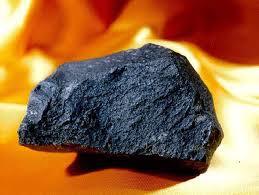
Describe the rock...

(select all that apply...)

a)

smooth

b)

black

c)

dull

d)

bumpy

41.

Describe this rock...

(select all that apply)

a)

sharp

b)

yellow

c)

purple

d)

shiny

42.

Which picture does NOT show a mineral being used?

a)
b)
c)
d)
43.

How is this mineral being used?

a)

you write with it

b)

you eat it

c)

you build with it

d)

you make jewelry with it

44.

Which is NOT a mineral being used?

a)
b)
c)
d)
45.

If you kept this rock on a table in your bedroom, would it change to a different type of rock in a year?

a)

yes, it will change

b)

no, it will not change

46.
What are the 3 major types of rocks?
a)
Igneous, Metamorphic, Sedimentary
b)
Metamorphic, Igneous, Cementation
c)
Brown, Red, Gray
d)
Streak, Hardness, Breakage
47.
This rock was formed by smaller pieces of rock that settled at the bottom of a lake millions of years ago. What type of rock is this?
a)
Sedimentary
b)
Igneous
c)
Metamorphic
48.
This rock was found near the mouth of a volcano. What type of rock is this?
a)
Sedimentary
b)
Igneous
c)
Metamorphic
49.
This rock was formed when molten rock cooled into a solid. What type of rock is it?
a)
Igneous Rock
b)
Metamorphic Rock
c)
Sedimentary Rock
50.
Which type of rock is formed from INTENSE heat and pressure?
a)
igneous
b)
sedimentary
c)
metamorphic
51.
Extreme Heat and Pressure creates a _________ rock.
a)
Igneous
b)
Metamorphic
c)
Sedimentary
d)
Mineral
52.
This rock was molten magma that slowly cooled under the ground. What type of rock is this?
a)
Sedimentary
b)
Igneous
c)
Metamorphic
53.
The cooled and hardened magma from volcanoes form what rocks?
a)
igneous
b)
sedimentary
c)
metamorphic 
d)
fossils
54.

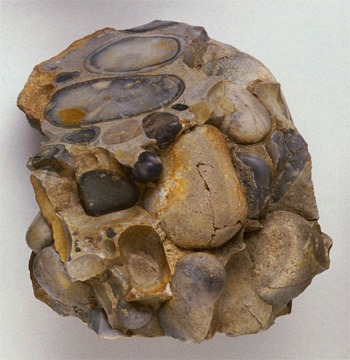
What type of rock is this?

a)

Sedimentary

b)

Igneous

c)

Metamorphic

d)

Sand

55.
Which type of rock is made when magma cools?
a)
sedimentary
b)
igneous
c)
metamorphic
d)
all of the above
56.
Sedimentary rocks are made when layers of _____________ are pressed together.
a)
water
b)
sediments
c)
fossils
d)
limestone
57.
Which type of rock is formed when heat or pressure changes it?
a)
sedimentary
b)
igneous
c)
metamorphic
d)
all of the above
58.

What type of rock is made from magma?

a)

SEDIMENTARY

b)

METAMORPHIC

c)

IGNEOUS

59.

What type of rock is made of tiny fragments of rocks?

a)

SEDIMENTARY

b)

IGNEOUS

c)

METAMORPHIC

60.

Which rocks are made by heat and pressure?

a)

IGNEOUS

b)

SEDIMENTARY

c)

METAMORPHIC

61.
This rock formed when bits of other rocks became pressed into a solid. What type of rock is it?
a)
Sedimentary Rock
b)
Metamorphic Rock
c)
Igneous Rock
62.
What are the 3 major types of rocks?
a)
Igneous, Metamorphic, Sedimentary
b)
Metamorphic, Igneous, Cementation
c)
Brown, Red, Gray
d)
Streak, Hardness, Breakage
63.
What process is used to form sedimentary rocks?
a)
Lava cools and hardens to form a rock.
b)
Weathering, Erosion, Deposition, Compaction, Cementation
c)
Extreme heat and pressure from inside the Earth turn rocks into new rocks.
d)
Magma trapped under the Earth's surface cools and solidifies.
64.
Which of the words below describe broken up rock?
a)
stalactites
b)
magmas
c)
metamorphs
d)
sediments
65.
This rock was formed by smaller pieces of rock that settled at the bottom of a lake millions of years ago. What type of rock is this?
a)
Sedimentary
b)
Igneous
c)
Metamorphic
66.
This rock was found near the mouth of a volcano. What type of rock is this?
a)
Sedimentary
b)
Igneous
c)
Metamorphic
67.
When sediments are pressed together tightly, this is called ____________.
a)
Compaction
b)
Cementation
c)
Weathering
d)
Erosion
68.
The process in which sediment are fused or glued together.
a)
compaction
b)
deposition
c)
organic rock
d)
cementation
69.
This rock was formed when molten rock cooled into a solid. What type of rock is it?
a)
Igneous Rock
b)
Metamorphic Rock
c)
Sedimentary Rock
70.
Which type of rock is formed from INTENSE heat and pressure?
a)
igneous
b)
sedimentary
c)
metamorphic
71.
Extreme Heat and Pressure creates a _________ rock.
a)
Igneous
b)
Metamorphic
c)
Sedimentary
d)
Mineral
72.
True or False: Once a rock is sedimentary, it cannot become an igneous rock.
a)
True
b)
False
73.
This rock started as lava that cooled and then was heated and put under pressure over time. What type of rock is this?
a)
Sedimentar
b)
Igneous
c)
Metamorphic
74.
This rock was molten magma that slowly cooled under the ground. What type of rock is this?
a)
Sedimentary
b)
Igneous
c)
Metamorphic
75.
The three groups of rocks are classified by
a)
How they form
b)
Color
c)
Grain size
d)
Chemical Composition
76.
Fossils are only found in
a)
Sedimentary rocks
b)
Foliated Metamorphic rocks
c)
Igneous Rocks
d)
Nonfoliated Metamorphic rocks
77.
The cooled and hardened magma from volcanoes form what rocks?
a)
igneous
b)
sedimentary
c)
metamorphic 
d)
fossils
78.
Large rocks can be broken down into smaller rocks by wind and water.  These small rocks can break down into very tiny pieces called _______.
a)
minerals
b)
pebbles
c)
sediments
d)
chalk
79.
A never ending process by which rocks are changed from one type to another.  
a)
weathering and erosion
b)
rock cycle
c)
heat and pressure
d)
pressing and cementing
80.
1. What will happen if an igneous rock is put under an extreme amount of heat and pressure?
a)
it will melt into lava
b)
it will weather and erode
c)
it will become a metamorphic rock
d)
it will become a sedimentary 
81.
What are the 3 main layers of Earth's interior?
a)
mantle, shell, yold
b)
core, shell, rock
c)
mantle, core, shell
d)
core, crust, mantle
82.
How deep is the deepest mine ever dug?  It is the one in South Africa that was dug to find gold!
a)
About 4 miles
b)
About 4 kilometers
c)
About 4 yards
d)
About 4 meters
83.
How deep is the deepest well ever drilled to date?  It is the one drilled in Kola, Russia drilled for science!
a)
12 miles
b)
12 meters
c)
12 yards
d)
12 kilometers
84.
What do scientists notice about going further into our Earth's layers?
a)
It gets harder and cooler.
b)
Pressure decreases and it gets cooler.
c)
I gets softer and hotter.
d)
Pressure increases and it gets hotter.
85.
What do scientists use to infer the density and composition of materials below Earth's surface?
a)
Volcanic Waves
b)
Oceanic Waves
c)
Earthquake Waves
d)
None of these
86.
How would you describe our Earth's crust?
a)
brittle and rocky
b)
soft and rocky
c)
soft and sandy
d)
None of these
87.
The oceanic crust is ________  dense than the continental crust.
a)
more
b)
less
c)
softer
d)
None of these
88.
The continental crust is ______ or times thicker than the oceanic crust.
a)
2
b)
4
c)
6
d)
8
89.
The layer directly below the crust is the ________________.
a)
core
b)
mantle
c)
crust
d)
None of these
90.
Part of uppermost mantle and the crust are grouped by scientists into the _______________________>
a)
Upper Mantle
b)
Asthenosphere
c)
Lithosphere
d)
Lower Mantle
91.
In this part of the mantle the rocks are so hot they begin to flow like melted plastic.
a)
Lower Mantle
b)
Asthenosphere
c)
Lithosphere
d)
Upper Mantle
92.
In the lower mantle the rocks do not flow even though they are very hot because the ________________ is too high, so not melting can occur.
a)
temperature
b)
weight
c)
height
d)
pressure
93.
The core has _______ parts.
a)
1
b)
2
c)
3
d)
4
94.
The _____________ core is solid and spins slowly.
a)
outer
b)
inner
c)
over
d)
under
95.
The _______________ core is liquid because temperature effects outweigh effects of pressure.
a)
inner
b)
outer
c)
under
d)
over
96.
What is the Earth's magnetic field called?
a)
magnetofield
b)
magnetobar
c)
magnetoforce
d)
magnetosphere
97.
What does the magnetosphere do?
a)
pushes away or traps charged particles coming from sun
b)
pushes away or traps aliens from Earth
c)
makes Earth a giant bar magnet
d)
non of these
98.
What do scientists think causes the Earth to act like a giant bar magnet?
a)
It has a giant magnet buried in the ground
b)
the spinning of the Moon
c)
the spinning of the Earth's mantle
d)
the spinning of the inner core
99.
Which layer of Earth is liquid metal?
a)
Outer Core
b)
Mantle
c)
Inner Core
d)
Asthenosphere
100.
Which is the hottest layer and has the most pressure on it?
a)
Crust
b)
Mantle
c)
Outer Core
d)
Inner core
101.

Heat transfer by convection is caused by differences in what two things:

a)

Thickness and material

b)

Weight and electricity

c)

Temperature and density

102.

What is the force inside the mantle that causes the Earth's Plates to move ?

a)

subduction

b)

radiation

c)

conduction

d)

convection

103.

The upper layer of the Earth which includes continental and ocean crust is called the :

a)

lithosphere

b)

asthenosphere

c)

atmosphere

d)

stratosphere

104.
What are the 3 main layers of Earth's interior?
a)
mantle, shell, yold
b)
core, shell, rock
c)
mantle, core, shell
d)
core, crust, mantle
105.
What do scientists use to infer the density and composition of materials below Earth's surface?
a)
Volcanic Waves
b)
Oceanic Waves
c)
Earthquake Waves
d)
None of these
106.
How would you describe our Earth's crust?
a)
brittle and rocky
b)
soft and rocky
c)
soft and sandy
d)
None of these
107.
The oceanic crust is ________  dense than the continental crust.
a)
more
b)
less
c)
softer
d)
None of these
108.
The layer directly below the crust is the ________________.
a)
core
b)
mantle
c)
crust
d)
None of these
109.
Part of uppermost mantle and the crust are grouped by scientists into the _______________________>
a)
Upper Mantle
b)
Asthenosphere
c)
Lithosphere
d)
Lower Mantle
110.
In this part of the mantle the rocks are so hot they begin to flow like melted plastic.
a)
Lower Mantle
b)
Asthenosphere
c)
Lithosphere
d)
Upper Mantle
111.
The core has _______ parts.
a)
1
b)
2
c)
3
d)
4
112.
The crust that makes up the continents- the land
a)
tectonic plates
b)
atmosphere
c)
continental crust
d)
oceanic crust
113.
The crust underneath the oceans.
a)
oceanic crust
b)
continental crust
c)
biosphere
d)
tectonic plates
114.
What is the name of the Super-Continent that existed long ago?
a)
Wegener
b)
Pangaea
c)
Geocontinent
115.
What does the prefix -litho mean.
a)
land
b)
water 
c)
living
d)
rock and stone
116.
What does the prefix -hydro mean?
a)
air, vapor
b)
rock and stone
c)
water
117.
Which sphere supports living things?
a)
Hydrosphere
b)
Biosphere
c)
Atmosphere
118.
Which sphere is made up of all the gases that surround Earth?
a)
Atmosphere
b)
Biosphere
c)
Lithosphere
119.
Which sphere of Earth contains rocks and stones, including all the mountains and land we can see?
a)
Atmosphere
b)
Biosphere
c)
Lithosphere
120.
Which sphere of the Earth contains all of Earth's water.
a)
Lithosphere
b)
Hydrosphere
c)
Biosphere
121.
What caused this rock to break apart?
a)
ice
b)
plant
c)
wind
d)
rain
122.
The process by which small pieces of rocks and soil are carried away to new locations is called...
a)
deposition
b)
erosion
c)
weathering
d)
faults
123.
Wind blasting sand at rock and carving out caves
a)
Weathering
b)
Erosion
c)
Deposition
124.
Wind blowing sand from one location to another
a)
Weathering
b)
Erosion
c)
Deposition
125.
How does freezing water cause the weathering of rocks?  The freezing water—
a)
keeps the rocks in place
b)
makes the rocks last longer
c)
expands cracks and breaks rocks
d)
causes rocks to fall in landslides
126.
What was sand before it was broken down?
a)
soil
b)
rock
c)
water
d)
cement
127.
What is the placement of the rocks after they are broken down and moved?
a)
Weathering
b)
Erosion
c)
Deposition
128.
Water getting into cracks, freezing, and breaking the rocks or pavement apart
a)
Weathering
b)
Erosion
c)
Deposition
129.
What made this landform known as a valley?
a)
Glacier
b)
hill
c)
deposition
d)
rocks
130.
What caused this canyon to form over many years?
a)
Water
b)
Deposition
c)
valley
d)
Plants
131.

Weathering is the breaking down of rock into ___________.

a)

boulders

b)

sediment

c)

ice

d)

mountains

132.

_________is the movement of sediment from one place to another.

a)

Erosion

b)

Weathering

c)

Deposition

d)

Movin on up!

133.

The dropping off of sediments in a new place is called __________.

a)

weathering

b)

deposition

c)

sedimentary rock

d)

drop off zone

134.

Weathering, Erosion, and Deposition are examples of ________ changes in the Earth's surface.

a)

Fast

b)

Very fast

c)

Super fast

d)

slow

135.

Which of the following is NOT a cause of weathering, erosion, and deposition?

a)

Wind

b)

ice

c)

fire

d)

water

136.

What is sediment?

a)

bits of rock, sand, and silt caused by the weathering of rocks

b)

decaying plant or animal material

c)

the process of rocks being broken down and carried away

d)

the top layer of the soil

137.

When wind, water, or ice deposit materials in a location, this is known as:

a)

Erosion

b)

Weathering

c)

Deposition

d)

Moving Around

138.

Rain washing away soil from a hillside is an example of...

a)

Erosion

b)

Weathering

c)

Deposition

d)

Washing out

139.

The process of breaking up, wearing away, and dissolving of rocks on Earth's surface is called...

a)

deposition

b)

weathering

c)

erosion

d)

sediment

140.

Water getting into cracks, freezing, and breaking the rocks or pavement apart is...

a)

Erosion

b)

Weathering

141.

How does freezing water cause the weathering of rocks? The freezing water—

a)

keeps the rocks in place

b)

makes the rocks last longer

c)

causes rocks to fall in landslides

d)

expands cracks and breaks rocks

142.

What is solid and made of one or more minerals?

a)

Rocks

b)

Minerals

c)

Rust

d)

Sand