wayground logo

Free Printable Worksheets

Font size

S
M
L
XL
Worksheets

chemistry

Total questions: 45

Worksheet time: 1hrs 17mins

Name
Class
Date
1.
How many electrons can the first energy level hold?
a)
1
b)
2
c)
8
d)
0
2.
What is the shorthand electron configuration for Sulfur atom?
a)
[Ar] 3p4
b)
[He] 3s23p4
c)
[Ne] 3s23p4
d)
[Na] 3s23p3
3.
What atom matches this electron configuration?
[Xe] 6s2 4f14 5d9
a)
Mercury
b)
Gold
c)
Platinum
d)
Thallium
4.
What is this element? 
1s22s22p63s23p6
4s23d104p6
a)
Argon
b)
Krypton
c)
Selenium
d)
Bromide
5.
How many electrons can the d sublevel hold?
a)
8
b)
10
c)
2
d)
4
6.
How many p orbitals are there in a sublevel?
a)
2
b)
1
c)
4
d)
3
7.
How many d orbitals are there in a given sublevel?
a)
1
b)
3
c)
5
d)
7
8.
What is the maximum number of electrons that an orbital can have?
a)
1 electron
b)
2 electrons
c)
3 electrons
d)
4 electrons
9.
Which is the electron configuration for an oxygen atom?
a)
1s22s22p63s23p64s2
b)
1s22s22p4
c)
1s22s22p6
d)
1s22s22p63s23p6
10.
What atom matches this electron configuration?
1s2s2p3s2
a)
Neon
b)
Magnesium
c)
Aluminum
d)
Potassium
11.

Which element has the largest electronegativity?

a)

barium

b)

oxygen

c)

iron

d)

lithium

12.

What is the ability of an atom in a chemical compound to attract electrons from another atom in the compound?

a)

ionization energy

b)

electronegativity

c)

atomic radius

d)

electron affinity

13.

Which element has the highest ionization energy?

a)

oxygen

b)

sulfur

c)

silicon

d)

potassium

14.

What is the trend for ionization energy?

a)

Across a period (left to right) it increases and down a group it decreases.

b)

Across a period (left to right) it decreases and down a group it increases.

c)

Across a period (left to right) it decreases and down a group it decreases.

d)

Across a period (left to right) it increases and down a group it increases.

15.

What is ionization energy?

a)

The energy required to remove an electron from a neutral atom of an element.

b)

The energy change that occurs when an electron is acquired by a neutral atom.

c)

The measure of the ability of an atom in a chemical compound to attract electrons from another atom in the compound.

d)

How close an atom is to its neighboring atom.

16.

What is the trend for atomic radius (radii)?

a)

It increases left to right on the Periodic Table and decreases down a group.

b)

It decreases left to right on the Periodic Table and increases down a group.

c)

It increases left to right on the Periodic Table and increases down a group.

d)

It decreases right to left on the Periodic Table and decreases down a group.

17.

What is the name of the elements that are unreactive and have a full octet?

a)

Halogens

b)

Noble Gases

c)

Alkali Metals

d)

Transition Metals

18.

What is the term of an atom that will lose electron(s) and have a positive change?

a)

cation

b)

anion

c)

electronegativity

d)

ionic radius

19.

Which scientist edited the Periodic Table and arranged elements in increased atomic number?

a)

Rutherford

b)

Dalton

c)

Mendeleev

d)

Moseley

20.

Elements in the same group or family have _____________.

a)

the same number of valence electrons and different properties.

b)

the same number of valence electrons and similar properties

c)

different number of valence electrons and similar properties.

d)

different number of valence electrons and different properties.

21.

Which scientist created the Periodic Table and arranged elements in increasing atomic mass?

a)

Rutherford

b)

Thomson

c)

Mendeleev

d)

Moseley

22.
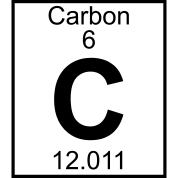
What does the C represent?
a)
atomic mass
b)
atomic number
c)
element name
d)
chemical symbol 
23.
What does 12.011 represent?
a)
atomic mass
b)
atomic number
c)
element name
d)
chemical symbol 
24.
What does the 6 represent?
a)
atomic mass
b)
atomic number
c)
element name
d)
chemical symbol 
25.

Put in order from biggest to smallest (decreasing size)

a)

Calcium

b)

Iron

c)

Zinc

d)

Bromine

e)

Krypton

1)
2)
3)
4)
5)
26.

Atomic radius DECREASES when

a)

when you go across a row from right to left

b)

when you go down a group

c)

when you go across a row from left to right

d)

when you go across a group from left to right

27.
What does Pauli exclusion principle state ?
a)
states that each electron occupies the lowest energy orbital available
b)
states that a maximum of two electrons can occupy a single atomic orbital, but if only if the electros have opposite spins
c)
states that single electrons electrons with the same spin must occupy each-energy orbital before additional electrons with opposite spins can occupy the same orbitals
28.
What do you start electron configuration with?
a)
1s2
b)
1d10
c)
1f14
d)
1p6
29.
Identify the Electron Configuration for Aluminum (Al)
a)
1s2s2p3s3p1
b)
1s2s2p3s3p3
c)
1s2s2p3s4p1
30.
Which electron configuration belongs to Copper (Cu)?
a)
1s2 2s2 2p6 3s2 3p6 4s2 3d8
b)
1s2 2s2 2p6 3s2 3p6 4s2 3d9
c)
1s2 2s2 2p6 3s2 3p6 4s2 3d10
31.
Which electron configuration belongs to Chlorine (Cl)?
a)
1s2s2p3s3p5
b)
1s2s2p3s3p6
c)
1s2s2p3s3p7
32.
The electron configuration of an atom is 1s22s22p6.  The number of electrons in the atom is 
a)
3
b)
6
c)
8
d)
10
33.
What electron configuration matches an oxygen atom?
a)
1s22s22p63s2, 3p64s23d104p5
b)
1s22s22p4
c)
1s22s22p6
d)
1s22s22p63s23p64s23d1
34.
How many electrons does Si contain? (click to see image)
a)
14
b)
28
c)
2
d)
4
35.

Fluorine has a smaller atomic radius than B because...

a)

F has more valence e- than B

b)

F has more shielding than B

c)

F has a larger atomic number than B

d)

F has a greater effective nuclear charge than B

36.

The ionization energy of Na is larger than Cs because...

a)

Na has a greater effective nuclear charge

b)

Na has fewer energy levels and less shielding

c)

Cs has a greater effective nuclear charge than Na

d)

Cs has more valence electrons than Na

37.

Which atom has the greatest electron affinity?

a)

N

b)

Cl

c)

F

d)

Li

38.

Which atom has the smallest metallic character?

a)

O

b)

Ba

c)

Co

d)

K

39.
Which periodic group has the smallest atomic radius?
a)
Alkali metals
b)
Halogens
c)
Noble Gases
d)
Transition metals
40.
As you move down the periodic table atoms get bigger.  This is because ____________.
a)
The atoms have more mass.
b)
The atoms have more protons.
c)
The atoms have more energy levels
d)
The atoms have more nuetrons
41.
As atoms of elements in group 16 are considered in order from top to bottom, the electronegativity of each successive element....
a)
decreases
b)
increases
c)
remains the same
d)
none of the above
42.
Which of the following will have a lower ionization energy than Scandium (Sc)?
a)
Helium (He)
b)
Titanium (Ti)
c)
Calcium (Ca)
d)
Magnesium (Mg)
43.

metallic character is greatest

a)

in the top right corner

b)

in the bottom right corner

c)

in the top left corner

d)

in the bottom left corner

44.
The element with the lowest electronegativity in Period 3 is - 
a)
Na
b)
Cl
c)
Ar
d)
Mg
45.

What is the correct Lewis structure for NH3?

a)
b)
c)
d)