
 Worksheets
Chem Unit 1d Periodic Table Revision Quiz
Total questions: 20
Worksheet time: 11mins

What does the 4 represent here?
the atomic number
the mass number
the number of electrons
the number of neutrons
What does the 2 represent here?
the atomic number
the mass number
the number of electrons
the number of neutrons
How are elements arranged in the periodic table?
in order of atomic number
in alphabetical order
in order of mass number
in order of the number of neutrons
In the periodic table, groups are...
rows
columns
blocks
elements
In the periodic table, periods are...
rows
columns
blocks
elements
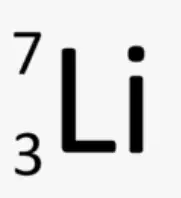
What is the electron configuration of lithium?
3,7
2,1
2,7
2,3,7
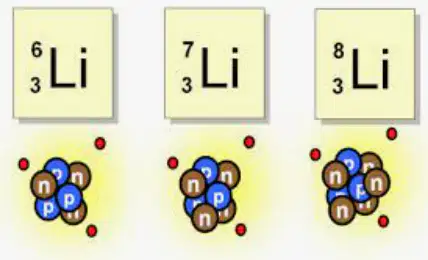
What is shown in the image?
three ions of lithium
three isotopes of lithium
three molecules of lithium
three isomers of lithium
What is an isotope?
Isotopes are atoms with different numbers of protons
An isotope is a variant of a chemical element which differs in the number of neutrons
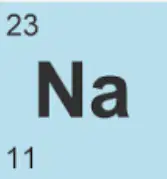
What is the electron configuration of sodium?
11,23
2,8,7
2,8,1
2,8,8,5
What group is sodium in?
1
2
3
7
What is the electron configuration of chlorine (atomic number = 17)?
17
2,8,8
2,8,7
2,8,17
Select two properties of metals
good conductors of electricity
poor conductors of heat
have oxides which are basic (i.e. react with acids to form a salt and water)
have oxides which are acidic or neutral
always solid
Select two properties of non-metals
good conductors of heat
poor conductors of electricity
have oxides which are basic (i.e. react with acids to form a salt and water)
have oxides which are acidic or neutral
always solid
Metals are mostly found on which side of the periodic table?
top
bottom
left
right
Elements which are in the same group have similar properties (i.e. characteristics) and often react in similar ways. Why?
because they have the same number of electrons
because they have the same number of electron shells
because they look similar
because they have the same number of electrons in their outer shell
Group 7 elements are called the halogens. They all have similar chemical properties, because....
they all have 7 electron shells
they all have 7 electrons
they all have the same nam
they all have 7 electrons in their outer shell
Noble gases do NOT react readily - they are very unreactive. Why?
Because they are noble
Because they have a full inner shell
Because they have a full outer shell
Because they only form covalent bonds
What does percentage abundance mean?
What percentage of the universe is made of a certain element
What percentage of the atom is made of neutrons
The percentage of a specific isotope present on earth
The relative atomic mass
The mass number of an atom is...
the number of protons
the number of neutrons
the number of protons + the number of neutrons
the number of electrons
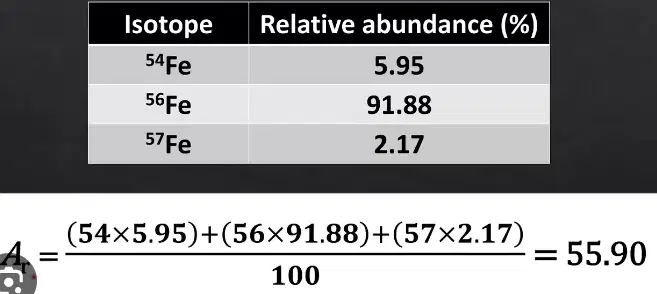
The relative atomic mass of iron to two decimal places is ...
54
5.95
55.90
56

