
 Worksheets
AKS 37 Renaissance/Reformation/Scientific Revolution Review
Total questions: 92
Worksheet time: 1hrs 3mins
Death

Where did the Renaissance begin?

Who invented the printing press?
da Vinci.
Gutenberg.
Mrs. Spring.

The _________ expanded ideas and increased cultural diffusion.
Perspective
Greece and Rome
Printing Press
Who inspired Renaissance artists?
Chinese and Koreans
Romans and Greeks

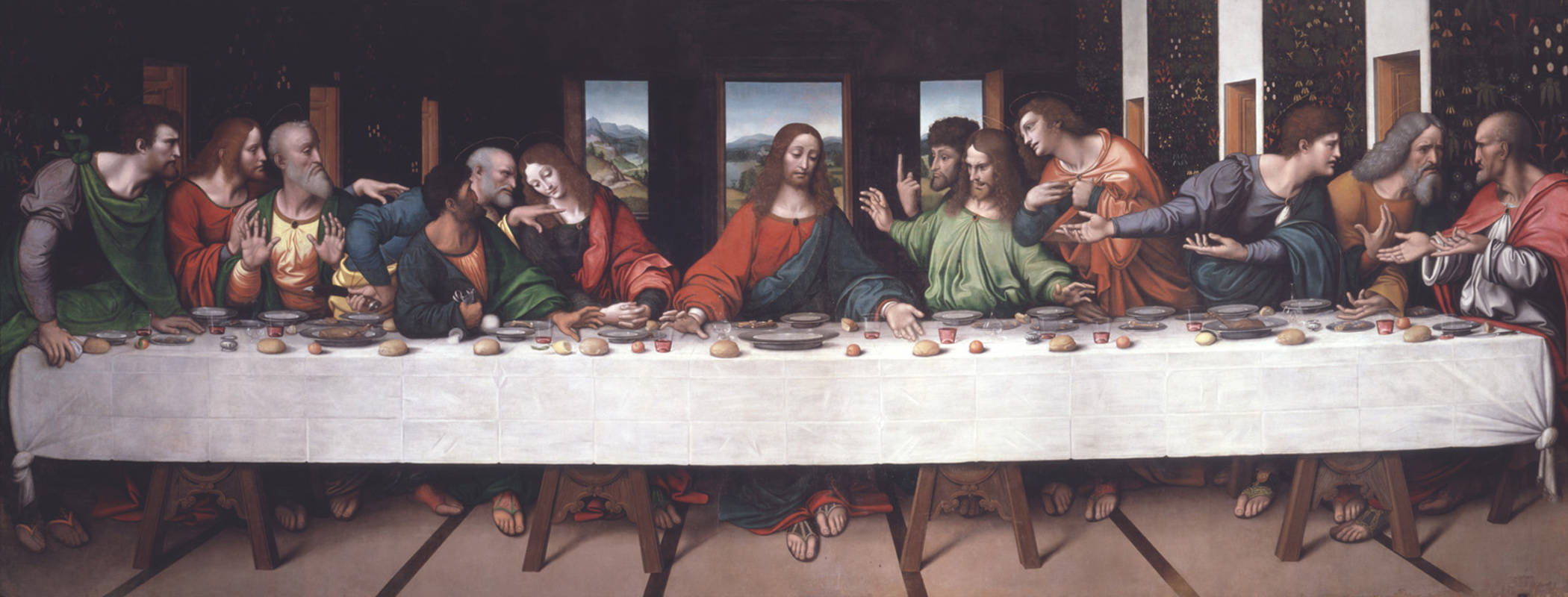
This is a famous Renaissance painting called the _______
Ms. Badamo

Where did the Renaissance begin?
Mesopotamia
Japan
Florence, Italy
Mongolia
What did the Renaissance of Italy refer to?
HIndu Beliefs
rebirth of art and learning
__________ celebrates the individual
Humanism
Dogism
sonnets
Protestant

Who invented the printing press?
Francesco Petrarch
Shogun
Gutenberg

People who paid for art were called _______
Patrons
friends

What does the word renaissance mean?
dancing
fun
rebirth
When was the Renaissance ?
1300s–1600s
1999-2009
2005- 2021
Humanism focused on the _______
religion
individual
Shintoism


Who painted the Sistine Chapel ceiling?
Vincent van Gogh
Claude Monet
Michelangelo
Artemisia Gentileschi

Who painted the Mona Lisa?
Michelangelo
Leonardo da Vinci
Claude Monet
Henri Matisse


Which artist created the Statue of David?
Michelangelo
Raphael
Leonardo da Vinci
Donatello
Which artist created the Sistine Chapel?
Titian
William Shakespeare
Michelangelo
Leonardo da Vinci
Which artist created The Last Supper?
Michelangelo
Masaccio
Leonardo da Vinci
Jan van Eyck

Name the painting and the artist
A Fight in the Street by Frederick Remington
Statue of David by Michelangelo
Mona Lisa by Leonardo

Name the painting and the artist
Statue of Neptune by Paul Dipasquale
The Last Supper by Leonardo
The Starry Night by Vincent Van Gogh

Name the painting and the artist
Cattle Drive by Fredrick Remington
Sistine Chapel Ceiling by Michelangelo
The Umbrellas by Renoir

Name the painting and the artist
Statue of Apollo by Etsy
Statue of David by Michelangelo
Statue of Leif Erikson by Jan Van Eyck

Name the painting and the artist
School of Athens by Raphael
School of Rome by Raphael
The Greek Forum by Raphael
What does the word Renaissance mean?
Resurrection
Rebirth
Rejuvenation
Reformation
Which is NOT a reason the Renaissance began in Italy?
Rich trading ports
They never had the Black Plague
Wealthy city states could support arts
It was the heart of the old Roman Empire
Which of these was the PRIMARY intellectual movement of the Renaissance?
Secularism
Humanism
McCarthyism
Classicism

Which Italian city is the BIRTHPLACE of the Renaissance
Rome
Florence
Milan
Naples
Intellectual movement at the heart of the Renaissance that focused on education, arts and classics
Humanism
Stoicism
Theism
Realism
What do we call a man (or woman) who excels in many aspects of life (academic, cultural, artistic, religious)?
Renaissance Man
Classical Man
Jack of all Trades
The Enlightened Man
Which family, known primarily for banking, ruled Florence during the Renaissance?
the Medici
the Capulet
the Scala
the Montague
What is the name of Martin Luther's written protest against the Catholic Church's use of indulgences?
The Protestant Reformation
The 95 Theses
The Whittenberg Church Door

What was the Catholic Church's response to Martin Luther's 95 Theses?
Excommunication
The Peace of Westphalia
The Counsel of Trent
They ignored it

According to Martin Luther, where is ultimate religious authority determined?
The decisions of the Pope
The bible
The actions of the Priest
Whatever feels good in the moment
Who was considered "The Father of the Renaissance"?
Francesco Petrarch
Leondardo Da Vinci
Martin Luther
Cosimo de Medici
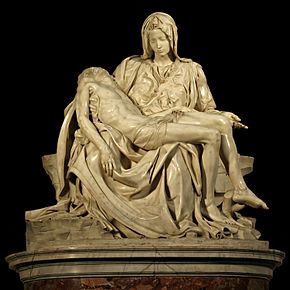

Who created the printing press?
Leonardo Da Vinci
Johannes Guttenberg
Niccolo Machiavelli
Martin Luther
Which two cultures make up the Classical style that was studied by humanists like Dante, Petrarch and Erasmus?
France and England
Greece and Rome
China and Japan
Mali and Incan
How did Humanism lead to the Protestant Reformation?
It encouraged people to leave the Catholic Church.
It encouraged the idea that each person could understand the Bible.
It encouraged people to seek jobs outside of the Church where they could make more money.
Which of the following are effects of the printing press? (Select all that apply)
Books become cheaper.
Ideas spread faster and further.
The Catholic Church becomes more powerful.
Some people print information that the Catholic Church does not support.
No one is able to learn about Columbus's discovery of the New World for many years.
What is the name of Martin Luther's written protest against the Catholic Church's use of indulgences?
The Protestant Reformation
The 95 Theses
The Whittenberg Church Door
Protestant Reformation definition?
The revolution against the Catholic Church and its practices
The act of fear against the Church
Mathematicians of the Renaissance era
Explaining the world around you through science and math
Who is the well known advocate that started the Protestant Reformation?
Nicolaus Copernicus
Pope John the III
Martin Luther
Micheal Jackson
What event lead to the birth of the Protestant Reformation?
Byzantine Empire being defeated by the Ottoman Empire
The findings of the Heliocentric Solar System
The riots against the Catholic Church
The 95 Thesis against indulgences
What did Martin Luther do to the new Testament of the Bible? What did this cause for the church?
Hid the New Testament from the public. This made it more exclusive for the church.
Translated them into common languages. This caused the church to lose power and influence over the citizens.
Sold the copies at a high price. This made extra money for the church.
Did nothing with the New Testament. The church had complete power over its distribution.
What did Martin Luther use to help spread the word of the Bible?
The newspaper
Used only word of mouth
Had multiple people rewrite the Bible for distribution
The use of the Printing Press
Which tradition would have supported the ideas of predestination, living a righteous life, and hard work?
Catholicism
Jewish
Lutheranism
Calvinism

Which stood against the Protestant revolt, but leaned toward Protestantism when Catholic law did not permit divorce?
Anne Boleyn
John Wycliffe
Henry VIII
Thomas Cronwell

Who brought religious unity and tolerance to England while encouraging expansion and power?
Mary Tutor
Elizabeth I
Thomas Cranmer
Sir Thomas Moore
What was the purpose of the Council of Trent?
Created a set of electors to choose the Holy Roman emperor
Negotiated the end to the Thirty Years’ War
Reaffirmed the traditional Catholic views and practices
Established schools for Protestant teachings
During the Counter-Reformation, which was a religious order founded that followed and spread the teachings of the Catholic Church?
Sects
Jesuits
Dissenters
Jacobin clubs
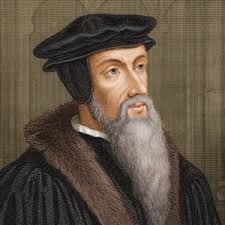
What is Calvinism?
Religious beliefs based on the teachings of John Calvin
Religious beliefs based on the teachings of the Pope
Religious beliefs based on the teachings of Calvin Coolidge
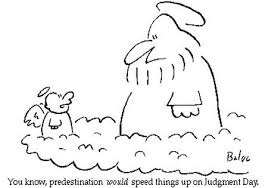
What is Predestination?
Belief that you are in control of your own destiny
Belief that God has already decided your destiny
1. ____________ was the response of the Catholic Church to the Protestant Reformation
Counter Reformation
Religion
Renaissance
This person made the Anglican Church the official church of England
Queen Mary
Queen Elizabeth I
King Henry 8
Edward
The Protestant Reformation left Europe
Religiously divided
happy
In famine
The Reformation WEAKENED the authority of the Pope
True
False

Christianity was spilt into which two groups?
Protestant
Catholic
Islam
Buddha
How many wives did Henry VIII have?
1
3
4
6
Which of Henry's children became a very famous British monarch?
Mary I
Elizabeth I
Edward VI
What was Henry the 8th seeking above all else?
A happy marriage
A male heir to the throne
European dominance
How did the Medici family become so wealthy?
Which Renaissance author wrote that for a ruler to maintain power, "it is better to be feared than loved"?
Shakespeare
Machiavelli
Erasmus
Petrarch

Machiavelli wrote this after being exiled by the Medici family in Florence explaining ruthless ways that a ruler could obtain and keep power
The Book of the Duchess
The Prince
The Divine Comedy
Romeo & Juliet

Which artists is known as a "Renaissance Man", because he was so well-rounded in many studies of the Renaissance including art and science?
Donatello
Leonardo da Vinci
Michelangelo
Raphael
The Renaissance artist most famous for writing the Divine Comedy
Dante
Raphael
Petrarch
Erasmus
da Vinci

The Renaissance artist most famous for The Praise of Folly which is a bold satire that pokes fun at the foolishness of mankind.
Dante
Raphael
Petrarch
Erasmus
da Vinci
Luther believed that salvation/justification came from what alone?
Indulgences
Good Works
Faith
All of the above contributed to salvation
Lutheranism spread so easily for which of the following reasons?
German Nationalism
Luther translating the bible
A corrupt papacy
All of the above
The Council of Trent created ___________ to train priests.
Colleges
The Vatican
Seminaries
All of the Above
What is the defintion of Geocentric?
Model of the universe with Earth at the center
The Sun is the center of the universe.
I am not sure
Giving power to multiple branches of government to limit individual power
What is the definition of Heliocentric?
Model of the universe with the Sun at the center
Model of the universe with Earth at the center
Process of using scientific methods to discover truth about the world.
I am not sure

During the Scientific Revolution, European scientists focused their work on explaining
the workings of the natural world
the presence of the divine in nature
the effects of society on the individual
the workings of advanced technologies
• Newton’s law of gravitation
• Descartes’ belief in truth through reason
This set of ideas from the Scientific Revolution gave Europeans a new way to
Who discovered the idea of gravity?
Copernicus
Galileo
Newton
What was the centerpiece of Newton's work ?
the doctrine of uniformity
the law of universal gravity
the doctrine of predestination
all of the above
Nicholas Copernicus was most known for his work as an
inventor
sculptor
politician
astronomer
He was the first person to use a telescope to observe objects in space. He discovered that planets and moons are physical bodies because of his studies of the night skies.
Isaac Newton
Rene Descartes
Robert Boyle
Galileo
Assistant to Brahe; used Brahe's data to prove that the earth moved in an elliptical, not circular, orbit. Accurately predicted movements of planets in a sun-centered universe
Francis Bacon
Ptolmey
Johannes Kepler
Nicholas Copernicus

