
 Worksheets
Protein Synthesis and DNA mutations
Total questions: 21
Worksheet time: 17mins
Name
Class
Date
1.
Normal-
GAG-CTC-GAC-AGA
Mutant
GAG CTC-CAC-AGA
GAG-CTC-GAC-AGA
Mutant
GAG CTC-CAC-AGA
a)
no mutation
b)
substitution
c)
insertion
d)
deletion
2.
DNA molecule segment is : TTACGCAAG
The mutated DNA segment is TTCGCAAG. This is an example of ___ mutation.
The mutated DNA segment is TTCGCAAG. This is an example of ___ mutation.
a)
Substitution
b)
Deletion
c)
Insertion
d)
Inversion
3.
If you are missing or have an extra base at the end of your mutated DNA . What type of mutation occurred?
a)
Substitution
b)
Frameshift
c)
Duplication
d)
Insertion
4.
mRNA is read in chunks of three, called...
a)
quadralets
b)
anticodons
c)
codons
d)
capsids
5.
Original: ATC CAT
Mutation: ATC GCAT
What mutation occurred?
Mutation: ATC GCAT
What mutation occurred?
a)
deletion
b)
insertion
c)
silent
d)
transverse
6.
A frameshift mutation can occur with either _________ or __________ mutations.
a)
Addition, division
b)
Deletion, substitution
c)
Addition, substitution
d)
Addition, deletion
7.
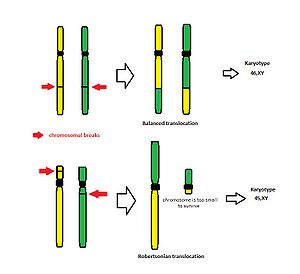
What type of chromosomal mutation is this?
a)
Inversion
b)
Translocation
c)
Deletion
d)
Duplication
8.

Original DNA: CAT GAT CCA
New DNA: CAT TGA TCC A
What mutation occurred? (one has been added)
a)
deletion
b)
substitution
c)
tranverse
d)
insertion
9.

What type of chromosomal mutation is this?
a)
Translocation
b)
Inversion
c)
Deletion
d)
Duplication
10.
Which of the following would result in a frameshift mutation?
a)
Insertions only
b)
Substitution only
c)
Deletion only
d)
Insertions and Deletions
11.
What is the product of translation?
a)
DNA
b)
mRNA
c)
tRNA
d)
proteins
12.
In RNA the base T is replaced with
a)
U
b)
G
c)
C
d)
A
13.
What combines together to make a protein?
a)
Amino Acid
b)
RNA
c)
Ribosome
d)
DNA
14.
What organelle is the site of translation?
a)
Nucleus
b)
Ribosome
c)
Mitochondria
d)
Chloroplast
15.

What type of RNA is shown in this image?
a)
rRNA
b)
mRNA
c)
tRNA
16.
Choose the nucleotide sequence of the RNA strand that would be complementary to the following strand:
GTAGTCA
GTAGTCA
a)
UATUAGA
b)
ACGACTG
c)
CAUCAGU
d)
CATCAGT
17.
Which phrase best describes translation?
a)
converts mRNA into a polypeptide
b)
catalyzes bonds between amino acids
c)
produces RNA from DNA molecules
d)
recycles tRNA molecules for reuse
18.
Which of the following is the site of translation?
a)
vacuole
b)
lysosome
c)
nucleus
d)
ribosome
19.

The bottom of the tRNA molecule joins with the mRNA molecule because it has the _________ that complements the _______ on mRNA.
a)
codon, anticodon
b)
anticodon, codon
c)
amino acid, nucleotide
d)
nucleotide, amino acid
20.

The mRNA leaves the ________ to find the ribosome to make proteins.
a)
cell
b)
nucleotide
c)
nucleus
21.

Which anticodon would be placed in spot #2
a)
GGC
b)
CCA
c)
GGA
d)
GGT
100 %

