
 Worksheets
Unit 3- Waves Review
Total questions: 93
Worksheet time: 52mins

Label number 1 is the
crest
trough
wavelength
frequency
Label number 2 is the
crest
trough
wavelength
frequency
Label number 3 is the
crest
trough
wavelength
frequency
Label number 4 is the
crest
trough
wavelength
amplitude
A disturbance that travels in a pattern and carries energy or information
wave
frequency
boat
pitch
The number of times a wave repeats itself in a certain amount of time
wave
frequency
boat
pitch

Armando used yarn to create waves on sheets of graph paper. He recorded his wave data in the table. Which heading in the table describes wavelength?
wave
number of crests
distance between crests
height of crests
Which of these waves would transfer the most energy?
low crest
high trough
low amplitude
high amplitude

Which wave is carrying more energy and why?
2 - highest amplitude
1 - low frequency
3 - high frequency
3 - shortest amplitude

compare the wavelengths
1 has a longer wavelength
1 has a shorter wavelength
2 has a lower frequency
1 and 2 are the same height
Which one of these statements is usually true about waves
all kinds of waves are the same size
all waves move at the same speed
waves don’t move matter, just energy
some waves do not move in a pattern

What property of the wave is represented by the letter "A"?
Amplitude
Crest
Trough
Wavelength

Which wave in the diagram has the greatest wavelength?
1
2
3
4
letting all light through
amplitude
transparent
translucent
crest
Half of the distance from the crest to the trough of a wave.
amplitude
wavelength
translucent
transparent
How loud or soft a sound is
amplitude
trough
volume
reflection
Not letting any light through
amplitutde
opaque
wave
translucent
the bouncing of light waves when they encounter an obstacle
reflection
amplitude
volume
opaque
The up-and-down movement of surface water. It can be a disturbance that carries energy through space.
wavelength
amplitude
volume
wave
letting some light through
translucent
volume
crest
opaque
the distance between a point on one wave and the identical point on the next wave
wave
wavelength
trough
crest
you cannot see color in the dark because
all of the colors are hidden
you need light to see objects
Light ____________ off objects and then enters the eye
directs
reflects
absorbs
In order to see ____________ must be present
light
refraction
colors
The low points of a transverse wave.
Crest (peak)
Trough
Amplitude
Wavelength
Pick two words that mean the top of the wave.
peak
trough
crest
valley
Which picture shows a wave vibrating slowly?


Which picture shows a softer sound?


What is the pattern of motion for this type of wave?
Back & Forth
Up & Down
There is no pattern
A source is ______.
The place where something comes from.
Something we observe to be similar over and over again.
A pattern of motion that travels away from a source.
The ability to make things move or change.
Energy is motion is called _____.
Potential Energy
Sound Energy
Kinetic Energy
Light Energy
Waves transfer _________.
Energy
Matter
Candy
Boats
A quick back and forth motion is called a
absorption
vibration
song
frequency
Binary code is made up of which numbers?
A wave with a large amplitude must have a
low crest.
long wavelength.
high crest.
short wavelength.
What happens when you increase the amplitude of a sound?
It makes the sound travel faster
It makes the sound louder
It increases the wavelength of the sound
It increases the frequency of the sound
How does sound travel?
In a straight line
In a vacuum
In all directions
In only one direction

This picture illustrates which of the following properties of light?
opaque
absorption
refraction
reflection
Which of the following colors results in ALL light waves being absorbed?


What emits sound waves?
Phone
desk
chair
light bulb
Which emits light waves?
microphone
trumpet
food
Light bulb
Light waves and water waves travel in what type of waves?
Transverse waves
Longitudinal waves

We can see because of _______________
photons
black holes
dark energy
light

Our brain _______________ the light into what we see.
explains
translates
reflects
dissects

Light travels in _______________ much like water
groups
bunches
swarms
waves

The return of a wave of energy after it strikes a surface is called _______________
rebound
reveration
reverberate
reflection

When light reflects from a smooth surface all of the light rays reflect ________________
equally, but in different directions
in the same direction
in different directions
into chaos
We can see because of _______________
photons
black holes
dark energy
light
Our brain _______________ the light into what we see.
explains
translates
reflects
dissects
Light travels in _______________ much like water
groups
bunches
swarms
waves
The return of a wave of energy after it strikes a surface is called _______________
rebound
reveration
reverberate
reflection
When light reflects from a smooth surface all of the light rays reflect ________________
equally, but in different directions
in the same direction
in different directions
into chaos

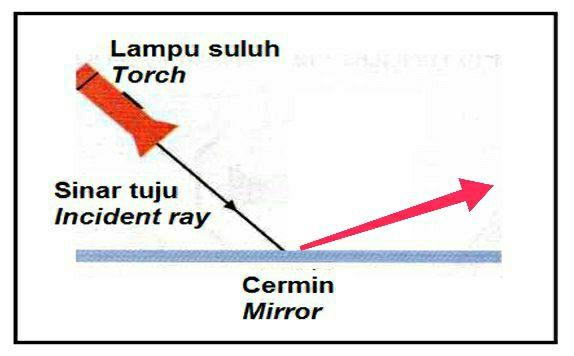
Diagram shows a phenomenon occurs when the spotlight is directed onto a mirror surface. What is the principle of light shown in the situation?
Light travels in a straight line
Refraction of light
Reflection of light
Light travels in parallel
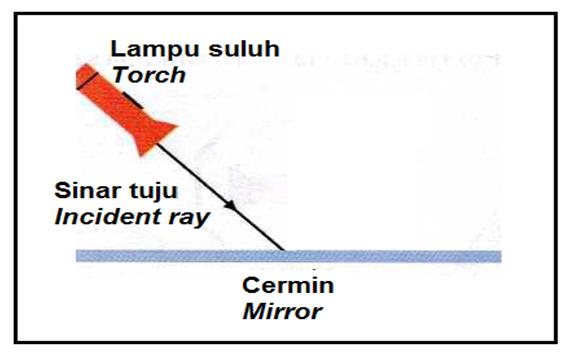
The following diagram shows the ray diagram when a torch light is torched towards a mirror. Which of the following is the correct reflected ray?
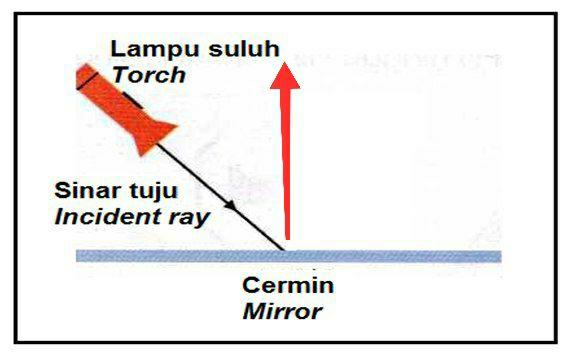
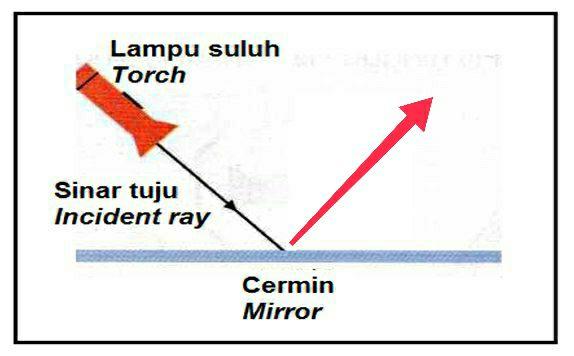
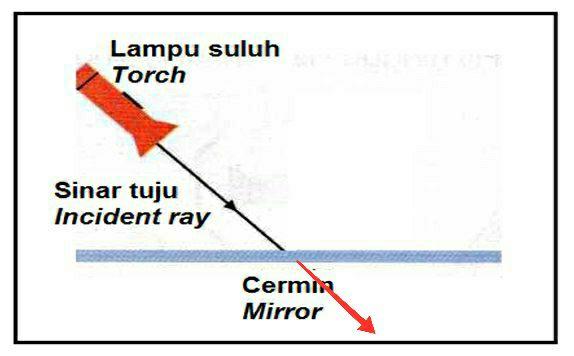

The following diagram shows a driver who could see the image of a vehicle behind him without turning his back.
Why?
Light travels in a straight line
Light is refracted
Light is reflected
Light travels in two different mediums


In the illustration, the light ray striking the object is?
refracted
reflected
Smooth surface that reflects an image of what is in front of it.
mirror
refraction
reflection

According to the Law of reflection, a light ray striking a mirror will?
bounces off the mirror toward the direction it came from
bounces off the mirror at the same angle it hits.

In the diagram, which letter represents the angle of reflection?
A
D
C
E
____________ is a form of energy that you can see.
Thermal Energy
Light Energy
Mechanicial Energy
Sound Energy
A(n) __________ material allows some light to pass through it.
Transparent
Translucent
Opaque
A(n) ______ material allows no light to pass through it.
Transparent
Translucent
Opaque
________ is to bounce off a surface.
Refract
Reflect
Transparent
Translucent
_________ is to bend light waves.
Refract
Reflect
Absorb
Transparent
What statement is NOT TRUE about how light travels?
Light travels in waves
Light waves travel in zig zag lines
Light travels in all directions
Light travels in straight lines
Which TWO objects are examples of opaque materials?
Water
Brick
Waxed Paper
Apple
Which of the following material NOT translucent?
Baseball
Tissue Paper
Stained Glass
Wax Paper
All of the following mateirals are examples of transparent material EXCEPT which one?
Lamp Shade
Clear Glass Jar
Air
Clean Water
Dirty water is an example of what type of material?
Transparent
Translucent
Opaque
A desk, baby doll and metal cup are all examples of what type of materials?
Transparent
Translucent
Opaque
A lamp shade is an eaxmple of what type of material?
Transparent
Translucent
Opaque
Which is an example of a transparent item?
Toliet Paper
Fish Bowl
Baseball
Which is an example of a translucent item?
Toliet Paper
Fish Bowl
Baseball
Which is an example of a opaque item?
Toliet Paper
Fish Bowl
Baseball
We see objects when light waves refelct off an object and enters our __________.
Ears
Eyes
Nose
Mouth
Light waves enter our eyes through what part of the eye?
Brain
Optic Nerve
Retina
Pupil
Why can we not see objects in a dark room?
Too much light enters our eyes
No light is refelcted into your eyes
Light can do all of the following EXCEPT which one?
Absorbed
Reflected
Split
Refracted

This box is an example of what type of material?
Transparent
Translucent
Opaque

This box is an example of what type of material?
Transparent
Translucent
Opaque

This box is an example of what type of material?
Transparent
Translucent
Opaque

Which description below describes what is happening in box 2.
The light waves hit the object and reflect off
The light waves enter our eyes through the pupil
Light waves travel in straight lines from the light source to an object.
After the light waves enter the eye the light is refracted and the image is now upside down on the back of our eye (retina)
Which description below describes what is happening in box 3.
The light waves hit the object and reflect off
The light waves enter our eyes through the pupil
Light waves travel in straight lines from the light source to an object.
After the light waves enter the eye the light is refracted and the image is now upside down on the back of our eye (retina)
Which description below describes what is happening in box 1.
The light waves hit the object and reflect off
The brain makes sense of the image and tells us the object we are seeing
Light waves travel in straight lines from the light source to an object
After the light waves enter the eye the light is refracted and the image is now upside down on the back of our eye (retina)
Which description below describes what is happening in box 5.
The light waves hit the object and reflect off
The brain makes sense of the image and tells us the object we are seeing
Light waves travel in straight lines from the light source to an object
After the light waves enter the eye the light is refracted and the image is now upside down on the back of our eye (retina)
Which description below describes what is happening in box 4.
The light waves hit the object and reflect off
The brain makes sense of the image and tells us the object we are seeing
Light waves travel in straight lines from the light source to an object
After the light waves enter the eye the light is refracted and the image is now upside down on the back of our eye (retina)
Why does oue pupil get larger when we walk outside at night?
to protect the eyes from too much light
to allow light to travel from our eyes to the object
to allow more light to enter the eyes
to increase the speed of the light waves that enter our eye

Which illustration represent a persons pupil when they are outside on a bright sunny day?
A
B
C
D

Which image reprsents a persons pupil when sitting in a room with absolutelty no light sources?
A
B
C
D

