
 Worksheets
CofM, Collisions, & Impulse
Total questions: 60
Worksheet time: 1hrs 27mins

In ALL collisions, ______ is always conserved (unchanged).
the total momentum
both the total momentum & energy
the energy
The Law of Conservation of Momentum states:
The total momentum before a collision is equal to the total momentum after a collision.
The total momentum before a collision is greater than the total momentum after a collision.
The total momentum before a collision is less than the total momentum after a collision.
According to the Law of Conservation of Momentum, when two objects collide...
both objects lose momentum.
both objects gain momentum.
momentum is neither lost nor gained.
2 balls collide and bounce off of each other. During the collision total momentum remained constant and total kinetic energy remained constant. What type of collision is this?
Inelastic Collision
Elastic Collision
Perfectly Inelastic Collision
A car rear ends another car at a stop light. The cars are damaged but NOT stuck together. The momentum was conserved in the collision but the kinetic energy was not conserved. What type of collision is this?
Completely elastic collision
Partially inelastic collision
Completely inelastic collision.
If a collision is perfectly elastic which of the following must be TRUE?
Momentum is not conserved.
The objects are in an open system.
The total momentum is equal to 0.
Kinetic Energy is conserved.
Two carts collide. They stick together and continue moving. Is momentum conserved in this interaction?
Yes
No
Two metal balls collide in an elastic collision. Is momentum conserved in this collision?
Yes
No

After collision, the two objects move off with different velocities. What type of collision is this?
Inelastic
Elastic

Which scenario would most likely occur when a cue ball (the white ball) strikes a pool ball that is at rest before the collision?
The cue ball will also stop moving and both balls will be at rest.
The pool ball will accelerate in the same direction as the cue ball was initially moving.
The cue ball will bounce back from the pool ball at around the same speed.
The pool ball will accelerate to a velocity greater then the cue ball had while moving.

In this collision, which car applied the LARGER FORCE onto the other one?
The red car.
The silver car.
Both applied EQUAL forces.
NO force was applied.

Which ball undergoes a LARGER IMPULSE?
Happy ball that bounces.
Sad ball that "splats".
The impulse is equal for both balls.

Pool balls colliding and bouncing apart is an example of an ____________ collision.
elastic
inelastic

BEFORE the cue ball (white) hits the other balls that are stationary, it has ____________ of the momentum in the system.
some
half
all
none

Where did SOME OF THE MOMENTUM the cue ball (white) had before the collision go?
into the pool stick
into the other balls
it dissipated (disappeared)
It ALL remained in the cue ball.

What TYPE of COLLISION would occur between a bug and a car's windshield?
elastic
inelastic

Which of the following would NOT be an example of an ELASTIC collision?
A basketball being dribbled
Being hit with a paint ball
A ping pong ball hit with a paddle
A diver, bouncing off of a diving board
No collision is either perfectly elastic or perfectly inelastic.
True
False

The purpose of crumple zones on a car is to...
decrease the time of the impact.
increase the force of the impact.
increase the time of the impact.
only to increase profits for autobody shops.
A piece of silly putty (clay) is dropped onto a skateboard as it rolls by. The putty sticks to the skateboard and moves the same direction the board is moving. What type of collision is this?
Inelastic collision
Elastic Collision
Not a collision
As two objects collide or explode, they experience...
the same amount of force for the same amount of time.
different amounts of force for the same amount of time.
different amounts of force for different amounts of time.
the same amount force for different amounts of time.

Which of the 0.5 kg spheres in the image experiences the GREATER FORCE?
the black sphere
the white sphere
They both experience the same amount of force.
Which of the 0.5kg spheres in the image experiences the GREATER CHANGE IN MOMENTUM?
the black sphere
the white sphere
both experience the same change in momentum
Paul observed a collision in a lab in which the kinetic energy after the collision was equal to the kinetic energy before the collision. This type of collision is...
elastic.
inelastic.
A billiard ball collides with a stationary identical billiard ball in a head-on collision. After the collision, which is true of the first ball?
It has one-half its initial velocity.
It comes to rest.
It moves in the opposite direction.
It maintains its initial velocity.

Which of the following collisions would cause a still object to move at the speed of the object that hit it?
A collision of a moving object with a still object of the same mass.
A collision of a moving object with a more massive still object.
A collision of a moving object with a less massive still object.
Jayden noticed a collision outside the coffee shop where two cars collided and stuck together. What type of collision did he observe?
A large moving ball collides with a small stationary ball. The momentum...
of the large ball decreases while the momentum of the small ball increases.
of the small ball decreases while the momentum of the large ball increases.
of the large ball decreases while the momentum of the small ball decreases.
does not change for either ball.
True or False: Momentum can be transferred from one object to another.
True
False
True or False: Putting your phone down on the table is an example of a collision.
True
False
True or False: Objects are damaged in elastic collisions.
False
True
True or False: In ELASTIC collisions, momentum is conserved, but some kinetic energy is lost due to friction, sound, damage, etc.
True
False
True or False: A drummer's stick hitting the drum to make music is an example of a collision.
False
True

Collision where objects collide and stick together.
inelastic collision
explosion
elastic collision

A trampoline increases __________________, which in turn decreases _____________________.
force; time
time; force
mass; weight
acceleration; velocity

If you were in a car accident, would you want to increase or decrease the duration (time) of the collision?
Increase
Decrease
Increasing the duration (time) of a collision...
decreases the amount of force.
increases the amount of force.
does not affect the amount of force.
A(n) _________________ causes and is equal to the change in momentum.
The impulse-momentum theorem states that...
the impulse on an object is equal to the change in momentum it causes.
the impulse on an object is greater than the change in momentum it causes.
the impulse on an object is less than the change in momentum it causes.
Applying a force to an object can change its momentum. Force multiplied by time is called...
impulse.
velocity.
momentum.
acceleration.
Clearly it is safer to jump from a ladder onto a mound of hay rather than onto bare concrete. Which explanation is best as to why this is so.
The impulse occurs over a longer time period but with a lower force.
Less momentum is lost when jumping onto hay.
There is less impulse when jumping onto hay.
There is a greater change of momentum when jumping onto concrete.
If we apply an impulse to an object...
it will always speed up.
it will always slow down.
it will experience a change in momentum.
the mass of the object will change.
The amount of impulse depends on...
weight and force.
force and time.
velocity and time.
distance and time.
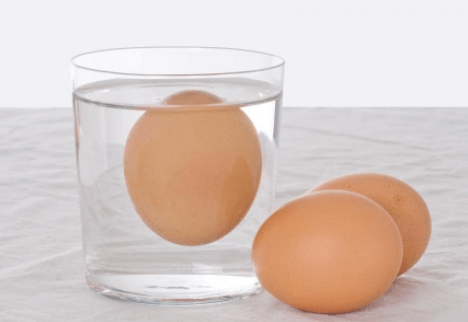
An egg gets dropped from a height of 0.1 meters and cracks. A second egg gets dropped from the same height but this time it lands on a glass of water and does not break. In terms of force and time, the second egg must have experienced...
more force, but less time.
less force, but more time.
more force, and more time.
less force, and less time.

Air bags are used in cars because they...
increase the force with which you hit the dashboard.
increase the duration (time) of impact in a collision.
decrease the momentum of a collision.
decrease the impulse in a collision.

One car crashes into a concrete barrier. Another car
crashes into a collapsible barrier at the same speed.
What is the difference between the 2 crashes?
change in momentum
change in velocity
impact time
For every action, there is an equal and opposite reaction.
Newton's 1st Law
Newton's 3rd Law
Newton's 2nd Law
Law of Momentum

The difference between a car hitting a concrete wall vs. a car hitting a thick hedgerow of shrubs...
the impulse on the car hitting the wall is greater.
the change in momentum of the car hitting the wall is greater.
the change in velocity is greater.
the collision time of the car hitting the hedgerow is greater.
What is one way in which an impact force can be reduced?
Increasing the change in velocity.
Increase the mass.
Decrease the impact time.
Increase the impact time.
During a collision, an object experiences an impulse. How can this impulse be calculated?
Multiplying force by time
Multiplying mass by velocity
Dividing velocity by time
Multiplying mass by acceleration

A helmet protects your head during a collision. The helmet crumples and breaks in order to increase the _____ and decrease the _____ on your head.
impulse; time
impulse; force
force; time
time; force

This GIF is an example of...
an inelastic collision.
an elastic collision.

When a more massive football player and a less massive player run into each other, who exerts more force?
The less massive player.
Their forces are equal.
The more massive player.

reducing the driver's change in momentum.
increasing the driver's change in momentum.
increasing the force of impact.
increasing the time of impact.
To increase the amount of force applied.
To increase the amount of time the force is applied.
To keep the velocity constant.
To minimize the change in direction.
Force is decreased by 1/2.
Force doubles.
Force is decreased to 1/4.
__________ is defined as a force multiplied by the time during which that force acts. This is also known as the change in momentum.
Momentum
Impulse
Acceleration
Displacement

