Wayground logo

Free Printable Worksheets

Font size

S
M
L
XL
Worksheets

1st quarte science revision sheet grade 5

Total questions: 186

Worksheet time: 4hrs 30mins

Name
Class
Date
1.

What is a chemical change?

a)

Forming a new substance

b)

When two or more substances combine to make a greater one

c)

When two or more substances combine to make a new chemical substance

d)

Combing substances

2.

involves how a substance will interact with something else

a)

physical change

b)

chemical change

c)

chemical property

d)

physical property

3.

When two or more substances combine, but it does not form anything new like salt and pepper or trail mix

a)

Chemical

b)

Matter

c)

mixture

d)

volume

4.

In a chemical reaction, the mass of the products is always

a)

A. equal to the mass of the reactants.

b)

B. less than the mass of the reactant

c)

C. greater than the mass of the reactants

5.

You know you a chemical reaction has occurred if .....

a)

A. There is a precipitate..

b)

B. There is a color change

c)

C.All of these answers are evidence.

6.

Which action does NOT occur when water is broken down to form hydrogen and oxygen ?

a)

A.. Atoms are rearranged to form new substances

b)

B. Atoms of hydrogen are created

c)

C. Bonds between hydrogen and oxygen are broken.

7.

A(n) is a starting substance in a chemical reaction ?

a)

reactant

b)

coefficient

c)

product

8.

A chemical reaction is the process of converting _____ to _____ ?

a)

atoms; molecules .

b)

reactants; products

c)

matter; energy

9.
Water that is heated and changed to steam is a 
a)
Physical change
b)
Chemical change
10.
Melting butter to pour over popcorn is a 
a)
Chemical change
b)
Physical change
11.
Which action would be a chemical change?
a)
freezing water
b)
tearing paper
c)
cleaning pennies
d)
melting chocolate
12.
Glass breaking s an example of a
a)
Chemical change
b)
Physical change
13.
Pancakes frying on a griddle is an example of a
a)
Physical change
b)
Chemical change
14.

Which is an example of a chemical change?

a)

Cutting paper

b)

Digesting Food

c)

Crumbling paper

d)

Boiling water

15.

A copper penny turning greenish after a few years is an example of what kind of change.

a)

Chemical Change

b)

Physical Change

16.
Which is a way that a piece of paper can go through a chemical change?
a)
fold the paper in half
b)
soak the paper in water
c)
burn the paper with fire
d)
cut the paper with scissors
17.
Which example best describes a physical change?
a)
iron rusting
b)
charcoal burning
c)
an ice cube melting
d)
a marshmallow burning
18.
A student is creating a potting soil mix. She combines 100 grams of sand, 200 grams of soil, and 200 grams of pebbles to make her potting soil. What is the mass of the potting soil?
a)
100 grams 
b)
200 grams
c)
300 grams
d)
500 grams
19.
The Law of Conservation of Mass tells us matter can't  ______________.
a)
change color
b)
change state of matter
c)
be created or destroyed
d)
change temperature
20.
What does the Law of Conservation of Matter refer to? 
a)
Matter can not be created or destroyed 
b)
Matter can be created but not destroyed 
c)
Matter can be destroyed but not created 
d)
Matter is being lost everyday 
21.

bread molding

a)

chemical

b)

physical

22.

making a paper airplane

a)

chemical

b)

physical

23.

Which is the best example of a new substance forming?

a)

lighting a match

b)

cutting a piece of paper

c)

popping a balloon

d)

hitting a nail with a hammer

24.

Bending metal

a)

Physical Change

b)

Chemical Change

25.

Boiling Water

a)

Physical Change

b)

Chemical Change

26.

Dissolving Sugar

a)

Physical Change

b)

Chemical Change

27.

A Candle Burning

a)

Physical Change

b)

Chemical Change

28.

A change from liquid to gas is a:

a)

chemical change

b)

mixture

c)

physical change

d)

chemical substance

29.

A change from liquid to gas is a:

a)

chemical change

b)

mixture

c)

physical change

d)

chemical substance

30.

Read the statement: Combining two liquids that give off heat and gas would provide evidence of a chemical change because the particles react to make a new material with different properties.

What evidence let's you know a chemical change has occurred?

a)

mixture of substances

b)

temperature change

c)

gas evaporation

31.

Heat water in a pan on a stove, and observe the steam that forms as the state of matter of the water changes.

What type of change is above?

a)

Chemical Change

b)

Physical Change

32.

Put an antacid tablet in water, and when the antacid and water mix, observe the bubbles that form as a new substance is created.

a)

Physical Change

b)

Chemical Change

33.

Placing two different liquids together in a beaker and observing that a solid forms when they mix would provide evidence of a chemical change because a new material is formed.

a)

Chemical

b)

Physical

34.
Is baking soda in vinegar a chemical or physical change?
a)
physical change
b)
chemical change
35.

Which of the following are signs of a chemical reaction?

a)

Formation of a gas

b)

A change in temperature

c)

A change in color

d)

A change in size

36.

In a chemical reaction, the number of atoms in the reactants and the products...

a)

Must be the same

b)

Must be different

37.

Which of these is NOT a sign of a chemical reaction?

a)

A phase change

b)

Formation of a precipitate

c)

A color change

d)

A temperature change

38.

When a chemical reaction occurs...

a)

New molecules and atoms are formed

b)

Molecules and atoms are rearranged

c)

Molecules and atoms disappear

d)

Molecules and atoms are destroyed

39.
In a chemical reaction
a)
The atoms of the reactants always stay together to form the products
b)
The atoms of the reactants unbond, rearrange, and then rebond to form the products
c)
Completely new atoms are formed which combine to make the products
d)
Some atoms disappear while others multiply to form the products
40.
One clue of a chemical change is the formation of a precipitate. A precipitate is formed when
a)
Two liquids react and a gas is produced
b)
A solid dissolves in a liquid
c)
One liquid dissolves in another
d)
Two liquids react and a solid is formed
41.
True or false? Dissolving salt is a chemical reaction.
a)
True
b)
False
42.
Is milk going sour a physical or chemical change?
a)
Physical 
b)
Chemical
43.

A substance that is formed as the result of a chemical reaction is a __________________

a)

Product

b)

Reactant

c)

Starters

d)

Enders

44.

Which one shows that a chemical reaction has occurred?

a)

dissolving

b)

melting

c)

formation of a gas

d)

bending

45.

Which observation(s) might be used as evidence that a chemical reaction occurred?

a)

Color change

b)

Properties change

c)

Odor change

d)

All the above

46.

A substance produced during a chemical reaction

a)

Product

b)

Reactant

c)

Properties

47.
Matter can not be created nor destroyed: it can only be
a)
Destroyed a little bit
b)
Invisible
c)
Transformed, changed
d)
None of the above
48.

A chemical reaction is balanced when

a)

both sides have the same elements

b)

Both sides have the same number of atoms

49.
If reaction starts with 20g of reactants it should produce 
a)
a total of 40g of products
b)
a total of 10g of products
c)
a total of 80 g of products
d)
a total of 20g of products
50.
What is the Law of Conservation of mass?
a)
Mass is created in a chemical reaction
b)
Mass is created in a physical change
c)
New chemicals formed from a chemical reaction have a larger overall mass than the original reactants
d)
Mass is never created or destroyed
51.

Mass is a measurement of

a)

how much space an object occupies.

b)

how dense an object is.

c)

the amount of matter in an object.

d)

the volume of an object.

52.

.............. is everything around us that has mass and takes up space

a)

volume

b)

space

c)

matter

d)

weight

53.

Are metals good conductors of heat and electricity?

a)

True

b)

False

54.

Which of these is a physical property of an object?

a)

Texture

b)

Color

c)

Shape

d)

All of the above

55.
How much space an object takes up is the 
a)
mass
b)
volume 
c)
weight 
d)
density
56.
Which units are used to measure mass?
a)
Grams
b)
Liters
c)
Meter
d)
Second
57.
a type of matter that can be found on earth as a solid, liquid, and gas
a)
gold
b)
water
c)
oxygen
d)
rock
58.
Example for Physical Property
a)
Taste
b)
explodes
59.
What causes a change in the state of matter?
a)
physical properties
b)
chemical energy
c)
temperature
60.
Which of the following could be a characteristic that changes in matter during a PHYSICAL CHANGE?
a)
Size
b)
State
c)
Texture
d)
All of the above
61.
How we describe and classify matter is called
a)
properties
b)
matter
c)
mass
d)
volume
62.
What is an example of a physical property?
a)
reactivity
b)
 color
63.
To determine if a piece of matter will sink or float, a student would...
a)
Use a hand lense to examine its physical properties.
b)
Measure its mass by using a spring scale.
c)
Use a magnet to see if it attracts.
d)
Place the object in a container of water.
64.
Which scientific tool should a student use to see if a piece of matter is magnetic?
a)
Hand lens
b)
Thermometer
c)
Hot place
d)
Magnet
65.
Physical Properties
a)
The look, feel, taste, sound, or smell of an object.
b)
Stay on the surface level in a liquid.
c)
Drop below the surface level in a liquid.
d)
Anything that has mass and takes up space.
66.
Magnetism
a)
Drop below the surface in a liquid.
b)
Group together based on similar traits.
c)
The property of attraction to a magnet.
d)
The look, feel, taste, sound, or smell of an object.
67.
Shape is a ____ that helps identify an object.
a)
physical property
b)
chemical property
c)
mass
d)
matter
68.
The ability of a metal to allow heat or electricity to pass through it.
a)
conductivity
b)
insulator
c)
mass
d)
density
69.

A characteristic of a type of matter that can be observed or measured

a)

Description

b)

Physical Property

c)

Investigation

70.

If matter sinks in water it is

a)

less dense.

b)

buoyant.

c)

least dense.

d)

more dense.

71.

A copper penny is

a)

non-magnetic.

b)

more dense in water.

c)

not soluble.

d)

All of the above.

72.

Salt is

a)

not soluble in water.

b)

less dense in water.

c)

soluble in water.

d)

magnetic.

73.

Sugar is

a)

less dense than water.

b)

not soluble in water.

c)

soluble in water.

d)

Not here

74.

An iron nail is

a)

magnetic.

b)

more dense in water.

c)

not soluble in water.

d)

All of the above

75.

What physical property does a copper penny and an iron nail have in common?

a)

The are soluble in water.

b)

The are magnetic.

c)

They are more dense in water.

d)

They are less dense in water.

76.

What would you measure with this tool?

a)

volume

b)

density

c)

mass

d)

weight

77.
This is testing ___________
a)
relative density
b)
solubility
c)
mass
d)
conductivity 
78.
The water is ______ dense than the boat
a)
more
b)
less
79.
If you poured 3 liquids that do not mix how could you tell which one is the most dense?
a)
The liquid on top
b)
The liquid in the middle
c)
The liquid at the bottom
80.
The ability of a substance to dissolve is called...
a)
malleability
b)
ductility
c)
solubility
81.
What is the difference between mass and weight?
a)
Mass is the total matter in an object, and weight is the downward pull of an object.
b)
Mass is the downward pull of gravity on an object, and weight is the total matter making up an object.
c)
Mass is Batnan, Weight is Spider-Cam
d)
I don't know 😭
82.
Which physical property is measured in liters?
a)
color
b)
length
c)
mass
d)
volume
83.

Which of the following tools can be used to measure the volume of a rock?

a)
b)
c)
d)
84.

The ability to burn

a)

physical property

b)

chemical property

85.

When ice melts, it is changing its state of matter. State of matter is a ---

a)

physical property

b)

chemical property

86.

The ability to shine is known as ---

a)

Luster

b)

Ductility

c)

Flammability

d)

Malleability

87.

Reactivity, like burning, bubbling, or fizzing, is a ---

a)

Chemical property

b)

Physical property

88.

Ductility is the ability to be stretched into thin wires, which is a ---

a)

Chemical property

b)

Physical property

89.

The ability to combust, or explode, is a ---

a)

Chemical property

b)

Physical property

90.

Malleability is the ability to be flattened into thin sheets, which is a ---

a)

Physical property

b)

Chemical property

91.

Digestion is the process of the human body breaking down food for nutrients, which is a ---

a)

Chemical property

b)

Physical property

92.

A characteristic of matter that can only be observed when matter is changed into a new kind of matter is called a ---

a)

Chemical property

b)

Physical property

93.
Reacts with Acid: Chemical or Physical Property
a)
Chemical Property
b)
Physical Property
94.
Reacts with Water: Chemical or Physical Property
a)
Chemical Property
b)
Physical Property
95.
Odor: Chemical or Physical Property
a)
Chemical Property
b)
Physical Property
96.

A measure of how easily a material allows electric current to flow through it

a)

electrical conductivity

b)

hardness

c)

physical change

d)

physical properties

97.

A measure of how easily the smooth surface of a mineral can be scratched

a)

conductivity

b)

hardness

c)

physical change

d)

physical properties

98.

a measure of an object's ability to conduct heat

a)

thermal conductivity

b)

electrical conductivity

c)

reflection

d)

density

99.

a substance that does not allow heat to pass through

a)

insulator

b)

electrical conductivity

c)

reflection

d)

density

100.

Which properties are physical properties?

a)

mass

b)

volume

c)

density

d)

all of these

101.

All matter can be classified by their physical properties. Which substance can be classified as being soluble in water?

a)

Sand

b)

Paper

c)

Iron Filings

d)

Salt

102.

Which of these is the best insulator of electricity?

a)

Copper Penny

b)

Plastic Tubing

c)

Aluminum Foil

d)

Metal Washer

103.

The picture below is an electrical wire.


What is the most reasonable answer for using copper in an electrical wire?

a)

Copper is a good insulator of electricity.

b)

Copper is magnetic.

c)

Copper is a good conductor of electricity.

d)

Copper is shiny.

104.

A student is dissolving sugar in water. What can the student do to make the sugar dissolve faster?

a)

Nothing, sugar will not dissolve in water.

b)

Add more water.

c)

Add ice to the water.

d)

Stir the solution.

105.

Choose the correct vocabulary word: Matter breaks down into particles that are so small that it seems to disappear.

a)

Relative density

b)

Magnetism

c)

Physical properties

d)

Dissolving

106.

the way light bounces off an object

a)

Solubility

b)

Reflectivity

c)

Hardness

107.
A large piece of ice is placed on the sidewalk on a warm day. What will happen to the ice? 
a)
It will melt to form liquid water
b)
It will melt to form water vapor
c)
It will not change at all.
d)
It will freeze to form liquid water. 
108.
How can you make liquid water become a solid?
a)
Add a lot of salt to the water.
b)
Put the water in a very cold place
c)
Shake the water container very fast.
d)
Heat the water on the stove.
109.
Snow turns to liquid water when it
a)
freezes
b)
evaporates
c)
condenses
d)
melts.
110.
John placed a pot of water on a stove. As the water boils, how does the state of the water change?
a)
from gas to liquid
b)
from liquid to a gas
c)
from a liquid to a solid
d)
from a solid to a liquid
111.
When ice melts, it becomes a 
a)
solid
b)
liquid
c)
gas
d)
plasma
112.
Which is MOST likely to happen to a solid substance that is heated?
a)
It will evaporate.
b)
It will boil
c)
It will melt.
d)
It will harden.
113.
Which change can occur when  you add heat energy to water?
a)
The water can change from a liquid to a solid
b)
The water can change from a gas to a liquid
c)
The water can change from a liquid to a gas
d)
The water can change from a solid to a liquid
114.
Anna is holding an ice cube. Why does the ice cube melt in her hand?
a)
Heat moves from her hand to the ice cube.
b)
Cold moves from her hand to the ice cube.
c)
Heat moves from the ice cube to her hand.
d)
Cold moves from the ice cube to her hand. 
115.
The change of state from a gas to a liquid
a)
condensation
b)
deposition
c)
evaporation
d)
sublimation
116.

Gas becomes solid without first becoming liquid

a)

sublimation

b)

deposition

c)

vaporization

d)

evaporation

117.

When matter goes from liquid to solid, that's called...

a)

Freezing

b)

Melting

c)

Evaporation

d)

Condensation

118.

When matter goes from solid to a liquid, that's called...

a)

Freezing

b)

Melting

c)

Evaporation

d)

Condensation

119.
What are the three states of matter?
a)
texture, volume, mass
b)
density, volume, mass
c)
solid, liquid, gas
d)
density, color, volume
120.
What is a solid?
a)
Solids have their own shape and size.
b)
Solids take the shape of their container.
c)
Solids spread out to fill space.
121.
What is a liquid?
a)
Liquids have their own shape and size.
b)
Liquids take the shape of their container.
c)
Liquids spread out to fill space.
122.
What is a gas?
a)
Gases have their own shape and size.
b)
Gases take the shape of their container.
c)
Gases spread out to fill space.
123.

A change from a liquid to a solid is called

a)

melting

b)

condensation

c)

evaporation

d)

sublimation

e)

freezing

124.

A change from a solid to liquid is called 

a)

melting

b)

freezing

c)

sublimation

d)

condensation

e)

evaporation

125.

A change from gas to liquid is called....

a)

melting

b)

freezing

c)

sublimation

d)

condensation 

126.

During freezing, liquid matter changes into ________

a)

gas

b)

solid 

c)

plasma 

127.

When liquid turns into solid the particles of the matter

a)

Moves slower, closer,and begins to pack tightly

b)

moves faster and escapes into the air

c)

neither moves slower or faster

d)

moves rapidly

128.

As heat energy is added to liquid, the water molecules (particles) have enough energy to

a)

break up, spread apart, and turn into gas

b)

bond and turn into solid

c)

bond and break up

d)

neither

129.

When heat energy decreases water vapor turns into gas, the water molecules start to move ____-

a)

faster and spread further apart

b)

slower and bond together

c)

slow and faster

d)

neither 

130.

When heat energy increases, the solid matter begins to turn back into liquid matter. Particles starts to

a)

move faster and break apart

b)

moves slower and bond

c)

escape into the atmosphere

d)

neither slower of faster

131.
Matter that has its own shape and takes up space.
a)
solid
b)
liquid
c)
gas
132.
Matter that always fills the shape in a container, such as air.
a)
solid
b)
liquid
c)
gas
133.
Milk takes the shape of its container because it is a:
a)
solid
b)
liquid
c)
gas
134.
How is a gas defined?
a)
no shape, no volume
b)
Definite shape, definite volume
c)
Found in stars
d)
Definite volume, no shape
135.
Molecules are closest together in a 
a)
Solid
b)
Liquid
c)
Gas
d)
plasma
136.
Define a liquid
a)
no shape, no volume
b)
Definite shape, definite volume
c)
Found in stars
d)
Definite volume, no shape
137.
On a hot summer day chocolate candy can melt in your pocket.  How can you get the chocolate to return to a solid?
a)
add heat
b)
leave it in your pocket
c)
cool it in the refrigerator
d)
leave it outside
138.
Which state of matter does ice start as (before you cool it)?
a)
liquid
b)
solid
c)
gas
139.

Particles in a ______________________ move quickly and are far apart.

a)

gas

b)

solid

c)

liquid

140.
The steam coming off the pot of boiling water is an example of....
a)
a solid becoming a liquid
b)
a liquid becoming a solid
c)
a liquid becoming a gas
d)
a gas becoming a liquid
141.

To change from a solid to a liquid, a substance must

a)

increase in temperature

b)

decrease in temperature

c)

stay the same temperature

142.

To change from a liquid to a gas, a substance must

a)

increase in temperature

b)

decrease in temperature

c)

stay the same temperature

143.

To change from a gas to a liquid, a substance must

a)

increase in temperature

b)

decrease in temperature

c)

stay the same temperature

144.

To change from a liquid to a solid, a substance must

a)

increase in temperature

b)

decrease in temperature

c)

stay the same temperature

145.

To change from a liquid to a solid, a substance must

a)

increase in temperature

b)

decrease in temperature

c)

stay the same temperature

146.

Particles (molecules) in a ______________________ have more energy than the other states of matter.

a)

Solid

b)

Liquid

c)

Gas

d)

Plama

147.
What is condensation?
a)
gas to solid
b)
gas to liquid
c)
liquid to solid 
d)
solid to liquid 
148.
If the tops were removed from the cylinders, the following would happen:
a)
The solid would fly out of the container
b)
The liquid would fly out of the container.
c)
The gas would fly out of the container.
d)
They ALL would fly out of the container.
149.
When a liquid loses enough energy it changes phase to a _____.
a)
solid
b)
liquid
c)
gas
d)
Mr.C
150.

Which process could cause a material to change state from gas to liquid?

a)

Adding heat

b)

Adding energy

c)

Removing particles

d)

Removing energy

151.

How can you stop the movement of particles?

a)

Increase the temperature

b)

Decrease the temperature

c)

You can't.

d)

Hold them still with your hands.

152.
When the temperature of matter increases the particles...
a)
speed up and move closer
b)
speed up and move farther apart
c)
slow down and move closer together
d)
slow down and move farther apart
153.

Removing energy from particles makes the particles

a)

move faster

b)

move slower

c)

stop moving all together

d)

remain the same

154.

Removing energy from particles makes the particles

a)

move faster

b)

move slower

c)

stop moving all together

d)

remain the same

155.

Which states of matter take the shape of their container?

a)

Liquids and gases

b)

Solids and liquids

c)

Gases and solids

d)

Solids, liquids, and gases

156.

When you add or remove heat to an object, you are adding or removing _________.

a)

Mass

b)

Energy

c)

Volume

d)

Matter

157.
Is  blood a mixture?
a)
No
b)
Yes
158.
Lemonade is a special mixture called a 
a)
substance
b)
solution
c)
plasma
d)
ingredient
159.
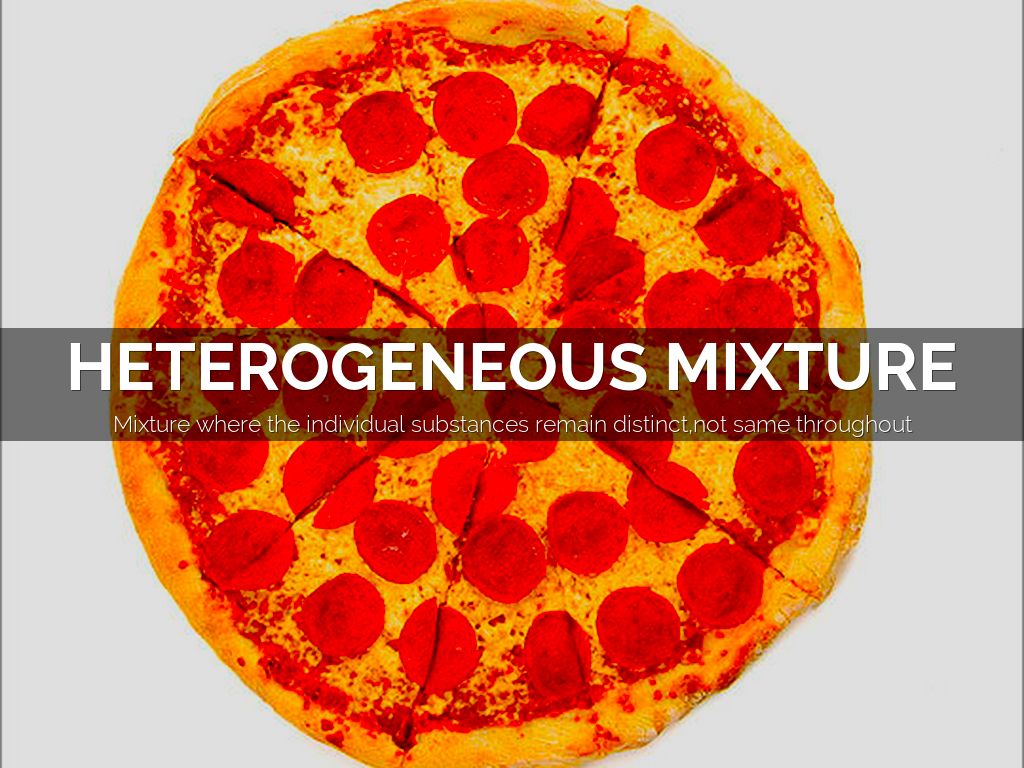
What does it mean if a mixture is heterogeneous?
a)
you can see the different parts
b)
cannot tell one part from another
c)
very well blended
d)
made of elements
160.
What does it mean if a mixture is homogeneous?
a)
you can see the different parts
b)
cannot tell one part from another
c)
chunks of particles
d)
made of elements
161.

What type of colloid Is Gas Dispersed in Liquid or Solid?

a)

Foam

b)

Aerosol

162.
A mixture that appears to be evenly mixed throughout:
a)
an atom
b)
a compound
c)
a homogeneous mixture
d)
a heterogeneous mixture
163.

_______ is a mixture in which particles will settle out.

a)

suspension

b)

colloid

c)

compound

d)

solvent

164.
Sugar water is a 
a)
solution
b)
suspension
c)
colloid
165.
Milk is a 
a)
solution
b)
suspension
c)
colloid
166.

The particles in both a solution and a colloid can

a)

A. scatter light.

b)

B. settle out.

c)

D. pass through a fine filter.

167.
Italian dressing is a
a)
solution
b)
suspension
c)
colloid
168.

Sugar water let's light pass through, and is a homogeneous mixture it is a

a)
solution
b)
suspension
c)
colloid
169.
A combination of rocks and water is an example of
a)

A heterogeneous mixture

b)
A solution 
c)
Dissovling
170.
Salad is an example of a
a)
homogeneous mixture
b)
heterogeneous mixture
171.
Chicken noodle soup
a)
heterogeneous mixture
b)
homogeneous mixture
172.
Chocolate milk is an example of a
a)
homogeneous mixture
b)
heterogeneous mixture
173.
Which of the following is an example of a solution?
a)
Water and Sand
b)
Water and Pepper
c)
Water and Sugar
d)
Water and Oil
174.

Sausage and mushroom pizza

a)

Heterogeneous

b)

Homogeneous

175.

When solids float but then settle if undisturbed, we call the mixture a

a)

Solution

b)

Suspension

c)

Colloid

d)

Alloy

176.

What is the difference between a solution and a suspension?

a)

solutions are well-mixed and homogeneous. Suspensions are heterogeneous and settle out.

b)

solutions settle out and are heterogeneous. suspensions are well-mixed and homogeneous

c)

solutions and suspensions are homogeneous. Solutions settle out

d)

solutions and suspensions are heterogeneous, but solutions settle out

177.

What can be combined to create a mixture?

a)

Lettuce, tomatoes, and onions

b)

Oil, water, and seasonings

c)

Lemonade powder and water

d)

All of the Above

178.

A thick fluid is poured through a filter and particles are left behind. This is a

a)

mixture, but not a solution

b)

mixture AND solution

c)

Solution, NOT a mixture

d)

Pure substance

179.

Can a mixture of sand, gravel, and water ever be a homogeneous mixture?

a)

Yes, if you stir it

b)

Yes, if you use a filter

c)

No, it will always be heterogeneous

d)

Yes, if you add cement to it

180.

Whipping cream is

a)

a colloid

b)

an alloy

c)

a suspension

d)

a solution

181.

Fog is a type of colloid. (a)  

182.

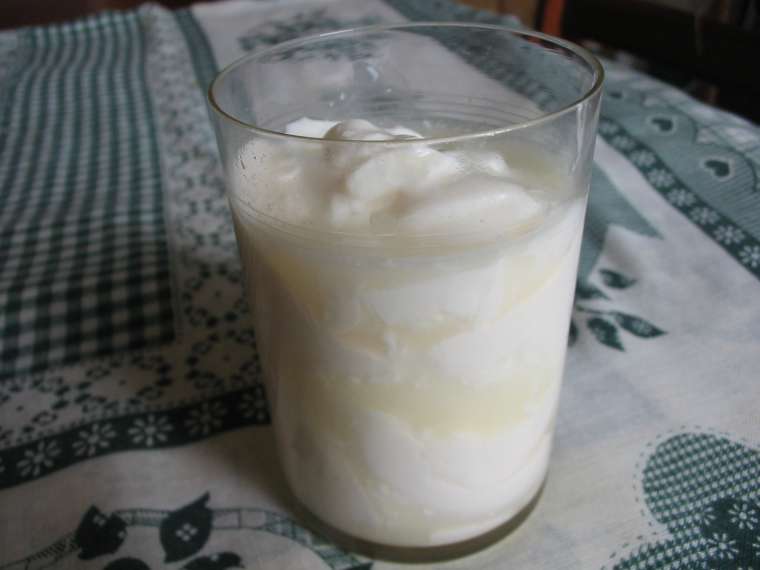
What type of mixture is shown in the image?

a)

aerosol

b)

homogeneous mixture

c)

suspension

d)

foam

183.

What type of mixture is shown in the image?

a)

foam

b)

suspension

c)

solution

d)

aerosol

184.

A colloid where small particles of liquid or solid material are trapped in air.

a)

suspension

b)

foam

c)

solution

d)

aerosol

185.

Water is a (a)   mixture.

186.

A colloid that forms when gas bubbles are trapped in a liquid or solid.

a)

foam

b)

homogeneous mixture

c)

colloid

d)

suspension