
Font size
 Worksheets
Circulation and Respiration Review
Total questions: 34
Worksheet time: 17mins
Pulmonary circulation involves movement of blood between the heart and:
lungs
brain
liver
kidneys
The lymphatic system is important for the normal functioning of the body because it:
carries newly formed blood to the cardiovascular system.
returns excess intercellular fluid, such as lymph fluid, to the cardiovascular system.
provides an alternative route for blood during strenuous exercise.
carries oxygen to the lymph nodes.
Exchange of nutrients and wastes between blood and body tissues occurs across:
alveoli
capillaries
arteries
veins
Which of the following blood vessels is responsible for supplying the heart with oxygen?
coronary arteries
aorta
coronary veins
pulmonary artery
Heart valves are important because they:
make sure blood is traveling in one direction.
are the largest part of the heart.
promote clotting
help to oxygenate the blood
Cilia that line the walls of the air passageways:
move inhaled air to the alveoli
move the expired air to the nasal cavity
moisten the expired air
clean the inspired air
The wall that divides the heart vertically is the:
ventricle
pericardium
septum
atrium
The function of fibrin is to:
destroy invading organisms
transport oxygen
stimulate the production of antibodies
help form blood clots
Blood is traveling in the pulmonary artery. Which of the following is likely to happen?
The blood will travel to the body tissues to deliver oxygen.
The blood will travel through the body to pick up wastes.
The blood will return to the right atrium.
The blood will travel to the lung to become oxygenated.
Which of the following is the chamber of the heart that collects deoxygenated blood?
right atrium
right ventricle
left atrium
left ventricle
Which of the following is the largest artery through which blood leaves the heart?
carotid artery
pulmonary arteries
aorta
superior vena cava
Which is the correct sequence for the path of oxygen through the respiratory system?
nasal passages, bronchi, trachea, bronchioles, cells, blood, alveoli
cells, blood, alveoli, bronchioles, trachea, nasal passages
nasal passages, blood, alveoli, bronchi, cells, trachea, bronchioles
nasal passages, trachea, bronchi, bronchioles, alveoli, blood, cells
Emphysema is a condition that results in the destruction of alveoli in the lungs. What effects would this have on the body?
lower levels of oxygen in the blood
high levels of oxygen in the blood
lower levels of carbon dioxide in the blood
no effect
If blood is traveling in the pulmonary vein, where is its destination?
the right atrium
the left atrium
the lungs
the body
The aortic valve is found between the aorta and the __________.
right atrium
left atrium
right ventricle
left ventricle
Which of the following valves is found between the right ventricle and the pulmonary artery?
tricuspid valve
bicuspid valve
aortic valve
pulmonary valve
Sam has been smoking for 37 years. Which of the following could be true about Sam?
Sam's pulse rate will be elevated.
Sam's blood pressure will be higher.
The cilia that line the respiratory system will be destroyed.
Sam could have higher healthcare costs.
All of the above could be true for Sam.
Which of the following is false about the alveoli of a smoker?
the alveoli can repair themselves
they lose the ability to hold oxygen
the rate of gas diffusion decreases
they expand in size
Which of the following represents ways to improve your cardiovascular health?
eat a well balanced diet
exercise regularly
do not smoke
maintain a healthy weight
all of the above are ways to maintain good cardiovascular health.
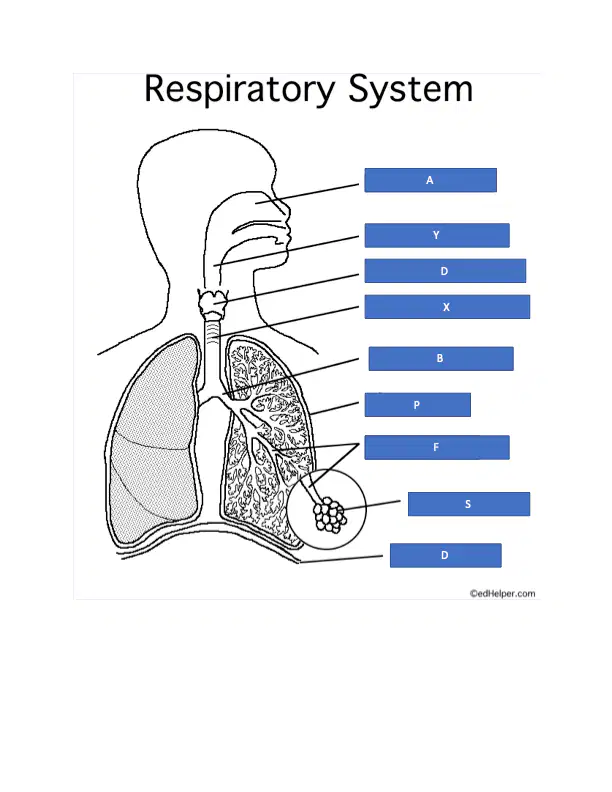
What is the name of the structure labeled D:
lung
alveoli
Trachea
diaphragm
How would the diaphragm change in order to inhale?
flatten and lower
expand and go higher
flatten and go higher
expand and lower
What would happen to the diaphragm during a cough?
it would flutter
it would remain still
it would move up rapidly
it would relax
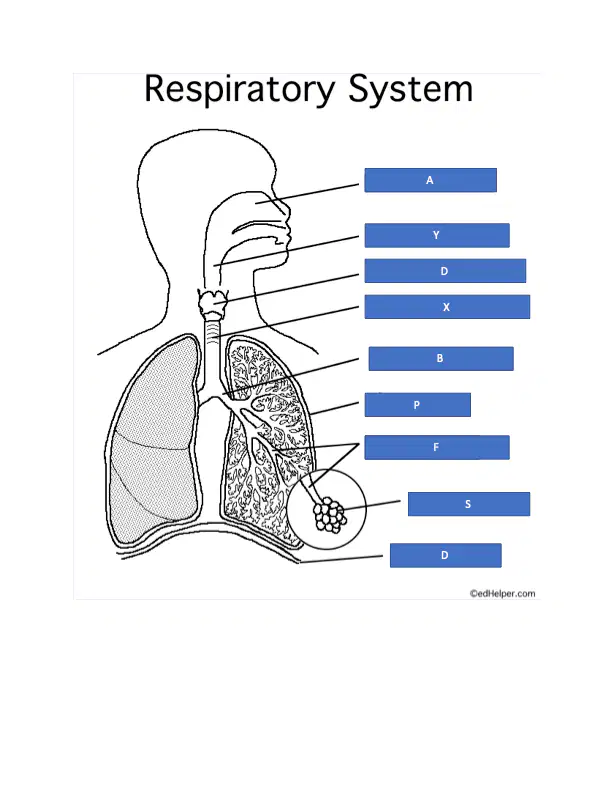
What is the name of the structure labeled X?
lung
alveoli
trachea
diaphragm
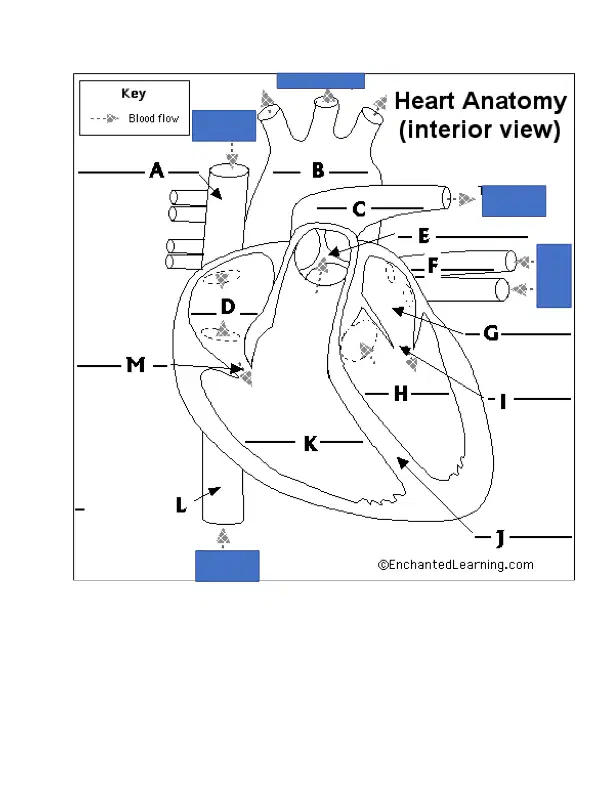
What is the destination of the blood in structure "B"?
the heart
both lungs
the body
the left lung
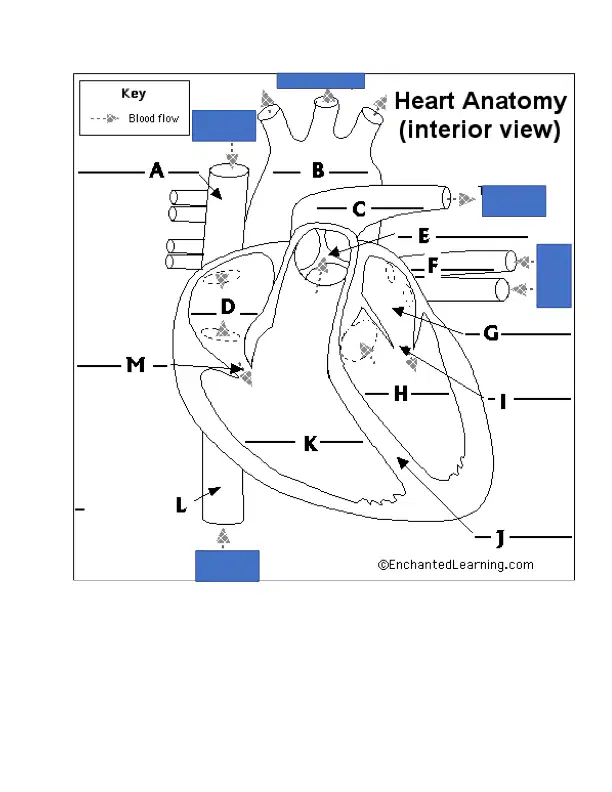
How is the blood located in artery C different than the blood in all other veins of the body?
it is rich with oxygen
it is rich with carbon dioxide
it doesn't reach the lung
nothing
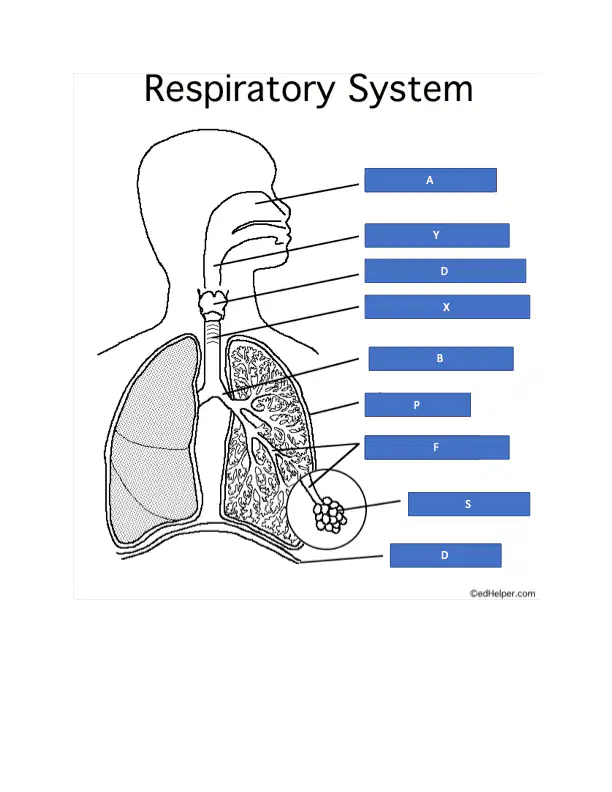
The location of gas exchange would be:
A
F
S
E
Which of the following is a protein that aids in the transport of oxygen?
hemoglobin
fibrin
alveoli
platelets
Which of the following helps the blood to clot after an injury?
hemoglobin
capillaries
platelets
red blood cells
When a person has pneumonia, the alveoli become inflamed and the air spaces become clogged. What effect will these symptoms have on a pneumonia patient?
Bronchi would exchange the gases
Increased oxygen flow to the body cells
Blood flow would increase to the alveoli
Decreased oxygen flow to the body cells
Arteriosclerosis slowly reduces blood flow through the arteries to the brain. Explain how this may affect a patient who has this condition?
The brain would compensate and get blood from another part of the body.
Decreased oxygen flow to the brain which would increase cell death and decrease neuron activity
Increased blood pressure sent to the brain to compensate for the reduced blood flow availability.
The arteries would grow in size to allow better blood flow.
Some babies are born with a hole in the septum between the two atria. Based on what you know about blood flow through the heart, explain why this condition is harmful.
Blood would flow between the two atria which would decrease the pressure needed to pump oxygen rich blood to the body.
Oxygen rich blood would mix with de-oxygen rich blood.
Carbon dioxide levels would increase.
all of the above answers are correct
What are the various cells that are found in the blood. (KNOW three facts about each type of blood cells for the test!)
red blood cells
white blood cells
platelets
hemoglobin
red blood cells that carry oxygen to the heart
white blood cells carry oxygen
platelets fight diseases
RBC- carry deoxygenated blood
(FOR THE TEST-Explain what happens to make the heart beat. Explain how blood pressure is determined and the meaning of the numbers.)
What is a healthy blood pressure?
140/90
90/140
80/120
120/80
FOR THE TEST- Explain how blood is oxygenated using the following words: lungs, alveoli, diffusion, capillaries, carbon dioxide, inhale, exhale, and oxygen.)
OH MY.. I really need to study!!!
I totally know the flow of blood through the heart.
I think I got this... but I should re-do this quizziz before the test.
I have zero clue what I am doing...

