
 Worksheets
2.1.3 / 2.1.4 - Neurons, Action Potential, Synapse
Total questions: 24
Worksheet time: 18mins
Match the following functions with the neuron structure
Carries the message to its next destination
Axon
Contains the nucleus
Soma (Cell Body)
Receive incoming message
Dendrites
Contains the Schwann Cells and insulates the neuron
Myelin Sheath
Branching ends of the axon where neurotransmitters are stored
Axon Terminals
Match the following structures with their function
Space between the axon terminal of one neuron to the dendrite of another
Synapse / Synaptic Cleft
An electrical signal used by neurons to transmit a message
Action Potential
Chemical Signaling molecules used to transmit signals from one cell to the next
Neurotransmitter

Match the following
A
Myelin Sheath
B
Sensory Neuron
C
Nodes of Ranvier
D
Soma / Cell Body
E
Synapse
Match the following
F
Interneuron
G
Dendrites
H
Axon
I
Motor Neuron
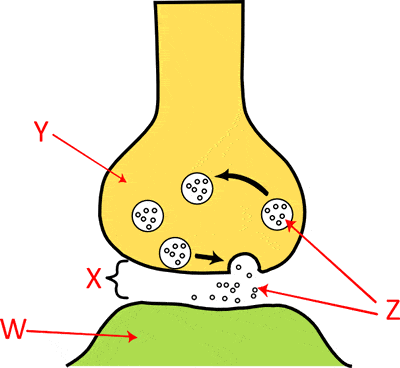


Z
Axon Terminal Button
Neurotransmitters
Dendrite
Synapse
X
Axon Terminal Button
Neurotransmitters
Dendrite
Synapse

What chemical is activated by the action potential in the presynaptic neuron that causes the vesicles containing neurotranmitters to move toward the synaptic cleft?
calcium
potassium
sodium
phosphorus
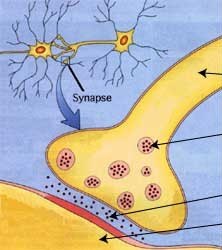
The location of neurotransmitters
axon terminals
dendrites
Schwann cells
cell body

5 shows ____ diffusing across the synaptic cleft.
neurotransmitters
calcium ions
sodium ions
6 shows ____ entering the pre-synaptic neuron
neurotransmitters
calcium ions
sodium ions
Reorder the following stages of a synapse
Action potential reaches the axon terminals of the sending cell; Ca ions flow into axon of sending cell
Ca ions entering the cell trigger vesicles to fuse with membrane, dumping neurotransmitters into synapse
Neurotransmitters attach to receptor proteins on the membrane of the receiving cell
Neurotransmitters re-enter the synapse and an action potential MAY be triggered in the receiving cell
![[Practice Test] Skeletal & Muscular Systems](https://cf.quizizz.com/image/image-loader.svg)
