Worksheets
Electricity and Magnetism
Total questions: 63
Worksheet time: 5hrs 15mins
Protons have a (a) charge.
Electrons have a (a) charge
Atoms become charged by gaining or losing (a) .
An accumulation of excess charge on an object is known as (a) electricity
electric charges can be transferred from object to object but not created or destroyed is described by the law of conservation of (a) .
Two positive charges would (a) each other
two negative charges would (a) each other
A positive and a negative charge would (a) each other
materials in which electrons can easily move is known as (a)
materials in which electrons are not able to move easily are known as (a)
the process of charging an object by actual physical contact is known as charging by (a) .
the process of charging an object by rearranging electrons on a neutral object caused by nearby charged objects is known as charging by (a) .
The collision of raindrops and ice crystals in a storm cloud create ___________ ________.
(a)
In a storm cloud, (a) move to the bottom of the cloud
In a storm cloud, (a) move to the top of the cloud
The net movement of electric charges through a wire or conductor is known as electric (a) .
The force that causes electric charges to flow is known as (a) difference.
Charges always flow from _____ voltage to _____ voltage
(a)
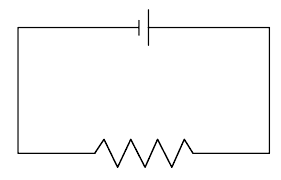
A closed path that electric current follows is known as a (a)
In which type of battery does the chemical reaction occur in a moist paste?
(a)
Which type of battery contains two metal plates in a conducting solution?
(a)
A car battery is an example of a (a) - cell battery
An energizer battery that is rated AAA is a (a) - cell battery.
The tendency for a material to oppose the flow of electrons is known as (a)
All materials have some amount of resistance. Resistance is measured in units called (a) .
For a circuit, if the battery outputs a voltage of 25 V, and the lightbulb has a resistance of 5 ohms, what current is flowing through the circuit?
(a)
A circuit in which the current has only one loop to flow through is known as a (a) circuit.
Which of the following is NOT one of the ways that you can increase the resistance of a wire?
making the wire thinner
giving the wire more coils
making the wire longer
heating the wire
Which scientist went out into a storm with a key on a kite?
LeClanche
Franklin
Edison
Volta
Which scientist is credited with building the first dry-cell battery?
LeClanche
Edison
Faraday
Volta
A circuit that contains two or more loops or branches for current to flow through is known as a (a) circuit.
A circuit that is composed of both series and parallel circuits is known as a (a) circuit.
What is the differences and similarities between electric fuses and circuit breakers?
(a) refers to the properties and interactions of magnets in which there is a force of attraction or repulsion between like or unlike poles.
The strength of force between two magnets depends on the (a) between them
The magnetic (a) exerts a force on other magnets and magnetic materials.
If you were to put two north poles of two magnets close to each other they would (a) each other.
If you were to put a north and a south pole of two magnets close to each other the poles would (a) each other
Which of the following is NOT a magnetic material?
tin
iron
cobalt
nickel
Groups of atoms that are aligned with magnetic poles are known as magnetic (a)
If an electric current flows through a wire from left to right, the magnetic field flows in a (a) rotation.
When an electric current flows from right to left through a wire, the magnetic field that is generated flows (a)
A temporary magnet made by wrapping a wire coil carrying an electric current around an iron core is known as a (a)
How can you increase the strength of the magnetic field generated from an electromagnet?
A device that converts electrical energy into mechanical energy is known as an electric (a)
Which of the following does NOT use alternating current?
Outlet
Alternator
electromagnet
tv remote
A current that only flows in one direction through a wire is known as a (a) current.
A current that reverses direction in a regular pattern is known as (a) current.
An electric current will always follow ______________.
a path towards the north pole
a path towards the south pole
a path through insulators
An example of an insulator is _________.
iron
water
A device used to open and close an electric current is known as a __________.
resistor
switch
battery
capacitor
What unit is used to measure current?
Ohms
Omega
Volts
Amps
What unit is used to measure resistance?
Ohms
Omega
Volts
Amps
What is the current in a circuit with 6 ohms of resistance and a battery containing 24 Volts?
1/4 A
144 A
4 A
0.4 A
What is the resistance of a lightbulb that experiences 9 Volts and 3 amps of current?
1/3 ohms
3 ohms
27 ohms
9 ohms
What is the formula for ohms law?
1+2=3
R X E = I
V =I x R
E= MC squared