
 Worksheets
Year 10 Revision Quiz all 2019
Total questions: 60
Worksheet time: 52mins

The graphs shows an object
moving in a circle
at constant speed
decelerating
accelerating

The graph shows an object
that has traveled 1300 metres
that has traveled 1150 metres
that has traveled 1600 metres
that has traveled 1250 metres

acceleration equals
9.0 ms-2
9.0 ms-1
900 ms-2
900 ms-1

acceleration equals
10.25 ms-2
15 ms-2
9.6 ms-2
8.2 ms-2

acceleration equals
3 ms-2
3.0 ms-2
0.33 ms-2
0.3 ms-2
Which are the major components of a model rocket?
body tube
wings
engine
fins
nose cone
Which rocket component reduces drag?
nose cone
streamer
Which rocket component provides thrust?
engine
nose cone
launch lug
fin
Which rocket component provides stability?
fin
streamer
nose cone
shockcord
What two forces slow a rocket down as it is being launched?
Thrust & Lift
Weight & Drag
The force supplied by the rocket engine must be strong enough to overcome...
Lift
Weight
Thrust
Acceleration


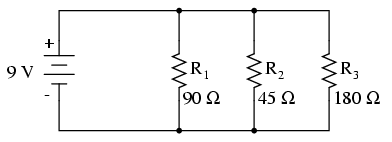


What is the unit for resistance?
Ohm
Amp
Volt
Watt
What is the unit for power?
Joule
Watt
Ohm
Amp
When bulbs are connected in parallel
they shine brightly
they keep shining if one blows
the current flowing is maximum
all of these are true
What current flows if a charge of 0.12 C passes through an ammeter every 3 seconds?
0.04 A
0.36 A
25 A
0.12 A
How much charge flows from a 1.5 V cell that supplies 0.18 Joules to a circuit?
0.12 C
8.33 C
0.27 C
0.18 C
What is the resistance of a bulb if a current of 2.5 A flows through it when there is a voltage of 12 V across it?
4.8 Ω
30 Ω
21 A
0.21 A
What is the voltage across a bulb of resistance 100 Ω when a current of 20mA flows?
2 V
500 V
5000 V
0.0002 V
What is the total resistance in a circuit with three 10 Ω resistors connected in series?
30 Ω
10 Ω
300 Ω
3.3 Ω
What is the total resistance in a circuit with three 10 Ω resistors connected in parallel?
10 Ω
30 Ω
3.3 Ω
300 Ω
What is the unit for charge?
Q
Coulomb
Watt
Amps
Current is the rate of ________ of charge
flow
charge
energy
time
In Physics the change of energy is the same as
work
electron
charge
time
Voltage is the _________ per unit charge
energy
time
current
resistance
Power is the rate of ___________ change
energy
current
voltage
resistance
The defining equation for current is
I=Q/t
I=V/r
I=Pt
I=W/t
The defining equation for voltage is
V=W/Q
V=Ir
V=Qp
V=P/I
How much power does a 12 V battery supply when a current of 3.5 A is flowing to a circuit?
3.4 W
42 W
12 W
0.21 W

*(hard question!! 5 minutes allowed)
The missing current is
0.21 A
0.34 A
0.12 A
0.56 A

it is an LDR with the positive side indicated
it is a diode with the negative side indicated
it is an LDR with the negative side indicated
it is an diode with the positive side indicated

it is an LDR which stands for light dependent resistor
it is a diode that emits light called an LED
it is an LDR which stands for light developing resistor
it is a diode which absorbs light and changes resistance

the graph is for a lamp and it curves as it heats up and gains resistance
the graph is for a resistor and it curves as it heats up and gains resistance
the graph is for a lamp and it curves as it cools down and loses resistance
the graph is for a resistor and it curves as it cools down and loses resistance

graph showing that the ratio of V/I is constant for a resistor
graph showing that the ratio of V/I is constant for a lamp
graph showing that the ratio of V/I is constant for a diode
graph showing that the ratio of V/I is not constant

If each electron has a charge of -1.6x10⁻¹⁹ C...how many of them does it take to make up 1 Ampere of current?
6.25x10¹⁸
6.25x10⁻¹⁸
1.6x10¹⁹
1.6x10⁻¹⁹
What does reflection mean?
It is when the light transmits through the material and the direction of it changes as well.
It is when the material is rebounding the light.
Light is absorbed by a material
When a rainbow is formed outside naturally, what causes the light to refract?
A. Small raindrops
B. Sunlight rays
C. Tiny mirrors
D. Glass prisms

Which explains why the fork looks different under water?
light can't pass through the glass
the wavelength of light lengthens
the amount of light increases when going through water
light is refracted at an angle when passing through different mediums
What is a magnifying glass made from?
convex lens
plane glass
concave lens
transparent magic glass
Another name for a convex lens
converging lens
diverging lens
bendy glass
concave lens

To see a rainbow sunlight needs to enter and leave suspended water droplets in the atmosphere at an angle relative to the observer equal to :
142o
32o
42o
132o
A beam of light is incident on a rectangular glass block at 30o to the normal. What happens to this beam?
it will refract towards the normal inside the glass block
it will speed up inside the glass
it will exit the block on the other side parallel to the original path
it will bend towards the normal line when it exits the block on the other side
White light from the sun
travels in straight lines
is made up of all the colours of the rainbow
is yellow
travels in curves
Which word means white light is spread apart into the rainbow colours?
dispersion
refraction
reformation
diversion

To spear a fish from above the water surface you need to aim
slightly forward and deeper
slightly behind and deeper
slightly forward and shallower
straight at the image

The type of image formed on the back of the eye
real, inverted and diminished
virtual, inverted and diminished
real, upright and diminished
virtual, inverted and magnified

What is it?
circuit symbol for a variable resistor
circuit symbol for an LDR
circuit symbol for a thermistor
road sign for a level crossing

graph showing resistance is inversely proportional to temperature
for a thermistor
graph showing resistance is proportional to temperature
for a light bulb

If a third resistor
is added in series the current will go down
is added in parallel the current will go up
is added in series the current will go up
is added in parallel the total circuit resistance goes down

the current I is the largest
if all resistors are equal then total resistance = 1.5R
if all resistors are equal then I1 = I2 + I
the circuit supply voltage is divided evenly between all three resistors if 2R1 = R2 = R3

