
 Worksheets
Magnetism and Electricity Study Guide_25
Total questions: 60
Worksheet time: 1hrs 10mins
What is MagLev (Magnetic Levitation)?
A technology that uses magnetic forces to lift, propel, and guide objects, such as high-speed trains, without direct contact with the ground, reducing friction and increasing speed.
A type of magnetic storage used in computers.
A method of wireless energy transfer.
A technique for magnetic resonance imaging.
What is a Proton?
A positively charged subatomic particle found in the nucleus of an atom and helps with the atomic mass.
A negatively charged subatomic particle found in the nucleus of an atom and helps with the atomic mass.
A neutral subatomic particle found in the nucleus of an atom and helps with the atomic mass.
A positively charged subatomic particle found outside the nucleus of an atom and helps with the atomic mass.
What is an Electron?
A negatively charged subatomic particle that orbits the nucleus of an atom and is responsible for electricity and chemical bonding.
A positively charged particle found in the nucleus of an atom.
A neutral particle that resides in the nucleus of an atom.
A type of molecule that forms the basis of organic compounds.
What is a Neutron?
A neutral subatomic particle found in the nucleus of an atom. It has no electric charge but contributes to the atom's mass.
A positively charged particle found in the nucleus of an atom.
A negatively charged particle orbiting the nucleus of an atom.
A particle responsible for the chemical properties of an atom.


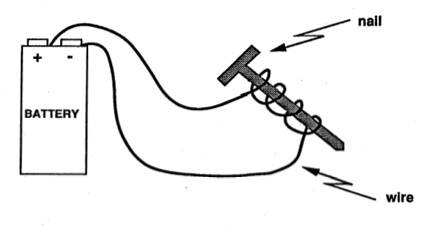
Magnets on a refrigerator cannot be turned off. Which type of magnets do they belong to?
electromagnets
battery
permanent magnets
copper wire
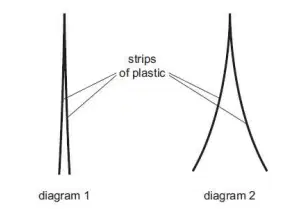
Diagram 1 shows two, thin, uncharged strips of plastic.
Diagram 2 shows the same strips after they have been rubbed with a dry cloth.
Which answer best describes the charges on the strips after rubbing and the force between the strips after rubbing.
Opposite charge and attractive force.
Opposite charge and repulsive force.
The same charge and attractive force.
The same charge and repulsive force.
A teacher wishes to show the production of electrostatic charges. A plastic rod, a copper rod, a glass rod and a steel rod are available.
The teacher chooses a rod, holds the rod and rubs it with a dry cotton cloth to produce the charges. Which two types of rods should he choose?
copper and glass
glass and plastic
plastic and steel
glass and steel
Which test could be used to find the North pole of a magnet?
Put it near a compass needle?
Put it near a ferrous metal
Put it near a non-ferrous metal
Put it near a steel spoon
A Van de Graaf generator is used to make?
A large amount of static electricity
A large amount of current
A small amount of voltage
A small amount of resistance.
The magnetic field lines around a magnet run from...
North to South
South to North
East to West
West to East

What is static electricity?
Build-up of electric charge on the surface of objects
The generation of heat from electric charge
The flow of electric charge through a conductor
The absence of electric charge on the surface of objects
What causes static electricity?
Drinking carbonated beverages
Rubbing two metals together
Exposure to sunlight
Imbalance of positive and negative charges
How is static electricity different from current electricity?
Static electricity is the build-up of electric charge on the surface of objects, while current electricity is the flow of electric charge through a conductor.
Static electricity is only found in nature, while current electricity is man-made.
Static electricity and current electricity are the same thing.
Static electricity is the flow of electric charge through a conductor, while current electricity is the build-up of electric charge on the surface of objects.
What are some examples of static electricity in everyday life?
Clothes sticking together after being in the dryer, getting a shock when touching a metal object after walking on carpet, and seeing hair stand up after rubbing a balloon on it.
Feeling warm after touching a metal object
Seeing a rainbow after a rainstorm
Hearing a loud noise when turning on a light switch
What is the role of insulators and conductors in static electricity?
Insulators attract electric charge, while conductors repel electric charge.
Insulators prevent the flow of electric charge, while conductors allow the flow of electric charge.
Insulators and conductors have no effect on the flow of electric charge in static electricity.
Insulators allow the flow of electric charge, while conductors prevent the flow of electric charge.
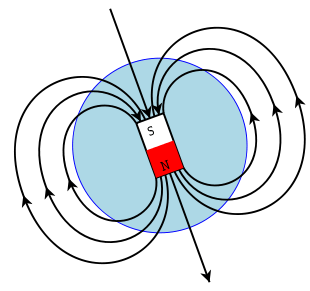
The area of magnetic force around a magnet is known as its _____________.
magnetic field
magnetic declination
magnetic fan lines
magnetic tan lines

Are the magnetic field lines in the picture correct?
Yes, because they point from north to south.
No, because they point from north to south (they're supposed to go the other way).
Yes, because the North pole is on the left in all pictures.
No, because the North pole is on the left in all pictures (it's supposed to be on the right).

The strongest part of a magnet is...
the bars .
the force field.
the poles.
the middle.

Describe the relationship between voltage and current in a circuit.
Voltage and current are inversely proportional in a circuit.
Voltage and current are unrelated in a circuit.
Voltage has no effect on current in a circuit.
Voltage and current are directly proportional in a circuit.
If the current in a circuit is 2A and the resistance is 5 ohms, what is the voltage?
7V
15V
3V
10V
Which best describes a parallel circuit?
Electricity flows along one pathway.
The flow of electricity comes from one source.
Electricity flows along more than one pathway.
The flow of electricity comes from more than one source.
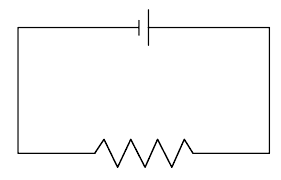
If the battery produced 12.6 Volts and there was a 6 Ohm resistor, what would be the current?
2.1 Amps
2.4 Amps
1.71 Amps
15 Amps

Simple, Series, or Parallel?
Simple
Series Circuit
Parallel Circuit
What is the unit for resistance?
volts
amps
coulombs
ohms
What is the job of a battery? (BEST answer)
provide power
provide energy
turns the circuit on
provide energy for the electrons to flow

In a neutral atom, the number of electrons is equal to the number of _______.
orbitals
neutrons
protons
none of the above

An object becomes electrically charged when the atoms in the object gain or lose
electrons
protons
neutrons
all of the above

When you rub a balloon up against your shirt, the shirt becomes positively charged. This means that
more protons were created on the shirt.
electrons left the shirt and moved to the balloon.
protons left the balloon and moved to the shirt.
neutrons left the shirt and moved to the balloon.

conduction
induction
friction
Static electricity can be generated by what three methods?
convection, conduction, and radiation
conduction, induction, and friction
gravity, force, and electricity
Charging by ____ occurs when electrons are transferred from one object to another by DIRECT contact.
conduction
induction
friction
An object becomes charged when another charged object comes close to, but does not touch the object.
conduction
induction
friction
An object becomes charged when it rubs against another charged object.
conduction
induction
friction

