
 Worksheets
1st Semester Exam Review
Total questions: 60
Worksheet time: 54mins
Name
Class
Date
1.
What type of heat transfer takes place in liquids and gasses?
a)
Conduction
b)
Convection
c)
Radiation
d)
Thermal Equilibrium
2.
As you touch a hot stove the heat transfers -
a)
from your hand to the stove
b)
from the stove to your hand
c)
It doesn't transfer
3.
Heat transfer always goes from-
a)
Cold to Hot
b)
Hot to Cold
c)
Heat doesn't transfer
d)
Freezing to Cold
4.

The heat from a hot burner to a pot is transferred by ______.
a)
convection
b)
insulation
c)
radiation
d)
conduction
5.
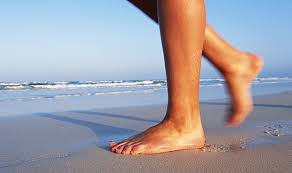
Walking on the warm sand sand with your bare feet demonstrates this type of heat transfer.
a)
conduction
b)
convection
c)
radiation
6.
When a soccer ball is on a field, the energy it has just before being kicked is called
a)
kinetic energy
b)
potential energy
c)
mechanical energy
d)
chemical energy
7.

Warm air rises and the cool air sinks demonstrates this type of heat transfer.
a)
conduction
b)
convection
c)
radiation
d)
Insolation
8.
Conductors are materials that...
a)
Allow heat to pass through
b)
Stop heat from passing through
c)
Allow cold to pass through
d)
Stop cold from passing through
9.

A battery converts what type of energy to another?
a)
sound to kinetic
b)
light to heat
c)
mechanical to electrical
d)
chemical to electrical
10.

Warm air rises and the cool air sinks demonstrates this type of heat transfer.
a)
conduction
b)
convection
c)
radiation
d)
Insolation
11.
Conduction, Convection and Radiation are three types of...
a)
Electrical energy
b)
Thermal Energy
c)
Chemical Energy
d)
Sound Energy
12.
Energy transformations occur when...
a)
energy is created through conduction
b)
energy changes from one form to another
c)
two forces slide together that are touching
d)
a chemical reaction takes place
13.

The roller coaster cart has the most gravitational potential energy at position-
a)
W
b)
X
c)
Y
d)
Z
14.

The picture shows a microwave oven. As a microwave oven is operated, electrical energy is transformed into all of the following types of energy EXCEPT —
a)
solar
b)
light
c)
thermal
d)
mechanical
15.

When the 2nd story of a house is warmer than the 1st floor of a house is heat transfer through
a)
conduction
b)
convection
c)
radiation
d)
thermal equilibrium
16.

The sun warming your skin is an example of heat transfer through
a)
conduction
b)
convection
c)
radiation
d)
thermal electricity
17.

Heat transfer through electromagnetic waves is called
a)
conduction
b)
convection
c)
radiaton
d)
thermal
18.

A group of friends gather around a fire to stay warm.
a)
conduction
b)
convection
c)
radiation
19.
Hot coffee is stirred with a spoon; the spoon gets hot due to
a)
conduction
b)
convection
c)
radiation
20.
Convection is heat transfer by-
a)
Touch an object
b)
The heating and cooling of a fluid
c)
Electromagnetic Waves
21.
Water (H2O) is an example of:
a)
Element
b)
Compound
c)
Solution
22.
When two or more elements chemically combine
a)
element
b)
compound
c)
mixture
d)
solution
23.
Compounds are different than elements because compounds are -
a)
A combination of two or more elements.
b)
B)not able to be broken down into parts
B)not able to be broken down into parts
c)
made from the same type of atoms
d)
a pure substance, elements are not
24.
A pure substance containing only one kind of atom.
a)
element
b)
mixture
c)
compound
25.

What is sugar (C6H12O6)?
a)
element
b)
compound
c)
mixture
26.

What is gold (Au)?
a)
element
b)
compound
c)
mixture
27.
Ca is an example of a
a)
Chemical Formula
b)
Chemical Symbol
c)
compound
28.
How many different elements are in Na4
a)
1
b)
2
c)
3
d)
4
29.
Which one has more than one type of atom in it?
a)
Element
b)
Compound
30.
The chemical symbol for Bromine is...
a)
B
b)
BR
c)
Bo
d)
Br
31.
Which statement best describes an element?
a)
made from mixture
b)
thousands in the world
c)
pure, made of only one type of atom
d)
can be separated
32.
Which of the following is a good conductor of heat?
a)
Metal
b)
Nonmetal
c)
Metalloid
33.
Some characteristics of a metal are that it is malleable and shiny.
a)
TRUE
b)
FALSE
34.
Silicon is a semiconductor and has properties of both metals and nonmetals. What type of element is Silicon?
a)
Metal
b)
Nonmetal
c)
Metalloid
d)
Pretty
35.
´Elizabeth was examining elements and their physical properties. She described an element is her science journal as having no shine, an insulator, and very brittle. What would this element be a metal, nonmetal, or metalloid?
a)
metal
b)
nonmetal
c)
metalloid
36.

Which of these grouping of elements could have the characteristic of high luster (shiny)?
a)
Metal
b)
Nonmetal
c)
metalloids
d)
Both metals and metalloids
37.

Which of these grouping of elements could have the characteristic of brittle?
a)
Metal
b)
Nonmetal
38.

All of the following would classify an element as a metal except?
a)
Dull
b)
Luster
c)
Malleable
d)
Conductor
39.

Non-metals are insulators.
a)
TRUE
b)
FALSE
40.

Metals appear on the _______ side of the dark zig-zag line or "steps" on the periodic table.
a)
A. right
b)
B. middle
c)
C. left
41.

Electrical Energy is transferred to _____ Energy.
a)
Thermal
b)
Solar
c)
Electrical
d)
None
42.
Which of the following is evidence of a chemical change?
a)
Temperature Change
b)
Formation of a Gas
c)
Formation of a Precipitate
d)
All of the above
43.
In a chemical reaction, the formation of a precipitate means...
a)
a gas has been created
b)
a solid has been created
c)
a new smell has been created
d)
ice has formed on the glass
44.
Maria finds the mass of a substance is 20 grams and it has a volume of 2. What is the density of the substance?
a)
1/20
b)
.1
c)
2
d)
10
45.
Mass is 35 grams and volume is 5 cm3. The density is...
a)
35
b)
.5
c)
7
d)
5
46.
Potential energy is due to an object's ________ while kinetic energy is due to an object's _____________.
a)
motion/position
b)
position/motion
c)
direction/ motion
d)
direction/ position
47.
Which of the following is the correct energy transformation for a fire.
a)
mechanical----> thermal and radiant
b)
chemical ----> thermal and radiant
c)
thermal-----> chemical and radiant
d)
radiant----> chemical and thermal
48.
The chemical symbol for Tungsten is...
a)
W
b)
T
c)
Tu
d)
Tn
49.
Conduction is heat transfer by -
a)
Touch
b)
Circles
c)
Waves
50.

What type of energy is stored in a battery?
a)
electrical
b)
chemical
c)
thermal
d)
mechanical
51.

How will this object move?
a)
It won't move.
b)
It will move to the right.
c)
It will move to the left.
d)
It will move in both directions.
52.

What is the net force?
a)
30 N left
b)
25 N right
c)
5 N left
d)
55 N right
53.
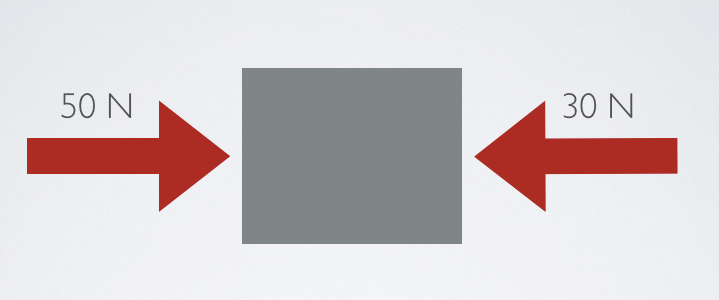
How will this object move?
a)
It won't move.
b)
It will move to the right.
c)
It will move to the left.
d)
It will move up.
54.

What is the net force?
a)
40 N left
b)
0 N Balalnced
c)
400 N right
d)
40 N right
55.
You and your dad are moving the couch from one side to another. Your dad pushes with a force of 35 N to the right and you push with a force of 25 N right. What is the net force on the couch?
a)
60 N right
b)
10 N left
c)
60 n right
d)
50 N left
56.

What is the net force?
a)
10 N
b)
0 N
c)
25 N
d)
1 N
57.

Forces that have a net force of zero
a)
Balanced force
b)
Unbalanced force
58.
What will cause an object to move?
a)
Applied forces
b)
Balanced forces
c)
Unbalanced forces
59.

Balanced or Unbalanced?
a)
Balanced
b)
Unbalanced
60.

If an object is not moving the forces acting upon it are _____________
a)
unbalanced
b)
weak
c)
balanced
d)
Hulk Smash!
100 %

