
 Worksheets
US History (1877-1920)
Total questions: 16
Worksheet time: 8mins

Who were the sharecroppers in American history?
Native Americans who cultivated crops on reservations
European immigrants who worked on plantations in exchange for food and shelter
African American farmers who rented land and paid with a share of their crops
Mexican laborers who worked on farms in the Southwest

Which laws enforced racial segregation in the Southern United States?
Emancipation Proclamation
Brown v. Board of Education
Civil Rights Act of 1964
Jim Crow Laws

Which Supreme Court case established the 'separate but equal' doctrine?
Marbury v. Madison
Miranda v. Arizona
Roe v. Wade
Plessy v. Ferguson

Who founded the Tuskegee Institute in Alabama?
Marcus Garvey
W.E.B. DuBois
Frederick Douglas
Booker T. Washington

Which organization was founded to fight for the civil rights of African Americans?
Women's Suffrage Movement
NAACP
League of Nations
United Negro Improvement Association
Who started the "Back to Africa" movement to free Africans from their colonial oppressors?
Madam C.J. Walker
W.E.B. DuBois
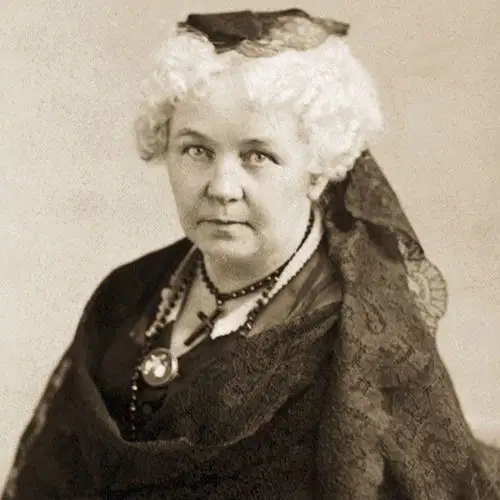
Who was the Quaker woman who gave lectures calling for temperance, peace, workers' rights, and abolition?
Elizabeth Cady Stanton
Mary Lyon
Lucy Stone
Susan B. Anthony
The Nineteenth Amendment was ratified in 1920 and extended voting rights to about half of the adult population of the United States. Who gained the right to vote with the ratification of the Nineteenth Amendment?
Native Americans
African Americans
Women
All citizens ages 18 and older
Which US President was most influential in starting the Panama Canal?
Woodrow Wilson
William McKinley
William Howard Taft
What does the term imperialism refer to?
A policy of giving away a country’s power to another nation as a gift
A policy of extending a country’s power and influence through diplomacy or military force
A policy of trading goods between two states or nations
A policy in which the government debates over paying someone to purchase another country
Which policy involved a country staying out of another country's business (including war)?
Isolationism
Naitonalism
Communism
Democracy
Which U.S. President is associated with "Big Stick Diplomacy"?
Grover Cleveland
William McKinley
Teddy Roosevelt
Woodrow Wilson
The ________________ was an extension of the Monroe Doctrine and enabled the United States to intervene in Latin American countries struggling with unstable conditions.
Yellow Journalism
Great White Fleet
Rough Riders
Roosevelt Corollary
The _______________ was a foreign policy statement issued in 1823 stating that the U.S. would oppose any intervention by European nations to control nations in the Western Hemisphere.
Monroe Doctrine
Articles of Confederation
Mayflower Compact
Treaty of Paris

