
Font size
 Worksheets
Evolution and Natural Selection Review
Total questions: 52
Worksheet time: 46mins
Which law or theory describes the changes in organisms and species over time?
Theory of Evolution
Law of Classification
Law of Superposition

Which coat pattern would be better adapted for life in the winter months of the snowy tundra?
Brown Coat
White Coat
Both Brown and White Coats
What is the primary reason for the variation in beak shapes among Galapagos finches?
to adapt to different climates
to communicate with other finches
to utilize various food sources
to migrate across islands

What is the primary function of root hairs in plants?
helps the plant transport nutrients to the stem
enables the plant to capture more sunlight
increases the plant's ability to absorb water from the soil
facilitates the plant's asexual reproduction
Which term best describes a specially developed characteristic that enables an organism to live in a specific environment?
adaptations
natural selection
survival of the fittest
variations
By studying fossil records, scientists have concluded that the horses that lived 50 million years ago were much smaller, weaker, and slower than modern horses. Which natural process is responsible for the evolutionary changes that have led to increased size, strength, and speed in horses?
inbreeding
migration
mutualism
natural selection
What initial catastrophic event is most likely responsible for the extinction of the dinosaurs?
the impact of many tornadoes during a massive storm
the impact of a large asteroid or comet hitting Earth's surface
the rise of sea levels caused by melting glaciers
the rise of mammals that became predators of dinosaurs
During the Mesozoic Era, the climate on one continent changed from being warm at the beginning to very cold at the end of the era. The climate changed due to the movement of tectonic plates and landmasses. In this era, many organisms became extinct while only some were able to survive. What type of adaptations did these surviving organisms most likely possess?
plants with long root systems and animals which laid eggs
plants with thorns and animals which gave birth to offspring instead of laying eggs
plants with very large leaves and animals which gave birth to large numbers of offspring
plants with protective seed coverings and animals with constant internal body temperatures
Around 250 million years ago at the end of the Permian Period, 90 percent of the planet's species became extinct. One of the major causes of the mass extinction is believed to be massive volcanic eruptions. These giant eruptions added large amounts of greenhouse gases to the atmosphere. How would these additional gases contribute to the mass extinctions?
depletion of the ozone layer
decrease in the amount of rainfall
change in the composition of the sea shelves
increase in the temperature of the atmosphere

An inherited trait that helps those organisms that have it to survive
niche
structure
characteristic
adaptation

Beak shape depends on...
where birds live
who they hang out with
diet (fish or seeds)
exercise

A giraffe has a long neck in order to better reach leaves to eat. This is an example of _____.
an adaptation
environment
response
stimulus


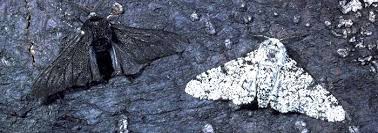
In this environment, predict which moth would increase in population.

The Arctic Fox's is a predator. It's fur changes from dark in the summer to white in the winter.
How does this adaptation help the fox survive in the winter?
This adaptation helps the fox hibernate & protect itself from the cold.
This adaptation helps the fox defend itself by mimicking a polar bear.
This adaptation helps the fox camouflage itself to hunt prey.
This adaptation helps the fox move quicker & migrate.
What does blending in to one's surroundings mean?
Camouflage
Hibernation
Migration
Spying
What is the period in which some animals or plants spend the winter in a dormant state?
Adaptation
Migration
Camouflage
Hibernation

One way animals usually respond to a drop in temperature is by
Shivering to increase body temperate
Sweating to reduce their internal temperature
Blinking to keep eyes clear
Salivating to increase digestion speed


Why do these limbs provide evidence of common ancestry?
They have the same basic structure
They perform the same function
They are the same size
They are part of mammals
There is a species of rabbit found in Alaska that is white, while a species of rabbit found in South Carolina is brown. Which statement best explains why rabbits native to different places vary in color?
Rabbits move to different habitats according to their color.
Rabbits change their colors on purpose to blend in with the habitat.
Rabbits select mates of different colors in order to have different colored offspring.
Rabbits of colors that blend in with the environment are more likely to survive and reproduce.

What is the most likely reason that the members of this species of moth resemble the tree bark?
Over generations, the moths migrated until they found a good place to hide.
Over generations, the color of a moth is determined by the color of the tree where the eggs are laid.
Over generations, moths that could hide on the tree bark were not eaten as often as those that could not hide.
Over generations, the moths change colors depending on the color of the tree they land on
Shorter, thicker beaks are better for picking up and eating nuts or seeds, while thinner beaks were better for capturing and eating live prey.
Based on Darwin's observation, which finch shown below was naturally selected to most easily eat insects?


The finches on the Galapagos Islands Charles Darwin studied showed variation in the trait for beak size as shown in the image. The islands sometimes experience droughts which lead to the availability of only large seeds. If droughts continue to occur, which finch would you expect the majority of the population to resemble.
1
2
3
4
What is courtship?
an animal's response to changes in the environment
a state of greatly reduced body activity
the movement of an animal from one place to another
a behavior of an adult of a species that is trying to attract a mate.
What is one of the main reasons why crickets make sounds?
To scare away predators
To attract female mates
To protect their territory
To communicate with other crickets
Which word best describes the following definition?
The process by which individuals that are better adapted to their environment are more likely to survive and reproduce than other members of the same species.
Trait
Generation
Adaptive Trait
Natural Selection
What does "offspring" mean?
A living thing
Children/babies
Enchilada
Hot spring

What could cause a species to go extinct?
Food becomes more plentiful.
The environment changes drastically and no-one can adapt.
There is less competition for resources.
Members of a species have adaptations to enhance survival.
An anatomical feature that no longer seams to have a purpose in the current form of an organism
Homologous structure
Analogous structure
Vestigial structure
None of the above

Which best describes these structures?
homologous
vestigial
analogous
What gives us our best evidence of evolution?
fossil record
law of superposition
Pangaea
It can be concluded that animals with common anatomical structures
evolved from a common ancestor
belong in the same classification
evolved from each other
live in the same part of the world
Based on the organism skulls, which organisms share the most recent common ancestor?
Select the two correct answers.


Artificial Selection = Man made
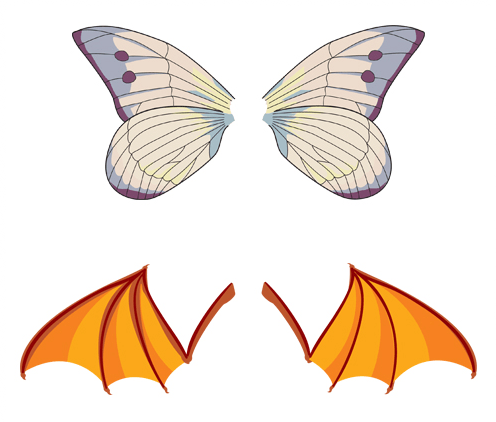
A group of similar organisms that can mate and reproduce.
Species
Organism
Adaptation
Competition

The long and sharp beak of a woodpecker is an example of
natural selection
selective breeding

Selective breeding is where _____________ decides which traits should be passed on.
nature
a human
traits
evolution

Grasshopper leg and kangaroo leg
homologous
analogous
evolutionary

Study the beak adaptation in picture. Which food would that beak be best for eating?
seeds
insects
nectar
small animals

