
 Worksheets
Integumentary Test Review
Total questions: 26
Worksheet time: 7hrs 30mins
a collection of tissues that structurally form a functional unit specialized to perform a particular function
(a)
epidermis - (corneum, lucidum, granulosum, spinosum, basale); dermis - (papillary and reticular); hypodermis - (adipose tissue).
(a)
sense pain, touch, pressure, and temperature
(a)
To become converted or changed into hard tissue
(a)
Keratinocytes produce keratin in the epidermis. The keratin forms a complex scaffold in the cytoplasm and, upon removal of cell organelles, fills the entire cell interior to form what type of cell?
(a)
Protects internal organs from being damaged, protects the body from invasion of bacteria, sensory benefits, maintains homeostasis - (temp and fluid regulation), and produces vitamin D - (protects against UV rays)
These are the functions of what system?
(a)
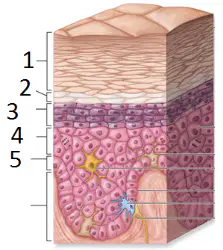
1.
(a)
2.
(a)
3.
(a)
4.
(a)
5.
(a)
Keratinocytes, melanocytes, cornified cells, pores, and Merkel cells are found in what layer of the integumentary system?
(a)
blood vessels, nerve endings, hair follicles, and sweat glands are found in what layer of the integumentary system?
(a)
Which layer of the integumentary system is made up of adipose tissue?
*Hint* - also known as the subcutaneous layer
(a)
What type of cell provides pigmentation and protection from ultraviolet radiation?
(a)
What type of cell provides the epidermis with its protective properties? (From microbial invasion, shielding UV exposure, maintaining adequate skin hydration, and hardening outer layers of skin)
(a)
Sweat glands and vasodilation/vasoconstriction of blood vessels help regulate what?
(a)
In large, open wounds, healing may be accompanied by the formation of small, round masses that develop in the exposed tissues. It consists of a new branch of blood vessels and a cluster of collagen-secreting fibroblasts that the vessel nourishes. This tissue eventually becomes a scar due to the lack of elastic fibers.
What is this process called?
(a)
Redness, heat, swelling, and pain.
(a)
A medical device used to hold body tissues together.
ex: stitches, super glue, butterfly bandages/stitches
(a)
Type of burn: epidermis only - red, painful, and dry.
(a)
Type of burn: epidermis and parts of dermis - blisters, serum, and swelling.
(a)
Type of burn: epidermis and all of dermis - redness and no pain
(a)
Skin Graft: taken from the same person
Pros: cheaper and faster
Cons: lower availability and donor site complications
(a)
Skin Graft: taken from a donor
Pros: no donor site complications and high availability
Cons: high cost and slow incorporation
(a)
Serum and/or blood flows to the burnt area to protect the underlying burnt skin while it heals.
What does this process form?
(a)

