
 Worksheets
S1 Humanities revision
Total questions: 38
Worksheet time: 35mins
World Map
(Identify the continents 各大洲)
Antarctica
Oceania
South America
Africa
Asia
Europe
North America
World Map
(Identify the ocean)
Southern Ocean / Antarctic Ocean
Pacific Ocean
Atlantic Ocean
Indian Ocean
Arctic Ocean
Match the following Humanities English terms into Chinese ones.
food web
食物網
Phytoplankton
浮游植物
habitats
生態
photosynthesis
光合作用
consumer
消費者
What is the primary difference between an ocean and a sea?
The color of the water
The size and boundaries
The type of marine life
The temperature of the water
Which of the following is an ocean?
Mediterranean Sea
Red Sea
Pacific Ocean
Sea of Japan
The ____________ is a smaller body of saltwater with defined boundaries.
Ocean
Sea
River
Lake
Which of these is NOT a characteristic of an ocean?
Larger body of saltwater
Has no boundaries
Water can flow freely among them
Water cannot flow freely among them
Which of the following is a characteristic of a sea?
Smaller than an ocean
Has no boundaries
Water cannot flow freely among them
Both A and C
The ____________ is an example of a sea.
Atlantic Ocean
Indian Ocean
Red Sea
Southern Ocean
Which of the following is NOT an ocean?
Arctic Ocean
Black Sea
Indian Ocean
Pacific Ocean
What is a food chain (食物鏈) in a marine ecosystem?
A chain that connects all the fish in the ocean.
The process of making food through photosynthesis.
The feeding relationships among marine organisms.
The process of water circulation in the ocean.
What is the role of producers in a marine ecosystem?
They consume smaller fish.
They make their own food by photosynthesis (光合作用).
They eat zooplankton and krill.
They are the largest fish in the ocean.
Which of the following are examples of primary consumers in a marine ecosystem?
Larger fish
Phytoplankton and algae
Zooplankton and krill
Smaller fish
What is the role of secondary consumers in a marine food chain?
They eat zooplankton and krill.
They make their own food by photosynthesis.
They consume smaller fish.
They are the largest fish in the ocean.
Who are the tertiary consumers in a marine food chain?
Phytoplankton and algae
Zooplankton and krill
Smaller fish
Larger fish
Match the following Humanities English terms into Chinese ones.
biodiversity
生物多樣性
bottom trawling
拖網捕魚
consumers
消費者
continental shelf
大陸架
coral reefs
珊瑚礁
What is overfishing (過度捕魚)?
Fishing during the wrong season.
Fishing with old equipment.
Catching fish at a rate faster than they can reproduce.
Fishing in protected marine areas.
What are the causes (成因) of overfishing?
Decrease in demand for seafood.
Increase in per capita income, development of more advanced fishing technology and destructive fishing practices.
Decrease in fish population.
Increase in marine protected areas.
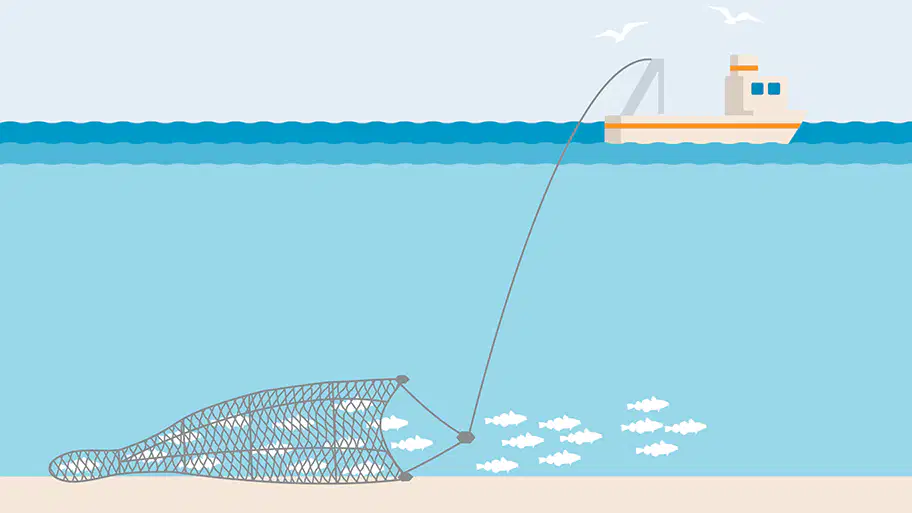
What is this overfishing activity?
B_____ T_______ (拖網捕魚).
(a)
What are the ecological impacts of overfishing?
Increase in biodiversity.
Destruction of habitats, decrease in biodiversity, and upsetting the balance of food web and the marine ecosystem.
Increase in fish population.
Increase in employment opportunities.
What are the socio-economic impacts (經濟社會結果) of overfishing?
Increase in employment opportunities and harmony between countries.
Unemployment and conflicts between countries.
Increase in seafood demand.
Increase in marine protected areas.
Which of the following is a solution to overfishing?
Increasing the demand for seafood.
Practicing sustainable fisheries, establishing marine protected areas, and education.
Decreasing the population of fish.
Using more advanced and effective fishing technology.
What are some sources of marine pollution?
Wind and rain
Sewage, oil, solid waste, and radioactive materials
Sand and salt
Fish and marine plants
What are the impacts of excessive nutrients in coastal waters?
Increase in fish population
Formation of dead zones due to algal blooms and eutrophication
Improvement of water quality
Reduction of solid waste in the ocean
How does marine pollution threaten marine life?
By increasing oxygen levels in the water
By creating more habitats
By increasing the population of algae
By introducing plastics into the ocean
What are the socio-economic impacts of marine pollution?
Increase in economic prosperity and health benefits
Economic loss, health risks, and loss of recreational resources
Increase in employment opportunities
Improvement of water quality in coastal areas
How does marine pollution affect the food chain?
By increasing the population of predators
By increasing the number of prey
By contaminating it
By improving the quality of food in the chain
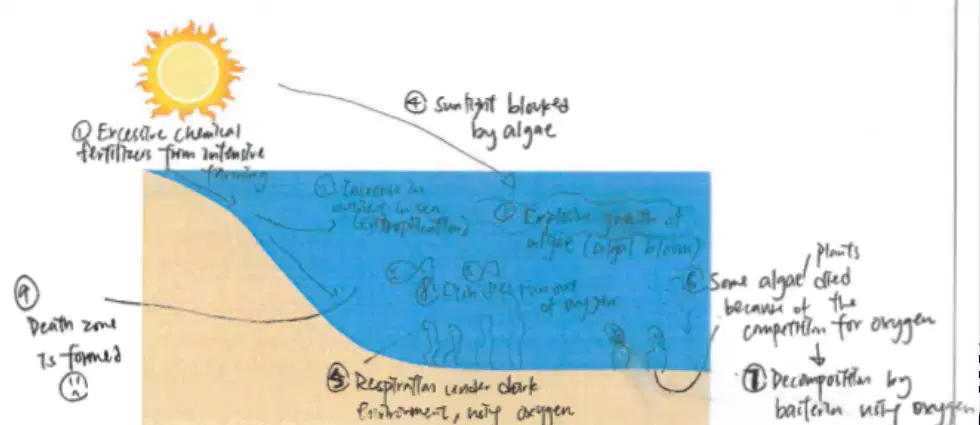
Marine pollution - Algal bloom sequence!!!
(a) activities use large amounts of pesticides and chemical fertilizers. Excessive (b) are washed into the rivers, increasing nutrient levels in coastal waters, as (c) . and (d) of algae use up oxygen in the waters, most forms of life cannot survive because a lack of oxygen, forming (e)
What role do oceans play in the water cycle?
Oceans do not participate in the water cycle.
Oceans only contribute to evaporation.
Oceans hold most of the world's water and contribute to various stages such as evaporation, condensation, precipitation, surface runoff, infiltration, and groundwater flow.
Oceans only contribute to condensation.
Water cycle (Matching I)
groundwater flow
infiltration
evaporation
condensation
precipitation
surface runoff
Water cycle (Matching II)
Evaporation
Transfer of water (surface->atmosphere)
Precipitation
Fall of water
Surface runoff
Flow of water on ground
Infiltration
Water movement (surface -> into ground)
Groundwater flow
Flow of water underground
Reading climatic graph
Line: Monthly average temperature
Bar: Precipitation in a month
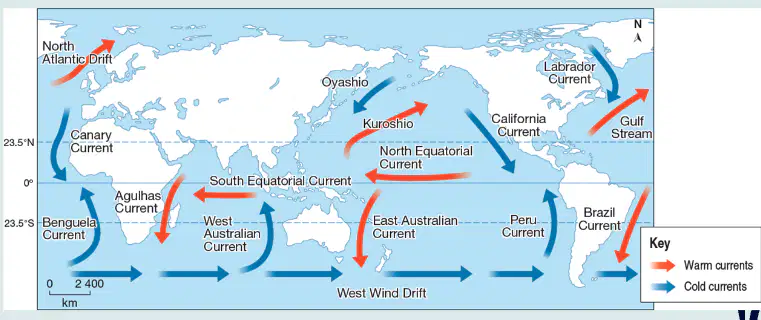
Ocean current (wind/water direction -> impact to temperature)
Warm ocean current (洋流)
Poleward
Cold ocean current
Equatorward
Warm ocean current (impact)
Warmwater to higher latitude-> higher °C
Cold ocean current (impact)
Cold water to higher latitude-> lower °C
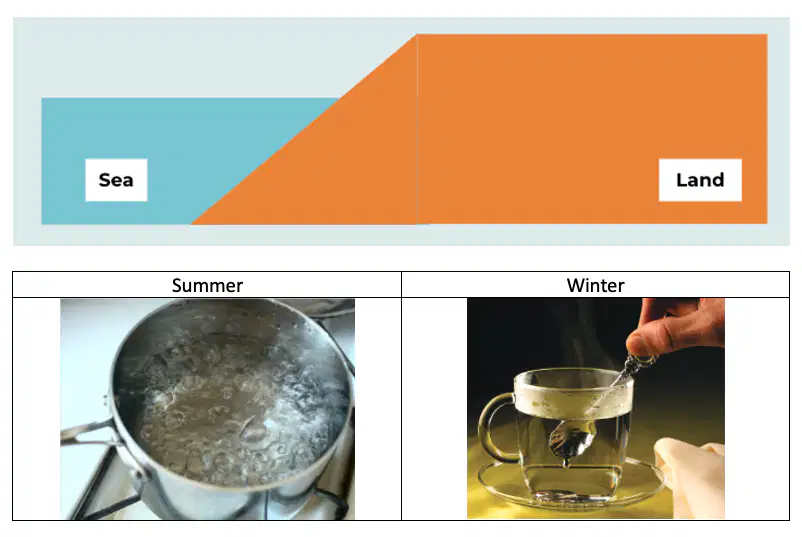
Places located near the coast usually has...
1. A cooler summer
With the high specific heat capacity of water, ocean is (a) than land in (b) -> The (c) bring a cooler climate to the area.
2. a warmer winter
Water loses heat more slowly than the land -> Ocean is (d) than land in winter -> The onshore winds brings a warmer climate to the area
Therefore, resulting in a smaller annual range of (e)
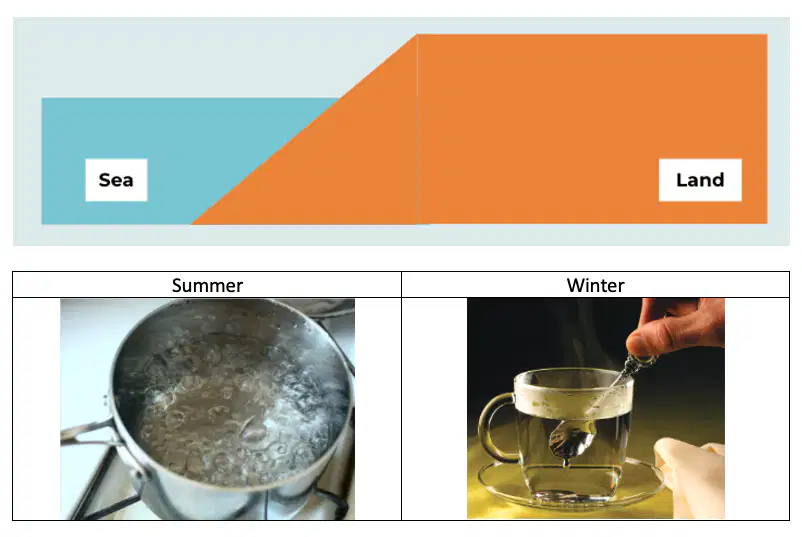
Places located near the coast usually has more rainfall...
a. (a) regions
Onshore wind from ocean brings lots of (b) to coastal region -> more precipitation
b. Inland areas
Moisture (c) on the way moving inland -> moisture cannot reach (d) region -> lower (e)
Categorise the energy resources on the ocean into:
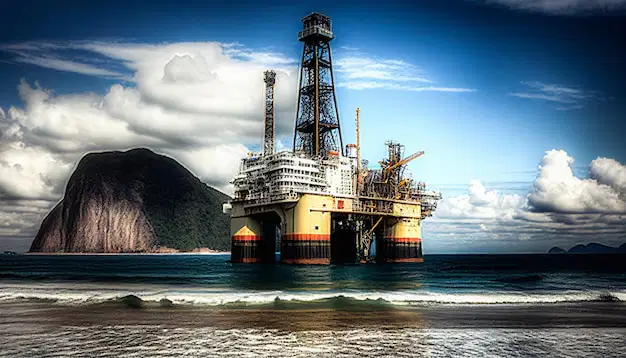
Oil and Fossil fuels

Wind power
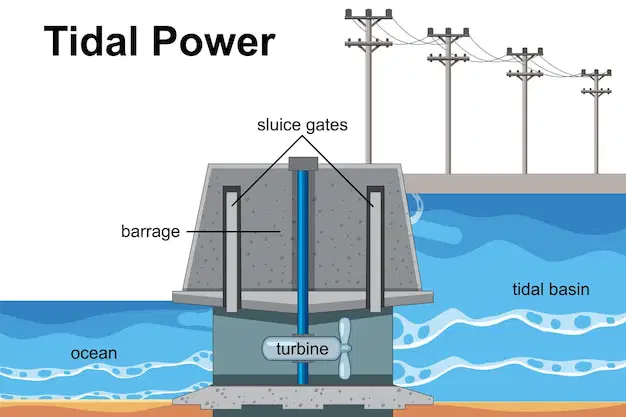
Tidal power
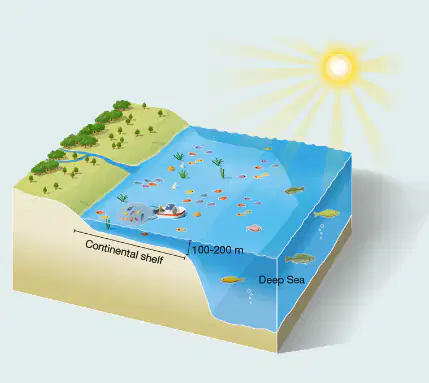
Oceans provide us with fish, shellfish, and plants for food.
Fish is obtained from either wild capture or fish farming. Most of the major fish grounds are located at (a) because they are:
a. in a (b) region
b. at the (c) of a continent
Because......
Phytoplankton grows well -> provides a rich source of food for fish -> A large number of fish is nourished in continental shelves -> good (d)
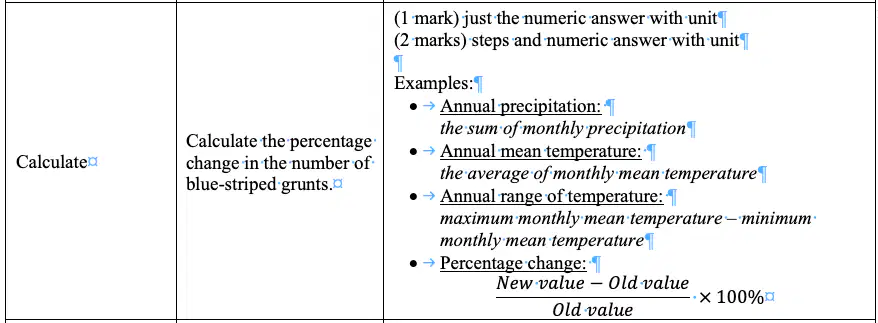
How to calculate percentage change?
( (a) - Old value) / (b) x (c)

