
 Worksheets
Grieg - Intro/Section A
Total questions: 30
Worksheet time: 20mins
Name the composer
(a)
What year was Anitra's Dance composed?
(a)
State the time signature
2/4
3/4
4/4
6/8
State the harmony
Homophonic
Diatonic
Piano
Forte
Anitra's Dance was part of a larger work called
(a)
State the dynamics used in Section A
pp
cresc
rit
ffff
State the tempo of this piece
Allegro
Adagio
Tempo di Mazurka
Presto
What musical era does this piece originate
Baroque
Classical
Romantic
20th Century
Name two features of the melody
Diatonic
Conjunct
Narrow range
Disjunct
What percussion instrument is heard in Anitra's Dance
Snare Drum
Bass Drum
Cabassa
Triangle
What is the tempo?
(a)
What is the home key?
A minor
Eminor
What is another way of describing 3/4 time
Simple duple
Simple triple
Simple quadruple
What does imitation mean?
Long held note
Question and answer
Plucking
Repetition
What is the musical term for plucking
(a)
What is the musical term for using a bow
(a)
State the number of movement that Anitra's Dance was from in Suite No.1
1st
2nd
3rd
4th
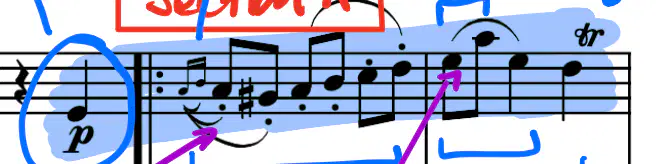
What two ornaments are used here:
Lower mordent
Upper mordent
Trill
Turn
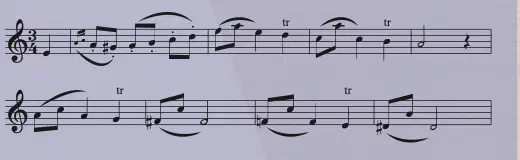
What theme is this:
Theme w
Theme z
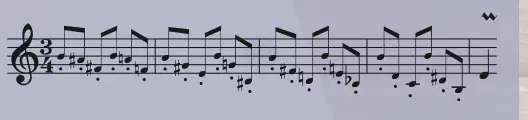
What theme is this that is used in Section A:
Theme x
Theme z
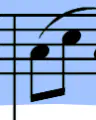
What interval is this:
3rd
4th
5th
6th
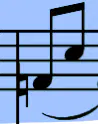
What interval is this:
3rd
4th
5th
6th
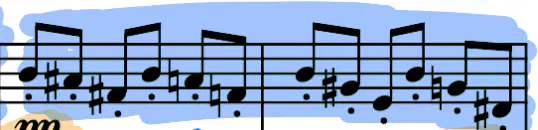
This melody is:
Diatonic (less sharps/naturals)
Chromatic (lots of sharps/naturals)
What cadence is heard at the end of Section A
Imperfect
What is the texture at the end of Section A
(a)
What chord does the piece start on - in the Introduction?
Tonic (I)
Dominant (V)
The strings are divsi in the introduction, this means:
Played by one player
Split between two players

What does this symbol mean?
(a)
The last note of Section A is in unison, what does this mean?
Played as a chord
Played one note, the same note

What does this mean?
Crescendo (getting louder)
Decrescendo (getting quieter)

