Worksheets
HS11A review
Total questions: 27
Worksheet time: 21mins
If the body can no longer make ATP, which type of transport would be impacted?
Facilitated Diffusion
Osmosis
Active Transport
Simple Diffusion
What macromolecule makes up the channels found in the cell membrane?
Lipids
Carbohydrates
Nucleic Acids
Proteins
What type of molecules can easily diffuse through the cell membrane?
Small Molecules
Large Molecules
Charged Molecules
Nonpolar Molecules

Would this dissolve in water?
Yes
No

The type of transport that requires the use of transport proteins
Passive Transport
Facilitated Diffusion
Active Transport
Vesicular Transport

The passage of a substance from an area of high concentration to an area of low concentration
Active Transport
Diffusion
Vesicular Transport
Exocytosis
Provides stability and fluidity; cold = rigid and lacks fluidity; hot = too fluid and difficulty holding shape
phospholipid (fatty acid) tail
channel protein
cholesterol
phospholipid head
glycoprotein
Permanently attached to the membrane; goes all the way through; signaling and transport cell processes
integral protein
channel protein
globular protein
peripheral protein
glycoprotein

Structure A in the diagram is
cholesterol
phospholipid
glycoprotein
channel protein
ATG TGA CAG
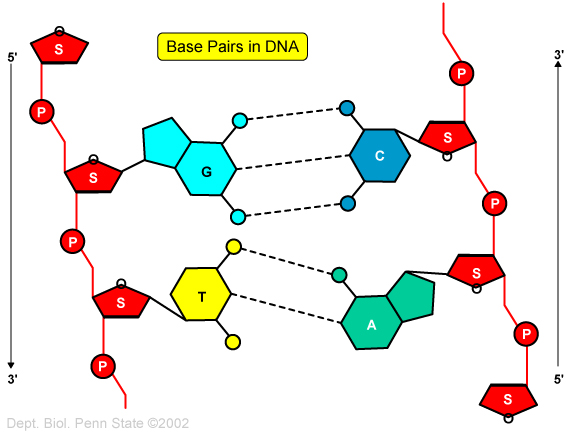
According to Chargaff's rule, Cytosine always pair with
Adenine
Uracil
Thymine
Guanine
Which of the following statements about DNA is not true?.
it contains 2 chains of nucleotides
it contains deoxyribose sugar
it is replicated in preparation for cell division
it never leaves the nucleus
it has the base uracil instead of thymine
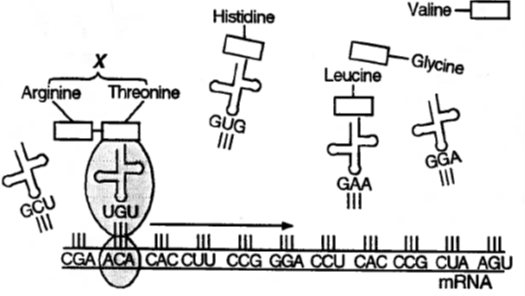
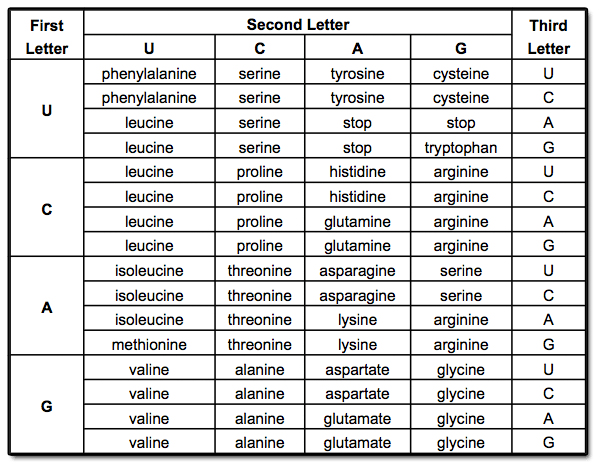
The end products of translation are
polypeptides
amino acids
lipids
RNA
DNA
The genetic instructions for forming a polypeptide chain are carried to the ribosome by the
tRNA
rRNA
mRNA
ATP
DNA
Set of three nucleotides in a tRNA molecule that binds to a complementary mRNA codon during translation
Anti-codon
Codon
Amino acid
Bases
Process of copying a nucleotide sequence of DNA to form a complementary strand of mRNA
Translation
Transcription
Replication
Synthesis
In RNA, what base replaces Thymine?
Cytosine
Adenine
Uracil
Guanine
Determine the RNA sequence that compliments the DNA stranded:
TACGGT
TACGGT
AUGCCA
ATGCCA
UACGGU