
 Worksheets
DC Circuit Fundamentals - MP 2 Exam Review
Total questions: 74
Worksheet time: 52mins
What does Ohm's law state?
Current is directly proportional to resistance and inversely proportional to voltage
Voltage is directly proportional to resistance and inversely proportional to current
Current is directly proportional to voltage and inversely proportional to resistance
Voltage is directly proportional to current and inversely proportional to resistance
What happens to the current in a series circuit if the voltage is increased?
The current will decrease
The current will increase
The current will remain the same
The current will fluctuate
What happens to the current in a series circuit if the resistance is increased?
The current will increase
The current will decrease
The current will fluctuate
The current will remain the same
What is a series circuit?
A circuit with multiple paths for current
A circuit with only one path for current
A circuit with alternating current
A circuit with no resistance
What is the total resistance in a series circuit?
The product of all the resistors' values
The sum of all the resistors' values
The difference of all the resistors' values
The average of all the resistors' values
If there are three resistors in series with values 1 kΩ, 500Ω, and 75Ω, what is the total resistance?
1.575 kΩ
1.575 Ω
1.575 MΩ
1.575 GΩ
If the total resistance of a series circuit is 600Ω and there are three equal value resistors, what is the value of one resistor?
400Ω
200Ω
500Ω
300Ω
If you have a series circuit with a total resistance of 1 kΩ and there are three resistors with values 500Ω and 47Ω, what is the value of the final resistor?
647Ω
553Ω
453Ω
547Ω
What is the relationship between current and resistance in a series circuit?
Directly proportional
Inversely proportional
Fluctuating relationship
No relationship
What is the relationship between voltage and resistance in a series circuit?
Inversely proportional
Directly proportional
No relationship
Fluctuating relationship
What is the relationship between voltage and current in a series circuit?
Fluctuating relationship
Inversely proportional
No relationship
Directly proportional
What is the relationship between power and resistance in a series circuit?
Directly proportional
Fluctuating relationship
Inversely proportional
No relationship
What is the relationship between power and current in a series circuit?
Directly proportional
Inversely proportional
No relationship
Fluctuating relationship
What is the relationship between power and voltage in a series circuit?
No relationship
Fluctuating relationship
Inversely proportional
Directly proportional
What is the relationship between total voltage and individual voltages in a series circuit?
They have no relationship
They are directly proportional
They are inversely proportional
They are equal
What is the current of a series circuit with a total resistance of 10 ohms and a voltage of 110 V
0.09
11.0
1100.0
10.0
What would you need to do to the voltage if you wanted to increase the current in a series circuit?
Increase
Greater
Decrease
Smaller
What does V stand for?
Vendetta
Voltage
Velocity
Vector
What does R stand for?
Revolution
Rictor Scale
Resistance
Right
What is the voltage needed to run a 9.2 ohm toaster on a 5.5 amps?
9.2 V
5.06 V
34.14 V
50.6 V
What unit is used to measure voltage?
Ohms
Omega
Volts
Amps
What unit is used to measure current?
Ohms
Omega
Volts
Amps
What unit is used to measure resistance?
Ohms
Omega
Volts
Amps
Which is the right form of Ohm's Law?
V=I/R
V=R/I
I=V/R
I=R/V
What is not needed in order to create a working circuit?
battery (power source)
lightbulb
current
use of energy
What is the resistance of a lightbulb that experiences 9 Volts and 3 amps of current?
1/3 ohms
3 ohms
27 ohms
9 ohms
What is voltage?
the amount of push the electrical source supplies to the circuit
how much a given device resists the flow of electric current
flow of electric charge
none of the above
What is current?
the amount of push the electrical source supplies to the circuit
how much a given device resists the flow of electric current
flow of electric charge
none of the above
What is resistance?
the amount of push the electrical source supplies to the circuit
how much a given device resists the flow of electric current
flow of electric charge
none of the above
What does I stand for?
Intensity
Internal Energy
Current
Charge

zig zag
Resistor
Ammeter

resistor
Ammeter
Voltmeter
Switch

Battery
Lines
Resistor
bulb
What is a positively charged particle?
neutron
electron
proton
atom
What is a negatively charged particle?
neutron
electron
proton
atom
What is a particle with no charge?
neutron
electron
proton
atom
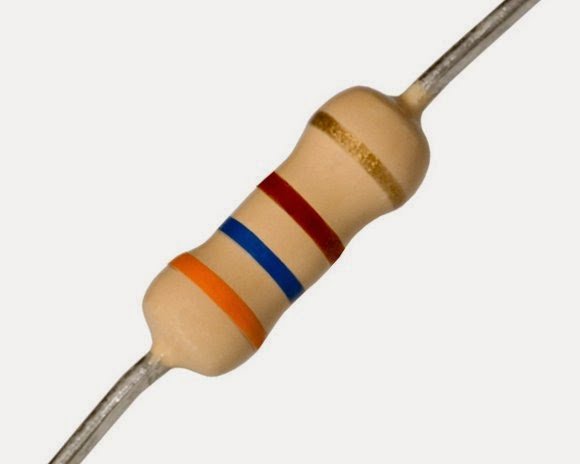
Resistor Value ?
36 Ω +/- 5 %
350 Ω +/- 5%
250 Ω +/- 5 %
360 Ω +/- 5 %

Resistor Value ?
1 kΩ +/- 5 %
2 kΩ +/- 5 %
202 Ω +/- 20 %
212 Ω +/- 10 %

Resistor Value ?
1 kΩ +/- 5 %
10 kΩ +/- 10%
10 kΩ +/- 5 %
103 Ω +/- 10 %

Resistor Value ?
10 MΩ +/- 5 %
10 kΩ +/- 5 %
1 MΩ +/-5 %
100 MΩ +/- 5%

Resistor Value ?
370 Ω +/- 5%
470 Ω +/- 5%
471 Ω +/- 5%
460 Ω +/- 5%

Resistor Value ?
1 kΩ +/- 5%
1 kΩ +/- 10 %
100 +/- 5%
102 +/- 10 %
Color code for
27 kΩ +/-5 %
brown, violet, orange, gold
red, violet, orange, gold
red, violet, red, gold
orange, violet, red, gold
Color code for 10 Ω +/- 10%
brown, black, brown, silver
brown, black, brown, gold
brown, black, black, gold
brown, black, black, silver
What size resistor would produce a 3 Amp current flow with a 12 Volt battery
1 Ohm
3 Ohms
4 Ohms
12 Ohms
What is current measured in?
Ω (Ohms)
V (Volts)
A (Amps)
W (Watts)
What is resistance measured in?
Ω (Ohms)
V (Volts)
A (Amps)
W (Watts)
What is Resistance?
The flow of electrons
Electric potential difference
A battery
The ability to reduce the flow of electrons
Electricity that flows in a closed path is called a
path
current
circuit
light
What types of charges attract?
Positive and Positive
Positive and Neutral
Negative and Neutral
Positive and Negative
(I X R)
Voltage divided by Resistance
(V / R)
Current
Power
Ohms
Watts
Voltage divided by Current
(V / I)
Current
Power
Resistance
Watts
If the battery produced 12.6 Volts what would be the current flow for a 6 Ohm resistor?
2.1 Amps
2.4 Amps
1.71 Amps
15 Amps
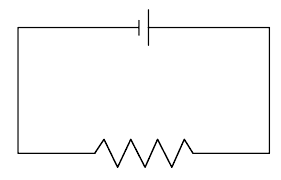
To put a number into engineering notation, we need to move the decimal place ____ places at a time.
2
3
4
5

Looking at the index form to the left, what is this number also known as?
base unit
a standard unit
1
all of these

Looking at the index form to the left, what is the engineering term used to represent this number?
terabyte
gigahertz
megohm
kilovolt

Looking at the index form to the left, what is the engineering term used to represent this number?
milliamp
microwatt
nanosecond
picofarad

Looking at the index form to the left, what is the engineering term used to represent this number?
megohm
terabyte
kilovolt
picofarad

Looking at the index form to the left, what is the engineering term used to represent this number?
milliamp
nanosecond
picofarad
microwatt

Looking at the engineering term to the left, what is the index form used to represent this?
103
109
106
1012

Looking at the engineering term to the left, what is the index form used to represent this?
10-12
10-9
10-6
10-3

Looking at the engineering term to the left, what is the index form used to represent this?
103
106
109
1012

Looking at the engineering term to the left, what is the index form used to represent this?
10-3
10-6
10-9
10-12

