
 Worksheets
Chemistry Review
Total questions: 75
Worksheet time: 2hrs 5mins
What below is NOT considered matter?
Carbon atoms
Light
Bacteria
Air
Matter is anything that.....
Has mass and takes up space
Has mass and is visible
Takes up space and has energy
Has energy and is visible

What is the best classification for this substance?
An element
A compound
A mixture
An atom

Does this particle view show an element or a compound?
element
compound

How many different TYPES of ATOMS are in this image?
1
2
3
4
How many TOTAL MOLECULES are in this image?
4
5
15
20

The number 16 for the element sulfur is the
ionic number
isotope
atomic mass
atomic number

How many protons does sulfur have?
32
16
48
12

How many electrons does sulfur have
16
32
48
12

In a neutral atom, the number of protons is equal to the number of ____________.
energy levels
neutrons
neurons
electrons
Which of the following is not a subatomic particle?
a proton
an electron
a neutron

How many neutrons does potassium K contain? (click to see image)
58

How many electrons does an Iodine atom have?
53
126
73
179
Subatomic particles with a negative charge
Electrons
Neutrons
Protons
Quarks
The center of an atom is known as the
nucleus
electron cloud
neutron cloud
mass circle

What does the nucleus of an atom contain?
Electrons and neutrons
Protons and neutrons
Neutrinos and positrons
Electrons and megatrons
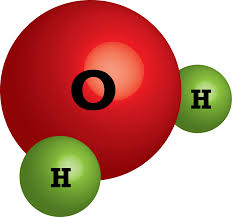
How many atoms are in this molecule?
1
2
3
4


What is the mass number for an atom that has 3 protons, 5 neutrons, and 3 electrons?
3
5
8
6

How many neutrons in Carbon-14?
What is the name of an isotope of magnesium that has 12 protons and 13 neutrons
Magnesium-12
Magnesium-13
Magnesium-25
Magnesium-24.305
Isotopes are atoms of the same element that have a different masses due to having different numbers of _
Protons
Neutrons
Electrons
Masses
The number of protons is equal to the number of electrons for an atom. This means an atom is-
electrically neutral
electrically positive
electrically negative
Which part of the atomic theory did JJ Thomson prove?
there are electrons
electrons are in energy levels
there is a nucleus
cathode ray tube

How many electrons can the d sublevel (the d orbitals) hold?
14
10
2
6
Each orbital can hold how many electrons?
5
4
8
2
In an electron configuration, what follows 4s?
4p
3d
4s
2f

What is the noble gas configuration for beryllium (symbol Be)?

1s22s22p63s23p64s23d10

Line emission spectra is produced from atoms when
electrons release energy as they move to their excited state.
electrons absorb energy as they move to their excited state.
electrons release energy as they return to the ground state.
electrons absorb energy as they return to the ground state.
A ground state electron is
freshly crushed into a fine powder.
in the highest possible energy level.
in the lowest possible energy level.
constantly emitting light.
The line with the shortest wavelength (in other words the greatest energy) is produced in the hydrogen spectrum when electron moves
from n=2 to n=1
from n=4 to n=1
from n=3 to n=1
from n=4 to n=3

How many electron energy levels does this element have?
1
2
3
0

How many valence electrons does this atom have?
Which Bohr model represents Neon?


What does the 1 in "1s" stand for?
energy level
s orbitals
p orbitals
the number of electrons
How many electrons are in 1s2 2s2 2p4?
5
6
8
13
What group number are the halogens found?
18 (8A)
1
2
17 (7A)
What is the name of group number 1 on the periodic table?
halogens
noble gases
alkali metals
alkaline earth metals
Periodic law states that the elements are arranged according to their atomic ________ so that elements with similar chemical properties are in the same ________ and properties repeat periodically.
numbers, rows
masses, rows
masses, column
numbers, column
A row on the Periodic Table of Elements is called
family
period
row
isotope
A grouping of elements based on similar chemical properties, arranged by columns in the periodic table; also known as a group
family
period
row
isotope
Metals (select all that apply)
are found on the right side of the periodic table.
are found on the left side of the periodic table.
are good conductors of heat and electricity.
are brittle.
are malleable and ductile.
Nonmetals (select all that apply)
are found on the right side of the periodic table.
are found on the left side of the periodic table.
are good conductors of heat and electricity.
are brittle.
can be solid, liquids, or gases at room temperature.

Which element is found in group 2, period 6?
Oxygen (O)
Barium (Ba)
Selenium (Se)
Carbon (C)
Which halogen is found in period 4?
Krypton (Kr)
Xenon (Xe)
Bromine (Br)
Iodine (I)
Which element has similar chemical properties as sodium but has 7 energy levels?
Francium (Fr)
Cesium (Cs)
Rubidium (Rb)
Potassium (K)
The 3 types of chemical bonds are ________, ________, and ______. (Choose 3)
ionic
valence
covalent
metallic
atomic
A bond between two nonmetal atoms is a __________ bond.
ionic
nuclear
metallic
covalent

