Wayground logo

Free Printable Worksheets

Font size

S
M
L
XL
Worksheets

Team Quiz Grade 8

Total questions: 36

Worksheet time: 21mins

Name
Class
Date
1.

What are the 3 organs of a plant?

a)

veins, root hairs and xylem

b)

stoma, stomata and root hairs

c)

roots, glucose and leaves

d)

roots, stem and leaves

2.

What is the purpose of the XYLEM?

a)

To bring food from the soil to the whole plant.

b)

To carry water and nutrients from the roots to the whole plant.

c)

To carry food from the chloroplasts around to all parts of the plant.

3.

If plants don't store up water, how does water leave the plant?

a)

The roots get rid of excess water.

b)

Most plants DO store water.

c)

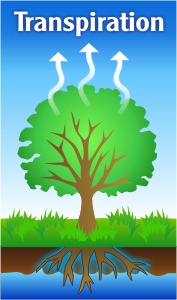
It is released from the leaves by TRANSPIRATION.

4.

What is the name of the microscopic holes in leaves that are opened and closed to allow water to TRANSPIRE?

a)

water doors

b)

stomata

c)

leaf eyes

d)

transpiration holes

5.

When water moves through the plant's xylem, what phase is it in?

a)

Solid

b)

Liquid

c)

Gas

6.

When water TRANSPIRES from the stoma into the atmosphere, what phase is it in

a)

Solid

b)

Liquid

c)

Gas

7.
What gas is RELEASED during photosynthesis?
a)
carbon dioxide
b)
argon
c)
oxygen
d)
nitrogen
8.
Transpiration is
a)
the movement of water through a plant from the roots up the stem
b)
the loss of water from the leaves of a plant by the process of evaporation
c)
the flow of water into plant roots by osmosis from the soil
d)
the process of minerals and sugars moving through plant veins
9.
Cells that control the opening and closing of stomata
a)
Cuticle
b)
Guard cell
c)
Vascular tissue
d)
Stomata
10.

Which is true?

a)

99% of water taken by the plant evaporates through transpiration

b)

9% of water taken by the plant evaporates through transpiration

c)

Evaporation through transpiration accounts only for 1% of all the water the plant takes in

d)

Evaporation through transpiration is minuscule

11.

which one of the following means light intensity

a)

dark

b)

day

c)

brightness

d)

night

12.

which of the following parts of a plant absorbs water?

a)

flower

b)

leaf

c)

stem

d)

root

13.

on which of the days would the rate of transpiration be high?

a)

rainy day

b)

no sun shine, still wind

c)

hot bright day

d)

still wind, rainy day

14.

what are the substances that leaves a plant through the stomata on a bright day?

a)

oxygen and water

b)

carbon dioxide and glucose

c)

water vapour and nector

d)

oxygen and water vapour

15.

which one of the following is the reason why a plant loses much water at the lower surface of the leaf?

a)

effect of gravity

b)

water is heavier than air

c)

there are more stomata at the lower surface

d)

the upper surface blocks the passage of water

16.

which one correctly identifies Q, W, X?

a)

x is transpiration

b)

Q is rain

c)

W is transpiration

d)

X is heat

17.

Two products produced by plants via photosynthesis are _______________ and _______________.

a)

Glucose and water

b)

Carbon dioxide and glucose

c)

Oxygen and glucose

d)

The Sun and water

18.
What is respiration?
a)
The way a plant grows
b)
The way a plant releases excess waste
c)
The way a plant makes its food
d)
When way a plant uses sugar for energy
19.
The green pigment in plants is due to the presence of 
a)
chlorophyll
b)
Chlorine
c)
Chlorophyta
d)
chromatophores
20.

What do you call the additional layer around the outside of plant cells that is made from cellulose that protect and give shape?

a)

Cell Wall

b)

Chloroplast

c)

Cell Membrane

d)

Golgi Complex

21.

Plants make their own food through a process called what?

a)

photosynthesis

b)

ATP

c)

chlorophyll

d)

structure and support

22.
The procedure(s) used to test a hypothesis.
a)
observation
b)
experiment
c)
infer
d)
control
23.
Information obtained through one or more of the five senses.
a)
hypothesis
b)
observation
c)
predict
d)
infer
24.
To explain what will happen before it occurs.
a)
predict
b)
conclusion
c)
independent variable
d)
dependent variable
25.
The variable that is varied or manipulated by the researcher.
a)
dependent variable
b)
independent variable
c)
control
d)
experiment
26.
Factor that you keep the same in an experiment
a)
Independent Variable
b)
Dependent Variable 
c)
Controlled Variable
d)
Operational Definition
27.
What variable in an experiment is measured? - it is also called the responding variable.
For example: measuring the amount of mold on bread 
a)
Dependent variable
b)
Operational Definition
c)
Independent Variable
d)
Control Variable
28.

If I want to check the importance of soil for plants' growth, what should the variable be?

a)

Temperature

b)

Water

c)

Soil

d)

Light

29.
Josie was performing an experiment where she grew the same kind of tomatoes in the same soil and amount of water.  She sat one in the sun and one in a closet for 14 days.  What is the independent variable in Josie's experiment?
a)
tomatoes
b)
soil
c)
sunlight
d)
water
30.
A scientist who wants to study the effects of fertilizer on plants sets up an experiment. Plant A gets no fertilizer, Plant B gets 5 mg. of fertilizer each day, and Plant C gets 10mg. of fertilizer each day. Which plant is the control group?
a)
plant B
b)
All of them
c)
Plant C
d)
Plant A
31.
The leaf has a shiny, waxy cuticle around it to
a)
increase the rate of photosynthesis
b)
attract more light
c)
control water loss
d)
stop carbon dioxide and oxygen gases escaping
32.
The role of the guard cell is to
a)
help control the temperature of the plant
b)
control how much water enters the leaf
c)
control how much glucose is stored
d)
control the movement of water vapour & gases 
33.

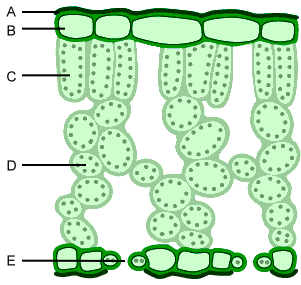
What is letter "D" pointing to?

a)

upper epidermis

b)

palisade mesophyll

c)

spongy mesophyll

d)

bundle sheath

34.

Recall the main role of the specialised plant cell below.

Root hair cells

a)

Open/close stomata

b)

Photosynthesis

c)

Absorb water/minerals

35.
Carbon dioxide enters plant leaves through the __________.
a)
stomata
b)
chloroplasts
c)
xylem
d)
cuticle
36.
The variable that is the result of the experiment is the 
a)
constant
b)
independent variable
c)
dependent variable
d)
control