
Font size
 Worksheets
Revision
Total questions: 166
Worksheet time: 2hrs 2mins
Choose all the items that are elements.
NaCl (table salt)
Sulfur
O2
Water
Air
Choose all of the items that are compounds.
NaCl (table salt)
Sulfur
O2
Water
Air
Choose all of the items that are mixtures
NaCl (table salt)
Sulfur
O2
water
Air
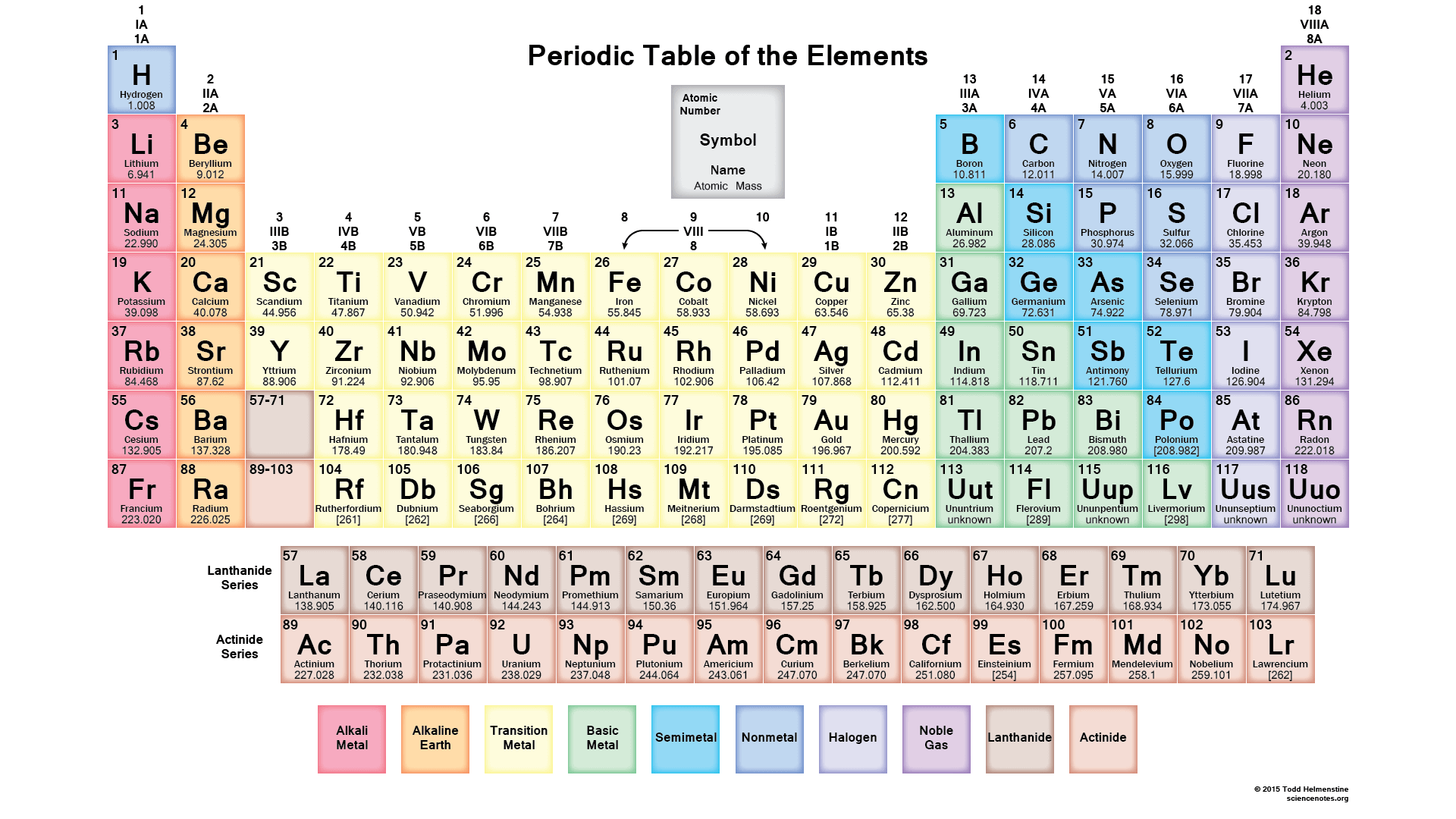
Which element is similar to Li?
Be
K
Which element is similar to Mg?
Ca
B
Which element is similar to B?
C
Al
Which element is similar to F?
Ne
Cl
Which element is similar to He?
H
Ar
Which element is the least reactive?
Li
Ne
B
C
Which element is the least reactive?
Mg
Na
C
S
Which choice shows the elements in order from most reactive to least reactive. Sr, K, Cl, P
Sr, K, Cl, P
K, Cl, Sr, P
K,P, Sr, Cl
K, Sr, P, Cl
Students in Mrs. Clark's science class are investigating a substance that has the following properties
-shiny
-bends easily
-hard, not easily broken
Based on these properties how would you classify the substance?
metal
nonmetal
metalloid
Which best describes the sequence of the elements in Period 5 of the periodic table?
highly reactive gases, relatively nonreactive metals, metalloids, very nonreactive gases, nonreactive nonmetals
highly reactive metals, relatively nonreactive metals, metalloids, reactive nonmetals, nonreactive gases
nonreactive gases, metalloids, nonreactive metals, highly reactive metals, highly reactive gases
nonreactive gases, nonreactive metals, highly reactive metals, metalloids,
reactive nonmetals, reactive gases
How comfortable are you with understanding the Periodic Table and understanding the relationships between its elements?
Extremely confident!
I feel good but not 100%
I remember only a little...
What is the periodic table?
Groups run:
up and down
left to right
Periods run:
up and down
left to right

Which two elements share common characteristics based on the periodic table?
Sodium and Magnesium
Chlorine and Sulfur
Argon and Neon
Calcium and Bromine

How are the 3 elements in the picture organized on the periodic table?
Niobium and cobalt have the same energy levels.
Cobalt and scandium have the same energy levels.
Cobalt and scandium have the same characteristics.
Niobium and cobalt have the same characteristics.
Metals are on the:
Left side
Right Side
Stairstep
Metalloids are on the:
Left side
Right Side
Stairstep
Nonmetals are on the:
Left side
Right Side
Stairstep
A student is studying a mystery substance. It breaks easily. It has a very dull luster. It doesn't conduct any electricity. What is the most likely substance this is?
Metal
Metalloid
Nonmetal
The same student works with a new substance. He concludes it conducts electricity very well. It has a very shiny luster. When he hammers it, it simply dents and flattens. What is the most likely substance type?
Metal
Metalloid
Nonmetal
The third substance the student works with is a little brittle. It is just a little shiny. When he tries to conduct electricity through it at first, it doesn't conduct, but upon heating up, it does start to allow electrons to flow. What is the most likely substance type?
Metal
Metalloid
Nonmetal
What are the three main groups of the periodic table?
groups
metal
nonmetals
metalloids
periods
What are the vertical columns on the periodic called?
groups
periods
nonmetals
metals
metalloids
What do the vertical columns on the periodic table tell us?
The number of orbitals
The number of valence electrons (electrons on the outer most shell)
What are the horizontal rows on the periodic table called?
periods
groups
metals
nonmetals
metalloids
What do the horizontal rows on the periodic table tell us?
The number of orbitals
The number of valence electrons (the electrons on the outer most shell)
What does the number of proton tell us?
electrons
atomic number
atomic mass
neutrons
How do you calculate the number of neutrons? *
Mass = Atomic number - Neutrons
Mass - Atomic number = Neutrons
Atomic number = Neutrons

What is the name of the element? (Periodic table will be needed)
sodium
magnesium
vanadium

What group and period does this element belong in? *
period 1 and group 3
period 3 and group 1
period 2 and group 3
period 3 and group 2

How many valence electrons does the element have?
1
2
3
4

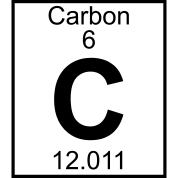
How many protons and electrons does nickel have?
28
58.69

What is the atomic mass?
58.693
28

How many orbitals does Nickel have?
3
4
5
10

Who discovered the nucleus?
Rutherford
Bohr
Thomson
Dalton

Who proposed a model with electrons moving in specific layers?
Rutherford
Bohr
Thomson
Dalton

Who discovered the electrons?
Rutherford
Bohr
Thomson
Dalton
This element has two valence electrons and two energy levels?
Beryllium (Be)
Lithium (Li)
Zinc (Zn)
How many valence electrons and energy levels does (Pb) lead have?
4 valence electrons and 6 energy levels (orbitals)
6 valence electrons and 4 energy levels (orbitals)
5 valence electrons and 5 energy levels (orbitals)
5 valence electrons and 10 energy levels (orbitals)

The vertical (up and down) columns in the Periodic Table are called
groups
towers
periods
atomic numbers

The horizontal (side to side) rows in the Periodic Table are called
groups
families
periods
atomic numbers
period
Elements that occur in vertical columns on the periodic table.
A horizontal row of elements in the periodic table
Found in group two of the periodic table; highly reactive
A subatomic particle that has a negative charge
neutron
A subatomic particle that has a positive charge and that is found in the nucleus of an atom
not able to conduct heat or electricity, little to no metallic luster
A subatomic particle that has a negative charge
A small particle in the nucleus of the atom, with no electrical charge
A subatomic particle that has a positive charge and that is found in the nucleus of an atom
Proton
elecrtron
groups
neutrons
A subatomic particle that has a negative charge
nobles gases
protons
electrons
neutrons

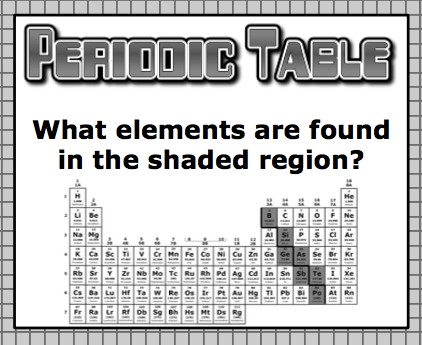
An element found in Group 17 of the periodic table. (K2)
Noble Gas
Halogen
Carbon Family
Nitrogen Family
An element that is dull and is a poor conductor of heat and electricity
proton
metal
nonmetal
subatomic particles
Elements that belong to group 1 are
Halogens
Noble gases
Alkali Metals
Alkaline Earth Metals
What type of elements form covalent bonds?
Metals
Non Metals
Metalloids
Nobel Gas
When a covalent bond forms _______________ are shared.
protons
nutrons
valence electrons
quarks
Compounds have _________________ properties, compared to the elements that form them.
similar
different
A ___________________ is the smallest unit of a compound.
atom
proton
electron
molecule

How many valence electrons does Oxygen (O) have?
6
8
15
16
How many atoms of hydrogen are in a sugar molecule with the formula C6H12O6
12
6
24
18
Atoms that are _____________ will form bonds.
stable
unstable

An atom of nitrogen (N) has _______ open bonding sites.
5
4
3
8

Polar molecules form due to ___________ sharing of valence electrons.
equal
unequal
greater
group
Valence electrons are located _____________ the nucleus of an atom
close to
farthest from
randomly around
The weakest covalent bond is a _____________.
single bond
double bond
triple bond
polar bond
Polar substances like water are good at dissolving ___________.
other polar substances
non polar substances
all substances
no substances
A triple covalent bond forms when two atoms share ____________.
2 pair of electrons
4 total electrons
3 pair of electrons
3 total electrons
Which statement best describes the relationship between atoms & molecules.
molecules are made of atoms that are chemically bonded together.
atoms are made of molecules that are chemically bonded together.
molecules are made of a mixture of atoms and compounds.
atoms are made of protons, neutrons & electrons.
Which statement best describes the a compound. Check all that apply.
atoms are the smallest unit of a compound.
the smallest unit of a compound is a molecule.
compounds are chemically different from the elements that compose them.
when atoms combine to form a molecule of a compound they become stable.

Which statement describes the model that shows a compound.
Model X shows a compound because there are two different types of atoms
Model X shows a compound because two different atoms are chemically bonded together.
Model Y dhows a compound because there is more than one type of atom.
Model Y shows a compound because each pair of matching atoms can form a chemical bond.
Why do all bonds form?
so the number of protons equals the number of electrons
so an atom can become unstable
to fill the outermost energy level
Which of the following is true about Covalent (non-polar) bonds? (select ALL true options)
High melting point
Low melting point
Can dissolve in water
Cannot dissolve in water
Can conduct electricity

This Lewis Dot Structure for water is correct
True
False
A Greek philosopher suggested that everything was made up of tiny piece
Atomicus
Democritus
Cactus
Marcus
Democritus called his tiny pieces of matter ________ means "cannot be splitted"
atom
demo
element
electron
Below is not the three sub-atomic particles
electron
proton
neutron
megatron
The protons and neutrons are grouped closely together in the centre of the atom form ________
electron
element
compund
nucleus
Protons and neutrons have ___________ the electrons
equal mass as
less mass than
much more mass than
much less mass than
__________ have almost no mass
proton
neutron
atom
electron
Protons and neutrons have the same mass.
true
false
Protons have ________ electrical charge
positive
negative
infinite
neutral
Protons have ________ electrical charge
positive
negative
infinite
neutral
Electron have ________ electrical charge
positive
negative
infinite
neutral
Electron have ________ electrical charge
positive
negative
infinite
neutral
Neutron have ________ electrical charge
positive
negative
infinite
neutral
The attraction between the positive and negative charges that holds individual atom together is ______
electromagnetic force
gravity
frictional force
electrostatic force

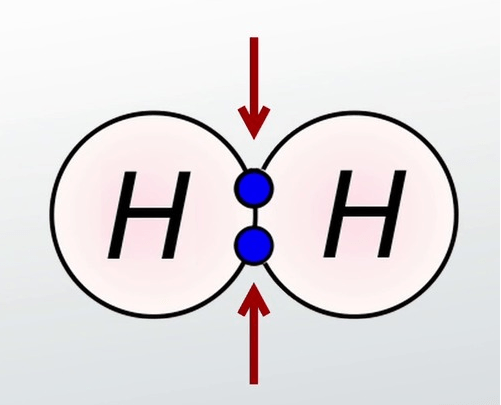
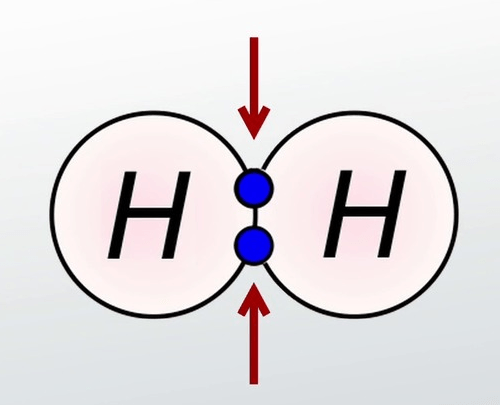
What type of bonding does this picture show?
Ionic
Covalent

What type of bonding does this picture show?
Ionic
Covalent
Which of these element pairs would bond covalently?
Fr and K
Sc and O
F and Cl
He and Pt
The chemical bond between a metal and a non-metal will be a _____ bond.
metal
ionic
covalent
polar
What is the formula for diphosphorus pentoxide?
P2O5
PO5
P5O2
P2O6
Which formula is for phosphorus trichloride?
KCl3
PCl3
K3Cl
P3Cl
Lead Chloride is an ionic compound, made up from Pb2+ ions and Cl- ions. Which is the correct formula for this compound?
PbCl3
PbCl
PbCl4
PbCl2
Magnesium Hydroxide is an ionic compound made up from Mg2+ and OH- ions. Which is its correct formula?
MgOH
MgOH2
Mg(OH)2
MgO
What questions do you have about this content? I will answer them quickly now, or will do so next lesson :)
What type of bonding does this picture show?
Ionic
Covalent
What type of bonding does this picture show?
Ionic
Covalent
Generally, atoms form bonds so that _______________.
Each atom loses its electrons
Each atom has a stable electron configuration
Each atom has an unstable electron configuration
Each atom gains electrons
Generally low melting and boiling points
Ionic compounds
Covalent compounds
Generally high melting & boiling points
Ionic compounds
Covalent compounds
Can be a solid, liquid, or gas at room temperature
Ionic compounds
Covalent compounds
Always a solid at room temperature
Ionic compounds
Covalent compounds
Poor electrical conductivity
Ionic compounds
Covalent compounds
Conducts electricity well when melted or dissolved
Ionic compounds
Covalent compounds
Valence electrons are shared
Ionic bonds
Covalent bonds
Valence electrons are transferred
Ionic bonds
Covalent bonds
The chemical bond between a non-metal and another non-metal will be a ________ bond.
metal
ionic
covalent
polar
The chemical bond between a metal and a non-metal will be a _____ bond.
metal
ionic
covalent
polar
Sodium and Bromine will make a _____ bond.
ionic
covalent
metallic
Carbon and Oxygen will make a ___________ bond.
ionic
covalent
metallic
MgO
ionic
covalent
metallic
NaCl
ionic
covalent
metallic
If two fluorine atoms bond they will make a _____ bond.
ionic
covalent
metallic
Hydrogen and Chlorine will from a _________ bond
ionic
covalent
metallic
1
H2O

What type of bond is the strongest?
single
Double
James
triple
An atom with 3 valence electrons "wants" a full shell, so it can either gain 5 or lose 3. Which is more likely to occur?
Gain 5
Lose 3
Nothing
Covalent compounds can have (select all that apply)
Single Bonds
Double Bonds
Triple Bonds
Quadruple Bonds

Which of the following is a pure substance that contains two or more elements? (Sodium chloride is an example of this.)
compound
ion
molecule
solution
NaBr

