
Font size
 Worksheets
Lymphatic system quiz reviewer
Total questions: 26
Worksheet time: 13mins
Function of lymphatic system: The lymphatic vessels transport back to the blood fluids that have
escaped from the blood vascular system.
Fat absorption
Fluid Balance
calories absorption
House of the bodies defenses
The lymphatic system absorbs fats and other substances from the digestive tract.
Fat absorption
Fluid balance
House of the body's defenses
Calories absorption
The lymphoid tissues and organs house phagocytic cells and lymphocytes, which play essential roles in body defense and resistance to disease.
Fluid balance
Fat absorption
House of the body's defenses
Lymphatic vessels
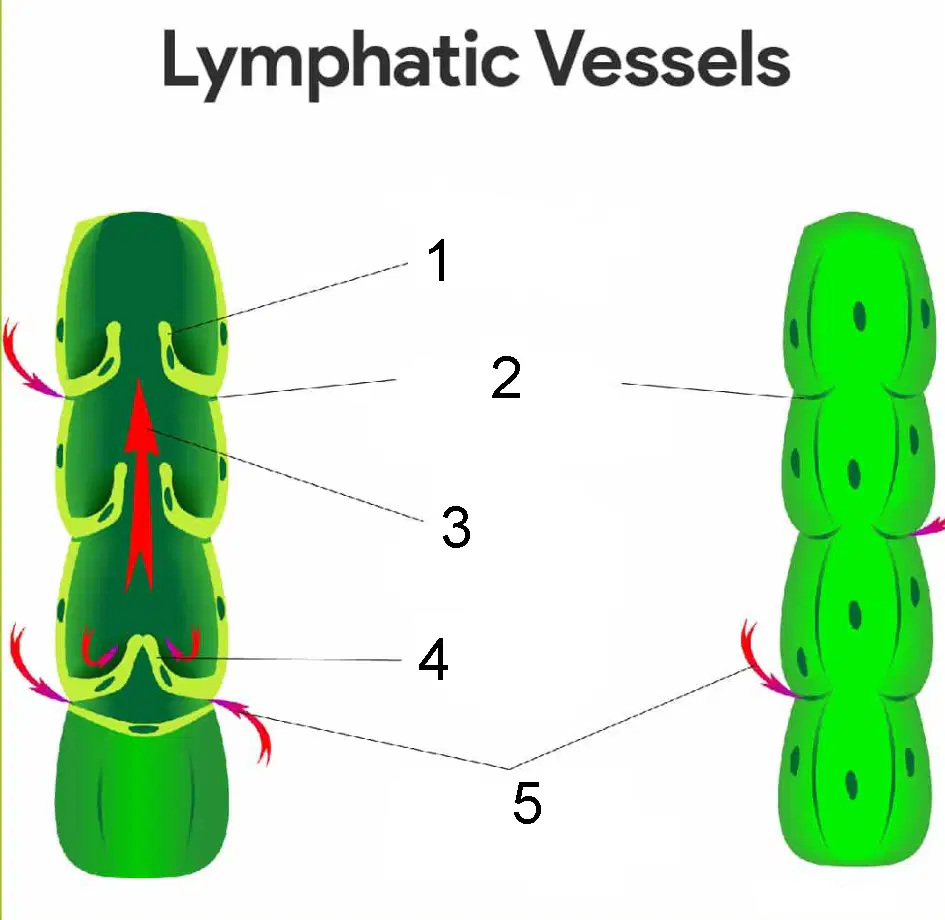
Lymphatic Vessels: What part is corresponding to number 1
Valve open
overlapping endothelial cells
Direction of lymph flow
valve close

Lymphatic Vessels : Label #2
valve close
Direction of lymph flow
overlapping endothelial cells
Fluid entering the lymphatic capillary

Lymphatic Vessels : label #3
Valve open
Overlapping endothelial cells
valve close
Direction of lymph flow
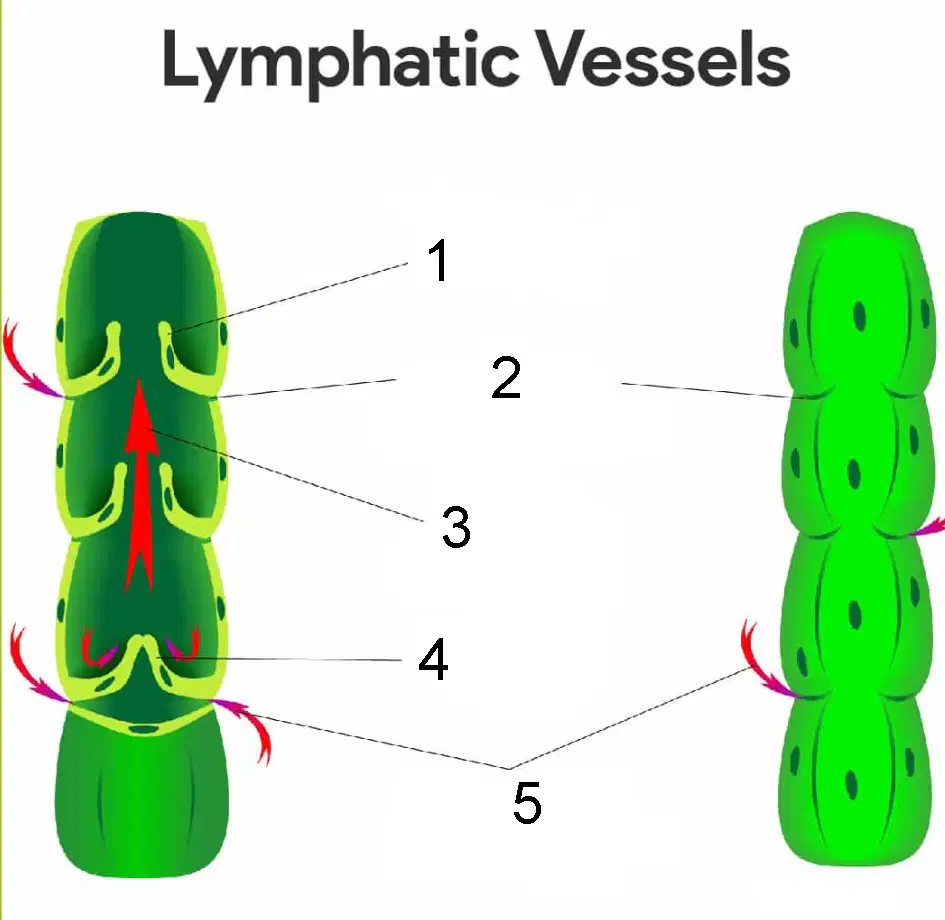
Lymphatic vessels: label #4
valve open
valve closed
Fluid entering lymphatic capillary
Overlapping endothelial cells
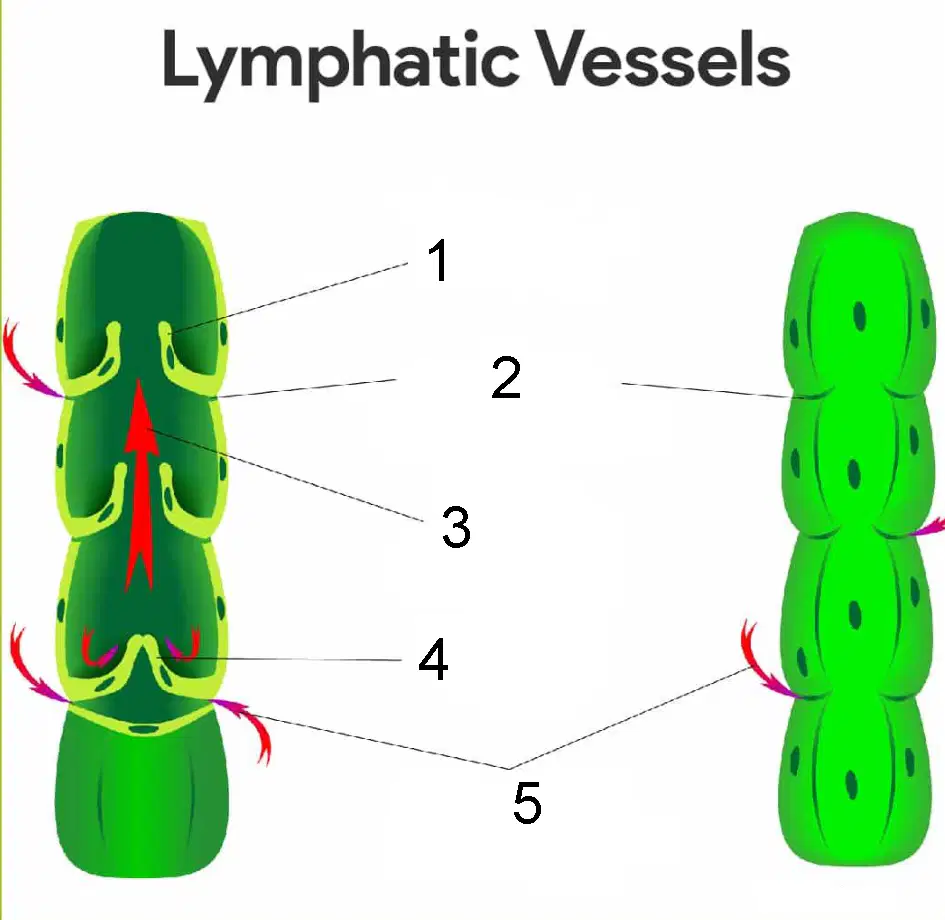
Lymphatic vessels : label #5
valve closed
Fluid entering lymphatic capillary
Direction of lymph flow
valve open
The lymphatic vessels are also called __________, form a one way system, and lymph flows only towards the heart.
lymphatics
lymph capillaries
minivalves
thoracic duct
The microscopic, blind-ended lymph capillaries weave between
the tissue cells and blood capillaries in the loose connective tissues of the body and
absorb the leaked fluid.
right lymphatic duct
minivalves
Lymph capillaries
thoracic duct
Lymph is transported from the lymph capillaries
through successively larger lymphatic vessels referred to as l____________________, until it is finally returned to the venous system through one of the two large
ducts in the thoracic region.
Lymphatic collecting vessels
thoracic duct
right lymphatic duct
lymph capillaries
The large _________ receives lymph from the rest of the body; both
ducts empty the lymph into the subclavian vein on their own side of the body.
lymph capillaries
minivalves
thoracic duct
right lymphatic duct
The __________ in particular help protect the body by removing foreign material such as bacteria
and tumor cells from the lymphatic stream and by producing lymphocytes that function in the
immune response
Lymph nodes
macophages
trabeculae
cortex
Within the lymph nodes are __________, which engulf and destroy
bacteria, viruses, and other foreign substances in the lymph before it is returned to the
blood.
Macrophages
Lymphocytes
Trabeculae
Cortex
Collections of ________ (a type of white blood cell) are also
strategically located in the lymph nodes and respond to foreign substances in the
lymphatic stream.
Macrophages
Lymphocytes
Trabeculae
Cortex
Each node is surrounded by a fibrous capsule from which strands called
________ extend inward to divide the node into a number of compartments.
Macrophages
Lymphocytes
Plasma cells
Trabeculae
The outer part of the node, the ______, contains collections of lymphocytes
called follicles, many of which have dark-staining centers called germinal centers.
Cortex
Plasma cells
Lymphocytes
Macrophages
These centers enlarge when specific lymphocytes (the B cells) are
generating daughter cells called ________, which release antibodies.
Plasma cells
T cells
Medulla
Afferent lymphatic vessels
Phagocytic macrophages are located in the central ______ of the lymph
node
Afferent lymphatic vessels
Medulla
Efferent lymphatic vessels
T cells
Lymph enters the convex side of a lymph node through
the ______________.
Efferent lymphatic vessels
Afferent lymphatic vessels
Medulla
T cells
lymph then flows through a number of sinuses that cut
through the lymph node and finally exits from the node at its indented region, the hilum,
via the ____________________________.
Afferent lymphatic vessels
Efferent lymphatic vessels
Medulla
T cells
The ___________is a soft, blood-rich organ that filters blood.
spleen
thymus
tonsils
Peyer's Patches
The ___________ is located on the left side of the abdominal cavity, just beneath
the diaphragm, and curls around the anterior aspect of the stomach.
Thymus gland
tonsil
spleen
Peyer's patches
The ______ are small masses of lymphoid tissue that ring the pharynx (the throat), where they are
found in the mucosa.
tonsils
uvula
Peyer's patches
thymus gland
________ are found in the wall of the small intestine.
Peyer's patches
tonsil
thymus gland
spleen
The body’s first line of defense against the invasion of disease-causing microorganisms is the
_____ and _____________. (Select 2)
skin
mucous membrane
anti-microbial proteins
antigens

