
 Worksheets
Social Studies - Anthropology Quiz
Total questions: 27
Worksheet time: 56mins
Who discovered "Lucy" ?
Paleontologist Edward Drinker Cope
Anthropologist Dr Edward Drinker Cope
Paleoanthropologist Yohannes Haile-Selassie
Anthropologist Donald F. Johnson
Paleontologist Donald C. Johanson
Why was the fossil named Lucy?
Where was "Lucy" found?
Perserved in the La Brea Tar Pits - California.
Buried underground in Hadar, Ethiopia.
Lucy was found in the Gulf of Mexico, specifially, in a brine pool.
Perserved frozen in ice near the Himalayas.
How do you determine whether or not an artifact is older than another?
Select two limitations to radiocarbon dating.
It can only detect things with carbon still present in it.
Radiocarbon dating is a hard process to execute, resulting in it not being used often.
It can only be used for organic matter.
It can only be used to determine artifacts no older than 70,000 years old.
It is an expensive process, and therefore most scientists prefer using isotopes instead.
Name the land bridge connecting North America and Asia.
(a)
What happened as sheets of ice formed on the Earth? Select all that apply.
The ocean levels dropped signifiantly.
It became nearly impossible to inhabit colder areas in the North.
Bodies of water became connected by land bridges.
Because of the decreasing temperatures, it became hard to light a fire.
How did our ancestors respond to the cooling environments? Select all that apply.
They migrated to warmer areas near the middle lattitudes.
They started using fire.
They gradually hunted more animals for their fur.
They became more reliant on eating resistant vegetables, like tubers.
They began using animal fur as clothing.
Select the genetics of which was triggered by the cooling environments.
They developed larger brains to think.
They began to become skinnier, which trapped heat easier.
They began to develop harder teeth to chew harder vegetables.
They began to develop darker hair, increasing body temperature.
Their body adapted to reduce sweat glands, as there wasn't much of a purpose.
The period of time where it began to globally cool down is known as?
(a)
The (a) was an important animal for early humans during the Ice Age, as it provided much needed warm clothing, food, and even shelter.
How was fire important to the early humans?
Fire helped them keep warm.
It helped them reduce how frequently they needed to go hunting.
It could be used as a nutritional benefit in cooking.
It helped them drive away predators.
All of the above
Was clothing beneficial to humans? If yes, how?
What could humans accomplish with the use of language?
What was language used for between Early humans?
Language helped the early humans hunt.
They could give each other information and instructions.
It helped them spread culture.
All of the above.
During or after a hunt, what were potentional political and social consequences if there was no leader present?
Nomadic people did not have high birth rates. Why? Select all that apply.
They could easily care for children due to the experience of domesticating animals.
There were frequent miscarriages because of trekking.
Nomadic people could not carry multiple children when they had other possessions.
None of the above - they had high birth rates.
Nomadic people often moved around in a specific, repetitive pattern. Explain this in the provided diagram. Let F stand for field, the orange dot for where the nomadic people are currently settled, yellow for resource-rich land, and maroon for where resources are currently low. YOUR WORKING SHOULD BE IN RED. You have ~5 minutes.
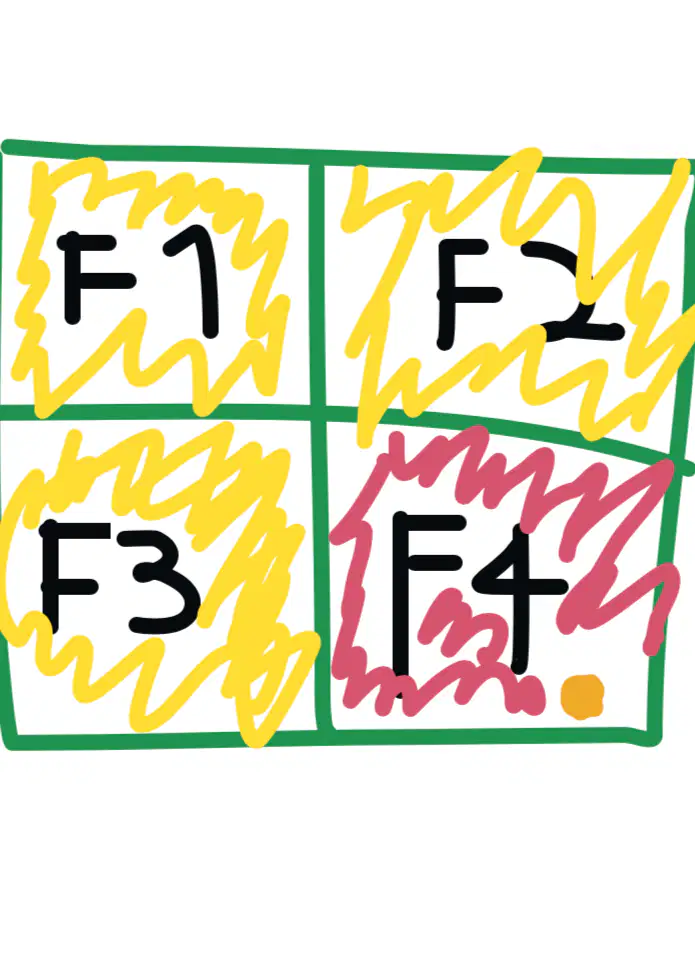
Which came first, the domestication of animals or plants? If you believe the answer is animals, please write animals. However, if you believe the answer is plants, then write veggies. (Do not include the dot after the word.)
(a)
Why did the nomadic people find animals more convenient than plants? Select the main idea, or whichever answers the question BEST.
Animals were a walking food source.
No energy was required to move the animal.
Animals were more nutritious than vegetables.
Animals provided more, such as fur or dairies (milk, cheese.)
Describe the link between agriculture and warfare. Select the main idea.
Farming tools were soon used as weapons during battle, like scythes.
War was often triggered because of agricultural difficulties, and the citizens rebelling due to it.
Surplus amounts of food improved the Standard of Living. This allowed them to trade crops for more recent technologies, like arsenals.
A government wanted to defend the food source - the investments and effort put into the crops.
Relating to modern times, why may a government invest a hefty amount of money into technology? Your answer must relate to warfare.
What were some benefits and consequences of a settled life, rather than a nomadic one? Similarly, what were the costs of a nomadic life, rather than a settled one?
Choose 2 of the following and explain how they helped us become stronger and more efficient. Meat・Bipedalism・Fire・Stone Tools・Language
How can neglect affect a child? Explain.
Question of the Week [Nov 3]
What does it mean to "domesticate plants and animals?"
Explain how these ideas help improve our quality of life.
Should be around ~4 sentences. (3 is acceptable)
What are the 7 Basic features?

