
Font size
 Worksheets
Stone Age Exam Group
Total questions: 70
Worksheet time: 2hrs 35mins
After hunting and gathering, humans developed ____________ where they began to farm and grow their food.
Domestication
Agriculture
Neolithic Period
Artifacts
________________________ hunted animals and gathered berries, vegetables, and other items for their food source.
Artifacts
Domestication
Agriculture
Hunter/Gatherer
The __________________ period came after the Paleolithic period. During this period, humans learned to farm, settled in communities, and populations grew.
Mesolithic Period
Paleolithic Period
Neolithic Period
Prehistory
The ____________________ period is also called the Middle Stone Age. It refers to the time before the Neolithic period and the time after the paleolithic period.
Mesolithic Period
Neolithic Period
Paleolithic Period
Prehistory
Water, shelter, food, and clothing are all examples of ______________________________.
Technology
Survival Needs
Prehistory
Migration
During the Paleolithic Period, cups and bowls made out of leaves, carved wood, and clay, are all examples of ____________________________.
Technology
Survival Needs
Migration
Agriculture
The time before written history is called ______________.
Prehistory
Paleolithic Period
Mesolithic Period
Neolithic Period
Early human groups moving from one place to another in order to find food and shelter is called _________________.
Migration
Nomad
Prehistory
Artifacts
Raising animals to use or eat, such as pigs, cows, and chickens is called ___________________________.
Domestication
Migration
Hunter/Gatherer
Archaeology
We are all part of the American _________________ because we all live in the United States of America and are connected to one another.
Anthropology
Migration
Society
Artifacts
The ____________________________ is when humans hunted, gathered, and migrated.
Paleolithic Period
Mesolithic Period
Neolithic Period
Archaeology
A _____________ has no permanent home and constantly moves around to find food.
Migration
Nomad
Artifact
Technology
The first human art called, __________________________________________, is from the Paleolithic Period.
Artifacts
Technology
Paleolithic Cave Art
Secondary Sources
_____________________ are different from fossils because they are items that are made by humans.
Technology
Artifacts
Migration
Nomad
In __________________________ class, students study events in the past by analyzing artifacts.
Anthropology
Archaelology
Secondary Source
Primary Source
____ and ____ refer to the time period before the birth of Jesus Christ and include eras like the Stone Age.
CE and AD
BCE and BC
Match the following

Stonehenge

Roundhouse

Animal Skin Tent

Skara Brae
What were the houses in the Bronze Age called?
Roundhouses
Trianglehouses
Squarehouses
Circlehouses
Put the following in the correct order of when they happened in history.
Palaeolithic Stone Age
Mesolithic Stone Age
Neolithic Stone Age
Bronze Age
In the (a) Age they wore clothes made from animal skins.
What were tools made from during the early Stone Age?
Bronze
Iron
Stone
Wood
Which of these are Stone Age tools? Click all the correct answers.
Hammerstone
Handaxe
Spanner
Scraping Tool
Which animals did Stone Age people hunt for? Select all the correct answers.
Deer
Wild Boar
Goats
Donkeys


What was the greatest benefit to people when early farmers began to raise plants and animals?
Easy travel
They kept pets
Shared most work
Stable food supply
What is the term that describes the discovery of farming?
domesticated
paleolithic age
neolithic age
agricultural revolution
The Stone Age got its name because
Stone Houses
Used pretty rocks for money
Rocky Fields
Stone Tools
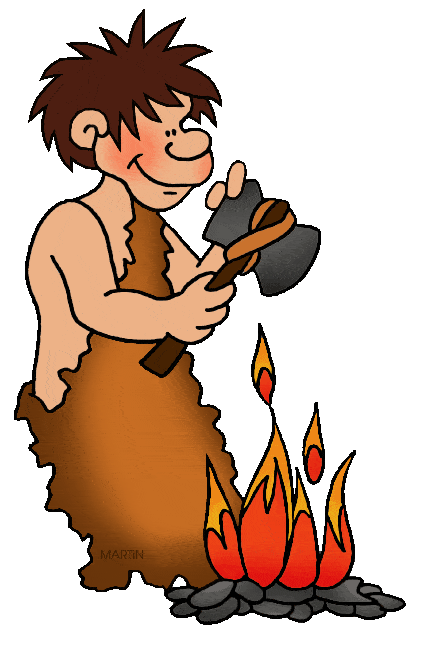
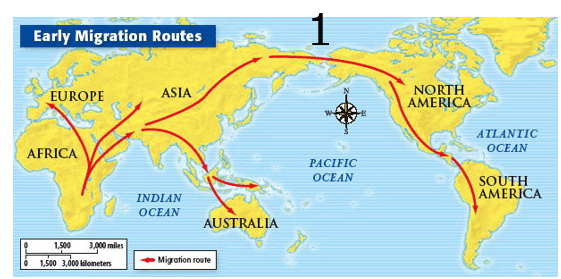
Housing during the Paleolithic Era was made from
Mud bricks
concrete
caves, furs, bones
igloos
A paleolithic diet would consist of
Corn, squash
Wheat
Berries, hunted meat
Beans, barley

In which ways did ancient Greeks adapt to their environment?
farming, fishing, trade, and shipbuilding
farming, sewing, silk production, and writing
fishing, trade, pyramid building, and art
trade, shipbuilding, writing, and storytelling

What are four primary contributions made by the ancient Greeks?
architecture
writing
government
art
sports


(Also, the largest city-state by a wide margin)

For instance, women COULD NOT participate in political activities or own property, and they were always under the care of a male family member.
Where were the Olympic games held?
Sparta
Athens
Corinth
Argos
This city state was known for its warriors?
Athens
Sparta
Argos
Corinth
Select two of the most famous city-states of Greece.
Athens
Argos
Thebes
Melos
Sparta
What was the Greek word for city-state?
polis
agora
acropolis
Who rules in a democracy?
the people
small groups of elite
king or queen
How were Athens and Sparta different? Pick 2
Athens was focused on education. Sparta was focused on building a strong army.
Athens was focused on building a strong army, Sparta was focused on education.
They were not different.
Athens was a democracy. Sparta was an oligarchy.
Athens was an oligarchy. Sparta was a democracy.
How were girls treated in Athens?
Girls were able to do anything boys did in Athens.
Girls were uneducated, unless they were from a wealthy family. Girls could not vote.
Girls were allowed to own businesses but not vote.
How were girls treated in Sparta?
Girls were not allowed to fight, but they were trained so they could produce strong children.
Girls had more control of the government.
Girls were educated but not trained in fighting.

This picture is an example of what Ancient Greek art?
hieroglyphics
pottery
mosaics
sculptures
Girls in Athens were taught how to
become soldiers
run a marathon
weave and sew
Spartan boys were trained to be
thinkers
farmers
soldiers
Ancient Greece was
a large city
a collection of cit-states
an island nation

