wayground logo

Free Printable Worksheets

Font size

S
M
L
XL
Worksheets

Bacel quiz

Total questions: 207

Worksheet time: 3hrs 55mins

Name
Class
Date
1.

Which if the following is not a structural part of the cell (plasma) membrane?

a)

phospholipids

b)

cholesterol

c)

proteins

d)

DNA

2.

Which of the following is not a major function of the cell (plasma) membrane?

a)

cell to cell communication

b)

provides a strong structure to keep the cell stiff and solid

c)

cell recognition

d)

controls the movement of substances in and out of the cell

3.

Phospholipids are made up of two parts. Which of the following correctly describes these two parts?

a)

hydrophobic head, hydrophilic tail

b)

hydrophobic head, hydrophobic tail

c)

hydrophilic head, hydrophobic tail

d)

hydrophilic head, hydrophilic tail

4.

Which image correctly shows the way phospholipids arrange themselves in the cell (plasma) membrane?

a)
b)
c)
d)
5.

The model that describes the current understanding of the cell (plasma) membrane structure is

a)

fluidity model

b)

fluid mosaic model

c)

semi-permeable model

d)

flexible mixture model

6.

Proteins that make up the cell (plasma) membrane

a)

are only found on the outer side of the phospholipid bilayer

b)

are able to provide a passageway for certain substance to pass through the membrane

c)

are only found on the inner side of the phospholipid bilayer

d)

are only found in the middle of the phospholipid bilayer

7.

Structure A in the diagram is

a)

cholesterol

b)

phospholipid

c)

glycoprotein

d)

channel protein

8.

Which of the following is incorrect about substances that can easily pass through the phospholipid bilayer?

a)

small, lipid soluble molecules

b)

small, uncharged molecules

c)

large molecules that are soluble in water

d)

molecules like carbon dioxide or oxygen

9.
True or False:  Regulating what enters and leaves the cell helps the cell maintain homeostasis. 
a)
True
b)
False
10.
Most of the cell membrane is made of...
a)
Lipids
b)
Carbohydrates
c)
Proteins
d)
Nucleic acids
11.
Hydrophobic region of the cell membrane?
a)
E
b)
B
c)
C
d)
12.
Phospholipid heads are...
a)
Hydrophobic
b)
Hydrophilic
13.
___________ allow cells to recognize each other and act like ID tags. 
a)
Carbohydrates 
b)
Proteins
c)
Phospholipids 
d)
Cholesterol
14.
The cell membrane is made up of 
a)
Polar heads, non-polar tails
b)
Non-polar heads, polar tails
c)
Polar heads, polar tails
d)
Non-polar heads, non-polar tails
15.
What forms the channels and pumps in the phospholipid bilayer?
a)
Carbohydrates
b)
Proteins
c)
Hydrophilic heads 
d)
Lipids
16.
The function of the plasma membrane is....
a)
to regulate what enters and leaves the cell.
b)
fight bacteria and viruses that enter the cell.
c)
provide rigid support and protection to the cell.
d)
make sure each cell can move
17.
Part of the plasma membrane responsible for cell recognition... 
a)
C
b)
E
c)
B
d)
D
18.
Which of the following is NOT part of the cell membrane?
a)
Lipids
b)
Carbs
c)
Proteins
d)
Nucleic Acids
19.
What does hydrophobic mean?
a)
Likes water as a friend
b)
Dissolves in water
c)
Loves water
d)
Hates water
20.
What does hydrophilic mean?
a)
Fills water up
b)
Hates water
c)
Loves water
d)
Only associates with water if it has to
21.
Which is the protein?
a)
A
b)
B
c)
C
d)
D
22.
This picture show the molecules getting help across the membrane.  The vocabulary word that best describes this is
a)
diffusion
b)
osmosis
c)
facilitated diffusion
d)
active transport
23.
Osmosis is the diffusion of __________.
a)
water
b)
glucose
c)
air
d)
passive transport
24.

Describe the movement of molecules going through the proteins in the illustration.

a)

Molecules are moving from a higher concentration to a lower concentration.

b)

Molecules are moving from a lower concentration to a higher concentration.

c)

Molecules are moving from a higher concentration to a lower concentration and then from a lower to higher concentration.

d)

Molecules are moving from a lower concentration to a higher concentration and then from a higher concentration to a lower concentration.

25.
The cellular process in which materials are moved across a membrane from an area of low concentration to an area of high concentration is called
a)
Osmosis
b)
Simple Diffusion
c)
Active Transport
d)
Passive Transport 
26.
The picture is an example of...
a)
active transport
b)
passive transport
c)
diffusion
d)
osmosis
27.
What is a bad description of the cell membrane?
a)
Selectively permeable
b)
Fluid Mosaic Model
c)
Solid Barrier
d)
Lipid Bilayer
28.
What type of solution is this cell in?
a)
Isotonic
b)
Hypertonic
c)
Hypotonic
d)
diffused
29.
What type of solution is this cell in?
a)
Isotonic
b)
Hypertonic
c)
Hypotonic
d)
diffused
30.
What type of solution is this cell in?
a)
Isotonic
b)
Hypertonic
c)
Hypotonic
d)
diffused
31.
This picture represents which type of cellular transport?
a)
passive transport
b)
endocytosis
c)
exocytosis
d)
osmosis
32.
This picture represents what type of cell transport?
a)
endocytosis
b)
exocytosis
c)
osmosis
d)
passive transport
33.

Which type of transport requires energy?

a)

Endocytosis

b)

Exocytosis

c)

Active Transport

d)

Diffusion

34.

Which of the following are a type of passive transport (does not require energy input)?

a)

endocytosis

b)

facilitated diffusion

c)

active transport

d)

osmosis

e)

diffusion

35.
Homeostasis is the process through which an organism regulates its internal environment in order to maintain a stable and constant condition.
An example of homeostasis is the regulation of the glucose sugar level in blood through the interaction of the hormones insulin and glucagon.  
What happens if the body is unable to maintain its blood glucose level?
a)
This regulation is unnecessary to the viability of organisms.
b)
The body adapts to a different blood glucose level.
c)
New hormones are created to solve the problem.
d)
Diseases, such as diabetes and hypoglycemia, result.
36.
The cell membrane, or plasma membrane, is made up of a lipid bilayer in which hydrophilic heads face outward and hydrophobic tails face inward.
This arrangement within the cell membrane allows it to 
a)
fuse with ribosomes during DNA replication.
b)
absorb water from the cytoplasm whenever necessary.
c)
keep out all viral and bacterial infections.
d)
control the movement of substances in and out of the cell.
37.
The diffusion of water across a selectively permeable membrane is called
a)
osmotic pressure.
b)
osmosis.
c)
pinocytosis.
d)
active transport.
38.

What is the order of organization within living things?

a)

Cells, tissues, organs, organ systems, organism

b)

Tissues, cells, organs, organ systems, organism

c)

Organism, cells, tissues, organs, organ systems

d)

Organism, organ systems, cells, tissues, organs

39.

A nucleus is found within...

a)

Eukaryotic cells

b)

Prokaryotic cells

40.

What organelles are found in both prokaryotic and eukaryotic cells?

a)

Plasma membrane, cytoplasm, ribosome

b)

Cell wall, plasma membrane, nucleus

c)

Cytoplasm, plasma membrane, nucleoid

d)

Cytoplasm, nucleus, nucleoid

41.

What is the function of the chloroplasts?

a)

Stores genetic information

b)

Absorbs sunlight and allows photosynthesis to take place

c)

Controls what enters and exits the cell

d)

The site where chemical reactions take place in the cell

42.

What is one condition of the cell theory?

a)

That all living things consist of one or more cells

b)

That all living things are bacterial in nature

c)

That all living things are eukaryotic in nature

d)

That all living things are prokaryotic in nature

43.

What organelles are found in both animal and plant cells (eukaryotic cells)?

a)

Plasma membrane, cytoplasm, chloroplasts

b)

Cell wall, plasma membrane, nucleus

c)

Cytoplasm, plasma membrane, nucleus

d)

Cytoplasm, nucleus, nucleoid

44.

What are the basic structural units of all living things?

a)

Cells

b)

Organs

c)

Tissues

d)

Organ systems

45.

What structures are found within a bacterial cell?

a)

Cell wall, nucleus

b)

Cell wall, chloroplast

c)

Cytoplasm, cell wall

d)

Flagellum, nucleus

46.

What is the function of mitochondria?

a)

The provide energy to the cell through the production of ATP

b)

The give the cell support

c)

They store the genetic information of the organism

d)

They trap energy from the Sun that can be used for photosynthesis

47.

Which organelle produces proteins in the cell?

a)

Ribosome

b)

Nucleus

c)

Cell wall

d)

Plasma membrane

48.

Which of the following is NOT a part of the cell theory

a)

All cells are made of atoms

b)

All living things are made of cells

c)

All cells come from pre-existing cells

d)

Cells are the basic structure and function of life

49.

The ___________ is the basic structure of life

a)

atom

b)

molecule

c)

cell

d)

organism

50.

All cells come from ___________ cells

a)
dead cells
b)
non-living matter
c)
pre-existing cells
d)
plants
51.

A cell that contains a nucleus is a ___________.

a)
Prokaryotic cell
b)
Virus
c)
Bacteria
d)
Eukaryotic cell
52.

A cell that does not have a nucleus is a __________.

a)
Eukaryotic cell
b)
Animal cell
c)
Plant cell
d)
Prokaryotic cell
53.

All of the following apply to eukaryotic cells except:

a)
They contain a nucleus
b)
They have membrane-bound organelles
c)
They are smaller than prokaryotic cells
d)
They contain DNA
54.

All of the following apply to prokaryotic cells except:

a)
They have a nucleus
b)
They lack membrane-bound organelles
c)

They have the ability to reproduce

d)

They have DNA

55.

The following kingdoms all contain eukaryotes except:

a)
Animalia
b)
Fungi
c)
Protista
d)
Archaebacteria
56.

Which of the following kingdoms contains prokaryotes?

a)
Animalia
b)
Fungi
c)
Plantae
d)

Eubacteria

57.

True or false? The structure of a cell is directly related to its function.

a)

True

b)

False

58.
What is a substance called if it speeds up a chemical reaction?
a)
reusable
b)
catalyst
c)
specific
d)
fragile
59.
Each enzyme only has 1 substrate that will fit its active site.  What is this called?
a)
reusablility
b)
denaturation
c)
specificity
d)
fragility
60.
With what 3 letters do enzymes typically end?
a)
-ose
b)
-ase
c)
-ese
d)
-tic
61.
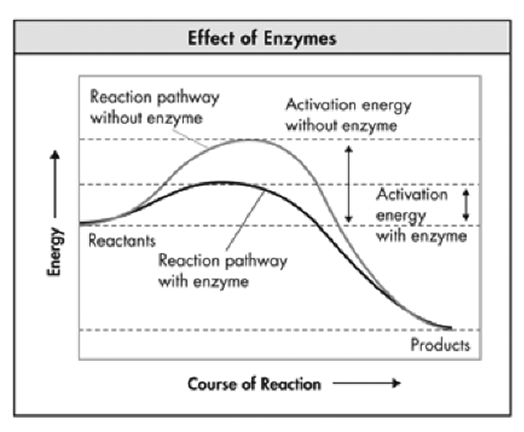
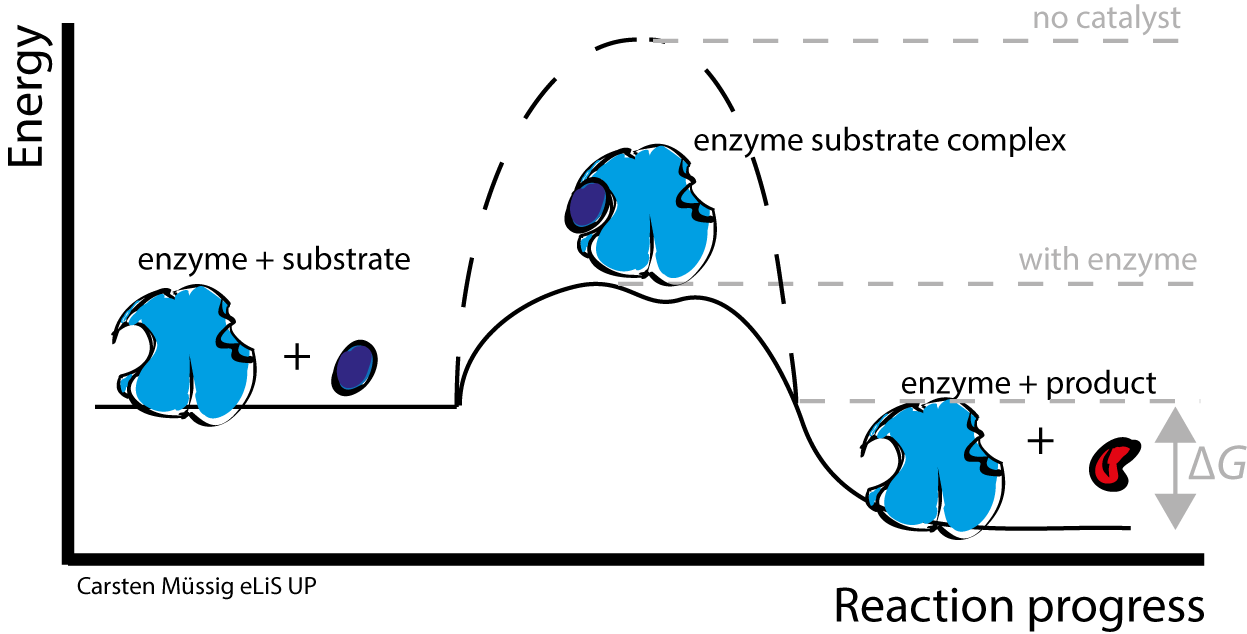
The graph shows how enzymes affect reactions in cells. Which statement best summarizes the information shown in the graph?
a)
Enzymes increase the energy of the reactants.
b)
Enzymes decrease the energy level of the products.
c)
Enzyme decrease the activation energy of the reaction.
d)
Enzymes reverse the direction of the reaction.
62.
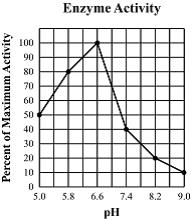
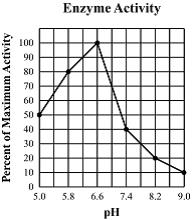
Which of the following conclusions can be drawn from this graph?
a)
The optimum pH of the enzyme is 6.6.
b)
The optimum pH of the enzyme is 5.8
c)
The enzyme’s activity increases as pH increases 5.0 to 9.0
d)
The enzyme’s activity is greater around pH of 8.0 .
63.
Any substance that is acted upon by an enzyme is called a(n)?
a)
Coenzyme
b)
Substrate
c)
Vitamin
d)
Polypeptide
64.
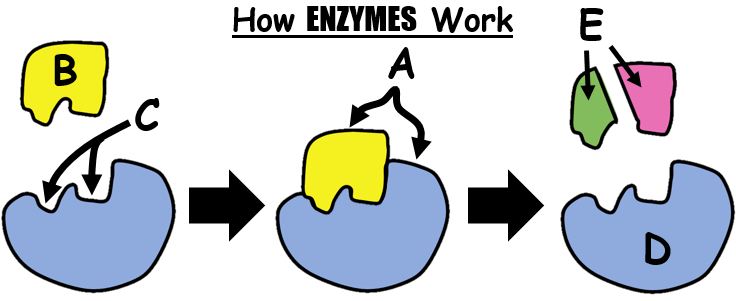
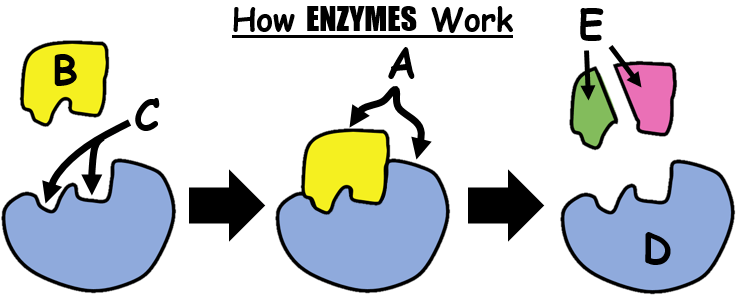
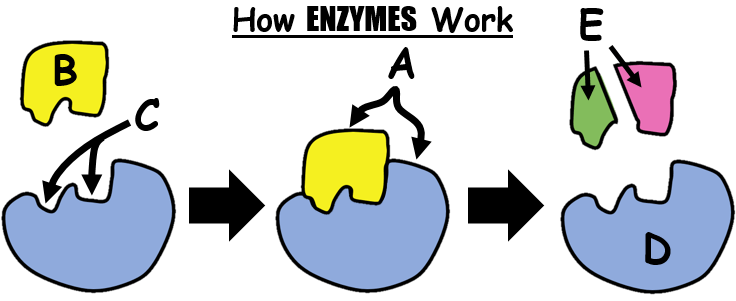
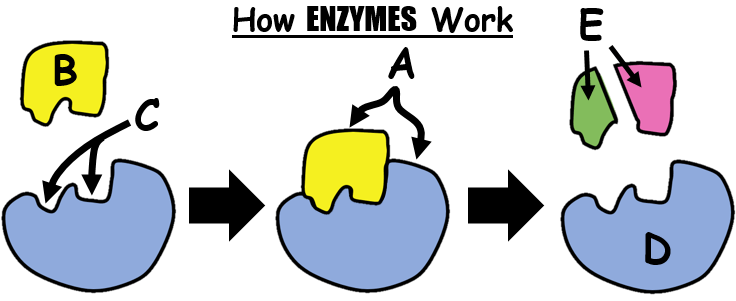
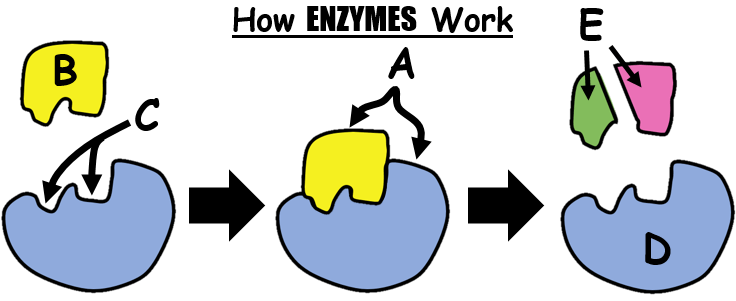
In the diagram, what is letter A? 
a)
product
b)
substrate
c)
enzyme-substrate complex
d)
active site
65.
Enzymes are...
a)
nucleic acids
b)
proteins
c)
lipids
d)
carbohydrates
66.
An enzyme speeds up a chemical reaction in the cell but can only be used once.  True or False? 
a)
true
b)
false
67.
What is the function of an enzyme?
a)
enzymes break themselves into small pieces
b)
enzymes slow down chemical reactions
c)
enzymes speed up chemical reactions
d)
enzymes combine products to form reactants 
68.
What happens when enzymes are heated to a high temperature?
a)
The enzymes die.
b)
The shapes of the enzyme are altered denature
c)
The enzymes' amino acid sequence changes.
d)
The enzymes remain the same
69.
Which of these is most likely an enzyme?  
a)
Sucrose
b)
Galactose
c)
Fructose
d)
Amylase
70.
Enzymes speed up reaction rates by changing...
a)
Activation Energy
b)
pH
c)
Hydrogen Bonds
d)
Kinetic Energy
71.
Letter D...
a)
active site
b)
enzyme
c)
substrate
d)
products
72.
Letter B...
a)
active site
b)
enzyme
c)
substrate
d)
products
73.
Letter C...
a)
active site
b)
enzymes
c)
substrate
d)
products
74.
Letter E...
a)
active site
b)
enzyme
c)
substrate
d)
products
75.
Which enzyme is most efficient in a basic solution?
a)
A
b)
B
76.

Enzymes are an example of

a)

Lipids

b)

Carbohydrate

c)

Protein

d)

Nucleic Acid

77.
What is the purpose  of an enzyme?
a)
give permission for the reaction
b)
raise activation energy
c)
speed up reactions
d)
control how many reactions occur
78.
Each enzyme only has 1 substrate that will fit its active site.  What is this called?
a)
reusable
b)
catalyst
c)
specific
d)
fragile
79.
Any substance that is acted upon by an enzyme is called a(n)?
a)
Coenzyme
b)
Substrate
c)
Vitamin
d)
Polypeptide
80.
Letter D...
a)
active site
b)
enzyme
c)
substrate
d)
products
81.
Letter B...
a)
active site
b)
enzyme
c)
substrate
d)
products
82.
Letter C...
a)
active site
b)
enzymes
c)
substrate
d)
products
83.
Letter E...
a)
active site
b)
enzyme
c)
substrate
d)
products
84.
Enzymes provide a site where reactants called substrates can be brought together in an enzyme-catalyzed reaction. The site is called the
a)
enzyme substrate complex.
b)
reaction site.
c)
active site.
d)
lock and key.
85.
An enzyme speeds up a reaction by
a)
lowering the activation energy.
b)
raising the activation energy.
c)
releasing energy.
d)
absorbing energy.
86.
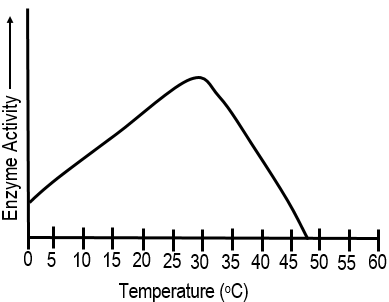
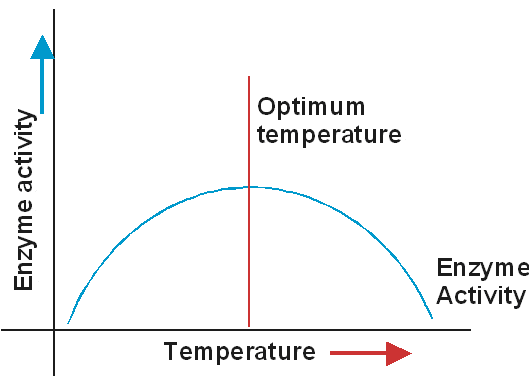
Based on the graph, what is the optimal temperature for this enzyme? 
a)
15oC
b)
40oC
c)
30oC
d)
35oC
87.
What makes an enzyme substrate specific?
a)
Size
b)
Shape
c)
Name
d)
Location it is found in
88.
At high temperatures enzyme activity declines because of:
a)
Denaturation
b)
Decreased Kinetic Motion
c)
Increased H-Bonding
d)
Dissociation of Ionic Compounds
89.
Enzymes are composed of which of the following monomers? 
a)
amino acids
b)
carbohydrates
c)
nucleotides
d)
monosaccharides
90.
What is a Cataylst?
a)
A substance that speeds up a rate of chemical reaction.
b)
Molecules that make enzymes work harder and faster 
c)
reaction of an enzyme
d)
A substance that slows down a rate of chemical reaction.
91.
The diagram shows the general structure of an amino acid. Which type of molecule is formed from amino acids?
a)
lipids
b)
proteins
c)
carbohydrates
d)
nucleic acids
92.
You are analyzing a compound in the laboratory. You find that it is made up of carbon, hydrogen, and oxygen in a ratio of two hydrogen atoms for each carbon atom. How will you classify the compound?
a)
lipid
b)
protein
c)
carbohydrate
d)
nucleic acid
93.
Fats, oils and cholesterol are all types of what?
a)
cell membranes
b)
hormones
hormones
c)
lipids
d)
fatty acids
94.
RNA and DNA are which type of macromolecules?
a)
carbohydrate
b)
lipid
c)
nucleic acid
d)
protein
95.
Many plants have waxy coatings on some surfaces. This coating reduces water loss because it is not water-permeable. This waxy coating is which of the following types of organic molecule?
a)
protein
b)
carbohydrate
c)
nucleic acid
d)
 lipid
96.
A sugar, a phosphate group, and a nitrogen base form the building blocks of which organic compound?
a)
carbohydrates
b)
lipids
c)
nucleic acids
d)
proteins
97.
The human body maintains a temperature of around 98.6 degrees at all times. Enzymes are involved in almost every chemical reaction in the body. Which of the following describes the connection between these two statements? 
a)
Enzymes function best at a specific temperature.
b)
The body needs to be warm to prevent hypothermia.
c)
The body is kept relatively warm to prevent too much enzyme action. 
d)
There is no connection between the two statements. 
98.
Like complex carbohydrates, proteins are macromolecules that serve many functions and can be chemically broken down and restructured. Both proteins and complex carbohydrates are which of the following?
a)
 polymers of smaller subunits
b)
sequence of sugars
c)
lipids of large molecules
d)
nucleotides of DNA
99.
 In living organisms, lipids function mainly as:
a)
Sources of stored energy and transmitters of genetic information
b)
Sources of stored energy and components of cellular membranes
c)
Transmitters of genetic information and catalysts of chemical reactions
d)
Catalysts of chemical reactions and components of cellular membranes
100.
What is the function of macromolecule subunit below?
a)
energy
b)
catalyst
c)
stores genetic information
d)
composes the majority of the cell membrane
101.

What macromolecule is shown?

a)

Protein

b)

Nucleic Acid

c)

Carbohydrate

d)

Lipid

102.

What macromolecule is shown?

a)

Protein

b)

Nucleic Acid

c)

Lipid

d)

Carbohydrate

103.

What is the monomer of a lipid?

a)

Amino Acid

b)

Fatty Acid

c)

Monosaccharides

d)

Glucose

104.

What is the function of carbohydrates?

a)

Short term energy

b)

Long term energy

c)

Storing genetic information

d)

Speeding up chemical reactions

105.

What is one of the functions of lipids?

a)

Storing genetic information

b)

Long Term Energy

c)

Short Term Energy

d)

Acting as chemical signals

106.

What is the function of nucleic acids?

a)

Short Term Energy

b)

Storing Genetic Information

c)

Long Term Energy

d)

Speeding Up Chemical Reactions

107.

What macromolecule is shown?

a)

Nucleic Acids

b)

Lipids

c)

Proteins

d)

Carbohydrates

108.

What macromolecule is shown?

a)

Carbohydrate

b)

Nucleic Acid

c)

Protein

d)

Lipid

109.

What is one of the functions of proteins?

a)

Long Term Energy

b)

Short Term Energy

c)

Storing Genetic Information

d)

Speeding Up Reactions in Cells

110.

What macromolecule is shown?

a)

Carbohydrates

b)

Lipids

c)

Nucleic Acids

d)

Proteins

111.

What macromolecule is shown?

a)

Lipids

b)

Proteins

c)

Carbohydrates

d)

Nucleic Acids

112.

What macromolecule is shown?

a)

Proteins

b)

Nucleic Acids

c)

Lipids

d)

Carbohydrates

113.

Which of the following is a function of carbohydrates?

a)

Long Term Energy

b)

Storing Genetic Information

c)

Creating the structures that supports plants

d)

Speeding Up Chemical Reactions

114.

What element if the building block of life?

a)

Carbon

b)

Hydrogen

c)

Oxygen

d)

Nitrogen

115.

Which of the following is NOT a macromolecule?

a)

Fiber

b)

Carbohydrates

c)

Amino Acid

d)

Monosaccharides

116.

How many bonds will a C atom form?

a)

1

b)

2

c)

3

d)

4

117.

Which of these element(s) will C form bonds with?

a)

C

b)

H

c)

O

d)

N

e)

all of these

118.

What type of compounds have at least 1C atom bonded to at least 1H atom?

a)

inorganic

b)

organic

c)

ionic

119.

Which of the following is an organic compound that makes up living things?

a)

carbohydrates

b)

salts

c)

oxides

d)

hydrocarbons

120.

6 Carbon atoms can form many different compounds.

a)

TRUE

b)

FALSE

121.

_______ are to polymers as a railroad car is to a long train.

a)

molecules

b)

protons

c)

monomers

d)

neutrons

122.

What is used to make molecules and is made of protons, neutrons and electrons?

a)

compounds

b)

atoms

c)

monomers

d)

polymers

123.

What connects two atoms together?

a)

H bond

b)

savings bond

c)

snap chat

d)

chemical bond

124.

What is an organic compound that makes up living things?

a)

carbohydrates

b)

hydrocarbons

c)

plastics

d)

water

125.

What is the definition of OSMOSIS?

a)

Diffusion of water through a selectively permeable membrane

b)

Molecular structure that surrounds the cell and controls what enters and leaves the cell

c)

Movement of molecules across the cell membrane against the concentration gradient

d)

Movement of molecules across the cell membrane from an area of high concentration to low concentration

126.

What is the definition of LIPID BILAYER?

a)

Molecular structure that surrounds the cell and controls what enters and leaves the cell

b)

Movement of molecules across the cell membrane against the concentration gradient

c)

Diffusion of water through a selectively permeable membrane

d)

Movement of molecules across the cell membrane from an area of high concentration to low concentration

127.

What is the definition of ACTIVE TRANSPORT?

a)

Movement of molecules across the cell membrane against the concentration gradient

b)

Diffusion of water through a selectively permeable membrane

c)

Molecular structure that surrounds the cell and controls what enters and leaves the cell

d)

Movement of molecules across the cell membrane from an area of high concentration to low concentration

128.

Identify the following structure

a)

Phospholipid

b)

Cell

c)

Cell membrane

d)

Protein

129.

What is the name of 'A' found on the structure below

a)

Lipid Bilayer (cell membrane)

b)

Protein

c)

Phosphate hydrophilic heads

d)

Lipid hydrophobic tails

130.

What is the name of 'B' found on the structure below

a)

Protein

b)

Lipic bilayer

c)

Phosphate hydrophilic heads

d)

Lipid hydrophobic heads

131.

What is the name of 'C' found on the structure below

a)

Phosphate hydrophilic heads

b)

Lipid hydrophobic tails

c)

Lipid bilayer

d)

protein

132.

What is the name of 'D' found on the structure below

a)

Lipid hydrophobic tails

b)

Protein

c)

Lipid bi layer

d)

Phosphate hydrophilic heads

133.

Which answer correctly describes the lipid bilayer?

a)

lipids are hydrophobic; phosphates are hydrophobic

b)

lipids are hydrophilic; phosphates are hydrophilic

c)

lipids are hydrophobic; phosphates are hydrophilic

d)

lipids are hydrophilic; phosphates are hydrophobic

134.

Why would the cell need energy to move molecules across the membrane?

a)

the molecule is going against the concentration gradient

b)

the molecule is to large to pass through the membrane

c)

the lipid membrane requires energy anytime something is moving across the membrane

135.

In passive diffusion, substances always move...

a)

from an area of higher concentration to an area of lower concentration

b)

from an area with more of the molecules to an area with fewer of the molecules

c)

from an area of lower concentration to an area of higher concentration

d)

from an area with fewer of the molecules to an area with more of the molecules

136.

What is the definition of FACILITATED DIFFUSION?

a)

Movement of molecules across the cell membrane from an area of high concentration to low concentration

b)

Diffusion of water through a selectively permeable membrane

c)

Movement of molecules across the cell membrane against the concentration gradient

d)

Molecular structure that surrounds the cell and controls what enters and leaves the cell

137.

The following cells have been placed in different solutions.

Make a prediction of what will happen.


(check all that are correct)

a)

Isotonic-- the cell will maintain size

b)

hypotonic-- the cell will increase in size

c)

hypertonic-- the cell will decrease in size

138.

In 2007, a young mom in Sacramento died after participating in a water-drinking contest. The goal was outlast others and not use the restroom while the participants continued to drink 8 oz of water every 15 minutes. She did win the contest, but complained as she got home about pain. Later that day, she died.


Explain using the following words, what could have taken place at the cellular level.

Osmosis

CellMembrane

WaterSolute

Hyptertonic

Hypotonic

Solvent

Equilibrium or Homeostasis
4 lines
139.
What process occurs when WATER diffuses across a membrane?
a)
endocytosis
b)
mitosis
c)
osmosis
d)
nuclear fission 
140.
What does “high concentration area” mean?
a)
Spread out
b)
Tightly packed together
c)
Uncrowded
d)
Spacious
141.
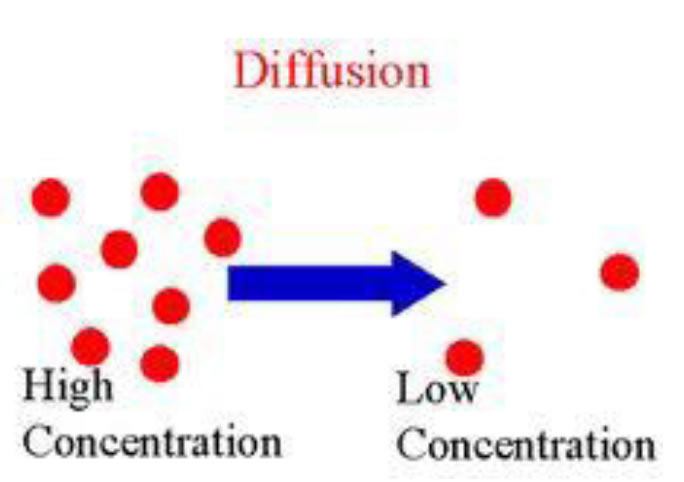
When particles move from areas of high concentration to areas less concentrated, this has taken place.
a)
diffusion
b)
mitosis
c)
endocytosis
d)
photosynthesis
142.
Why is diffusion and osmosis important to cells?
a)
It allows them to take in materials without using energy.
b)
It allows them to reproduce.
c)
It allows them to absorb sunlight.
d)
It allows cells to use all energy.
143.
What does selectively-permeable mean?
a)
The cell controls what passes in and out of the cell
b)
Nothing gets through
c)
The cell lets only large substances through
144.
What is diffusion?
a)
when molecules move 
b)
when molecules move from a high concentration to a low.
c)
no movement 
d)
molecules move everywhere
145.
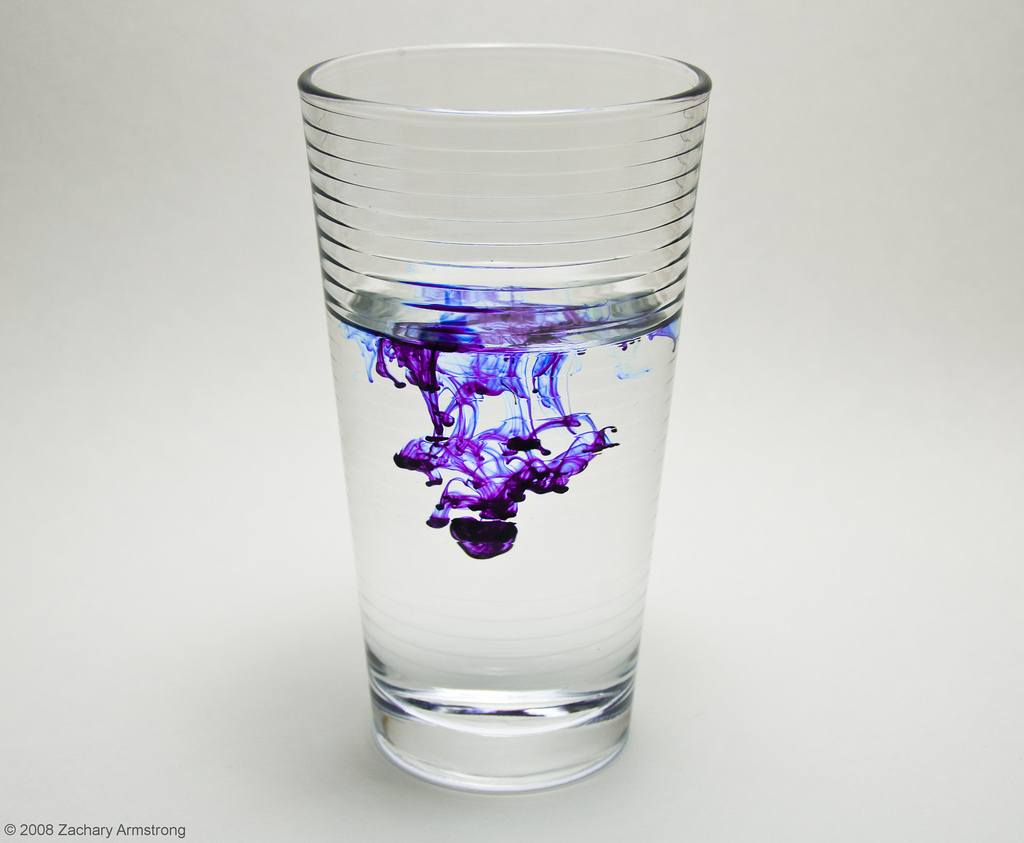
Where is there a low concentration of dye?
a)
at the bottom of cup
b)
in the color
c)
at the top of cup 
d)
no concenteraion gradient
146.
During osmosis
a)
water moves from high to low concentration
b)
large or oddly shaped molecules move across a cell membrane
c)
water moves when energy is used
d)
proteins are built
147.
Permeable means
a)
things can pass through
b)
the concentration levels are different
c)
it is permanent
d)
things are stuck
148.
Movement of particles from high to low concentration. 
a)
Passive Transport
b)
Active Transport
149.
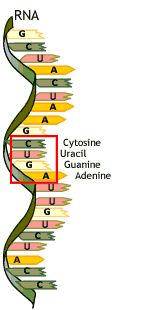
Which of the following is incorrect regarding RNA?
a)
RNA contains uracil
b)
RNA can only be found inside the nucleus
c)
RNA is single stranded
d)
RNA contains genetic information
150.
What is occurring in this picture?
a)
Translation
b)
DNA Replication
c)
Polymerase is unzipping the DNA
d)
Transcription
151.
What is the mRNA strand that would be created from this DNA strand:
T A C A G G C C T
a)
A C G T C C G G A
b)
A U G U C C G G A
c)
T U G G G C C A T
d)
U T G U C C G G U
152.
The diagram shows the process of
a)
Transcription
b)
Translation
c)
Replication
d)
Mitosis
153.
This diagram shows the process of 
a)
Transcription
b)
Translation
c)
Replication
d)
Mitosis
154.
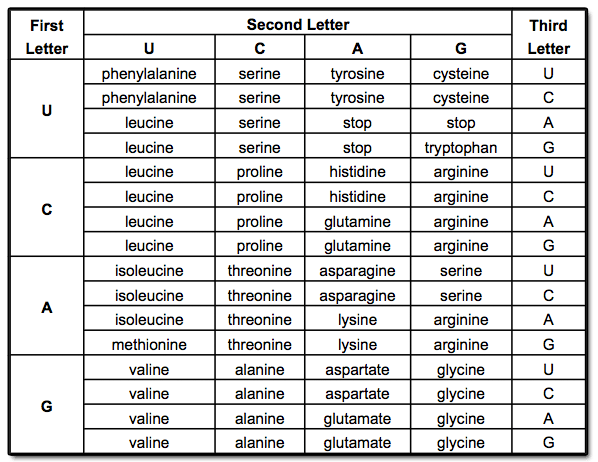
Which amino acid is coded from the mRNA codon:
G G C
a)
Arginine
b)
Serine
c)
Leucine
d)
Glycine
155.
What does Letter C indicate?
a)
Polypeptide Chain
b)
Anticodon
c)
Codon
d)
Amino Acid
156.
What process is occurring in the diagram?
a)
Transcription
b)
Translation
c)
Replication
d)
Mitosis
157.
What does Letter E Indicate?
a)
Codons
b)
Amino Acids
c)
An Anticodon
d)
Ribosome
158.
What is occurring in this diagram?
a)
Translation
b)
Transcription
c)
Dehydration Synthesis
d)
Hydrolysis
159.
What does Letter A indicate?
a)
amino acids being brought to the ribosome by tRNA
b)
ribosomes translating DNA
c)
A growing polypeptide chain
d)
new mRNA being formed
160.
Which codon can code for Serine?
a)
U G G 
b)
A G U
c)
C A A
d)
A U G
161.
Which amino acid is coded from the DNA segment:
G G T
a)
Glutamine
b)
Arginine
c)
Glycine
d)
Proline
162.
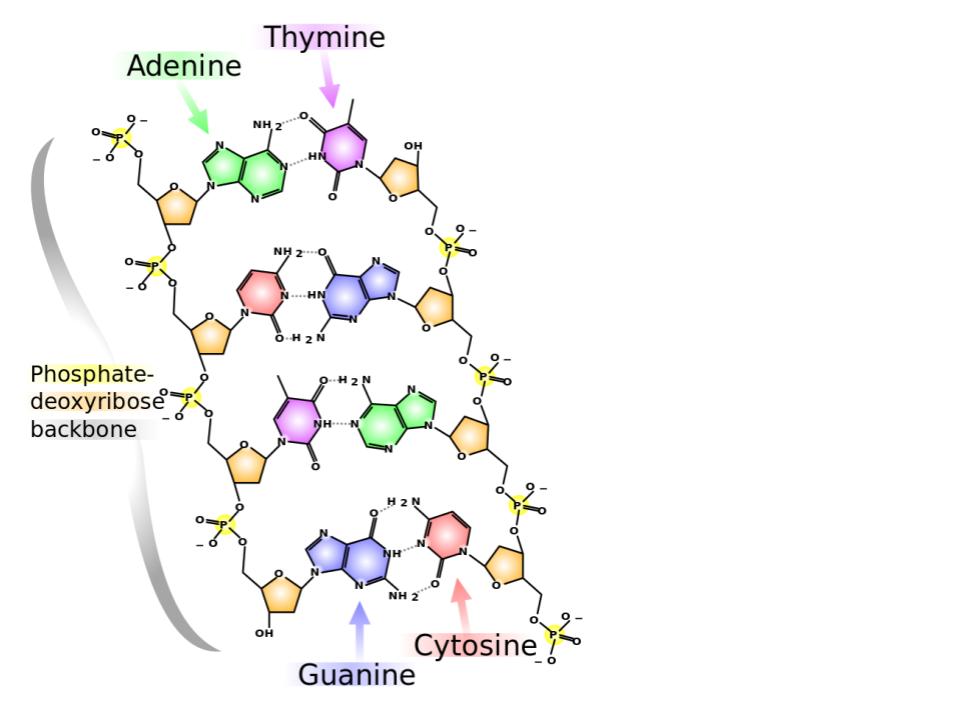
The two strands of DNA are held together by:
a)
Hydrogen Bonds
b)
Phosphodiester Bonds
c)
Glycolsyl Bonds
d)
Glycosidic Linkages
163.
In a molecule of double-stranded DNA, the amount of Adenine present is always equal to the amount of
a)
cytosine
b)
guanine
c)
thymine
d)
uracil
164.
What determines the code, or information, of a DNA molecule?
a)
the shape (structure) of the nitrogen bases
b)
the order (sequence) of the nitrogen bases
c)
the color of the nitrogen bases
d)
the frequency (number) of nitrogen bases
165.
A process in which DNA has the unique ability to make an exact copy of itself.
a)
Replication
b)
Translation
c)
Transcription
166.
Replicate the following strand of DNA: 
AATCATGGA
a)
AATCATGGA
b)
TTAGTACCT
c)
UUAGUACCU
d)
GGATAUCUA
167.
DNA replication results in two DNA molecules,
a)
each one with two original strands
b)
each one with two new strands
c)
each one with one new strand and one original strand
d)
one with two new strands and the other with two original strands
168.
RNA contains the sugar
a)
ribose
b)
deoxyribose
c)
glucose
d)
lactose
169.

Transcribe the following DNA strand: CTG AAT

a)

GAC TTA

b)

CTG AAT

c)

GAC UUA

d)

CUG AAU

170.
What is the correct amino acid sequence for the mRNA code AUGCCAGUAUGA
a)
Met-Pro-Ala-Val
b)
Met-Pro-Val
c)
Tyr-Gly-His
d)
Tyr-Gly-Arg-His
171.
One difference between DNA and RNA is that RNA....
a)
is double stranded 
b)
contains the base Thymine
c)
contains the base Uracil 
d)
contained the base Guanine
172.
The anti-codon 
a)
contains a sequence the same as the codon
b)
contains a sequence complementary to the codon 
c)
contains the base thymine
173.
tRNA is involved in
a)
carrying amino acids 
b)
carrying ribosomes
c)
carrying glucose
d)
carrying lipids
174.
Which organelle is DNA usually found in?
a)
cell membrane
b)
vacuole
c)
chloroplast
d)
nucleus
175.
Which process is happening in this picture?
a)
Transcription
b)
Translation
c)
Replication
176.
Which of the following molecules is created during TRANSCRIPTION?
a)
Protein
b)
DNA
c)
mRNA
d)
tRNA
177.
Which of the following molecules is created during TRANSLATION?
a)
Protein
b)
DNA
c)
mRNA
d)
tRNA
178.
What is the three base sequence of mRNA that codes for a single amino acid?
a)
Anticodon
b)
Codon
c)
Protein
179.
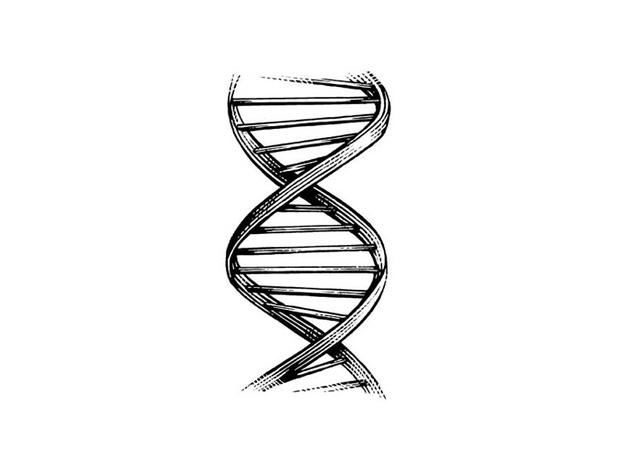
DNA has a _____________ structure. 
a)
double helix
b)
single strand
c)
ring 
d)
chain
180.
Which of the following units are repeatedly joined together to form a strand of DNA? (This is the MONOMER of DNA.) 
a)
amino acids
b)
nucleotides
c)
fatty acids
d)
polysaccharides
181.

Which of the following make up a nucleotide?

a)

Sugar, phosphate, and base

b)

Sugar, nitrate, and base

c)

Lipid, phospate, and sugar

d)

Protein, phosphate, and base

182.
In RNA, Uracil pairs with ______. 
a)
cytosine
b)
adenine
c)
guanine
d)
thymine
183.
With what 3 letters do enzymes typically end?
a)
-ose
b)
-ase
c)
-ese
d)
-tic
184.
Enzymes are...
a)
nucleic acids
b)
proteins
c)
lipids
d)
carbohydrates
185.
What happens when enzymes are heated to a high temperature?
a)
The enzymes die.
b)
The shapes of the enzyme are altered denature
c)
The enzymes' amino acid sequence changes.
d)
The enzymes remain the same
186.
Which of these is most likely an enzyme?  
a)
Sucrose
b)
Galactose
c)
Fructose
d)
Amylase
187.
Where do substrates bind on an enzyme?
a)
voltage-gated channels
b)
surface receptor
c)
calcium channels
d)
active site
188.
What is a substance called if it speeds up a chemical reaction?
a)
reusable
b)
catalyst
c)
specific
d)
fragile
189.

Can a change in pH alter the active site of an enzyme

a)

yes

b)

no

190.
Enzymes are composed of which of the following monomers? 
a)
amino acids
b)
carbohydrates
c)
nucleotides
d)
monosaccharides
191.
What is another name for enzymes?
a)
chemical catalysts
b)
microorganisms
c)
biological catalysts
d)
inorganic catalysts
192.
What is indicated by letter A?
a)
enzyme
b)
product
c)
substrate
d)
active site
193.

What is indicated by letter C?

a)

enzyme

b)

product

c)

substrate

d)

active site

194.

What is indicated by letter B?

a)

enzyme

b)

product

c)

substrate

d)

active site

195.
Which of the following conclusions can be drawn from this graph?
a)
The optimum pH of the enzyme is 6.6.
b)
The optimum pH of the enzyme is 5.8
c)
The enzyme’s activity increases as pH increases 5.0 to 9.0
d)
The enzyme’s activity is greater around pH of 8.0 .
196.
What makes an enzyme substrate specific?
a)
Size
b)
Shape
c)
Name
d)
Location it is found in
197.

Enzymes are

a)

Lipids

b)

Protein

c)

Carbohydrates

d)

Nucleic Acids

198.

Enzymes are responsible for-

a)

Speeding up reactions

b)

Giving the body energy

c)

Slowing down reactions

199.

Which of these is most likely an enzyme?  

a)

Sucrose

b)

Galactose

c)

Fructose

d)

Amylase

200.

Letter D...

a)

active site

b)

enzyme

c)

substrate

d)

products

201.

Letter B...

a)

active site

b)

enzyme

c)

substrate

d)

products

202.

Letter c...

a)

active site

b)

enzyme

c)

substrate

d)

products

203.

Each enzyme only has 1 substrate that will fit its active site.  What is this called?

a)

reusablility

b)

denaturation

c)

specificity

d)

fragility

204.

What is a substance called if it speeds up a chemical reaction?

a)

reusable

b)

catalyst

c)

specific

d)

fragile

205.

An enzyme speeds up a chemical reaction in the cell but can only be used once.  True or False? 

a)

true

b)

false

206.
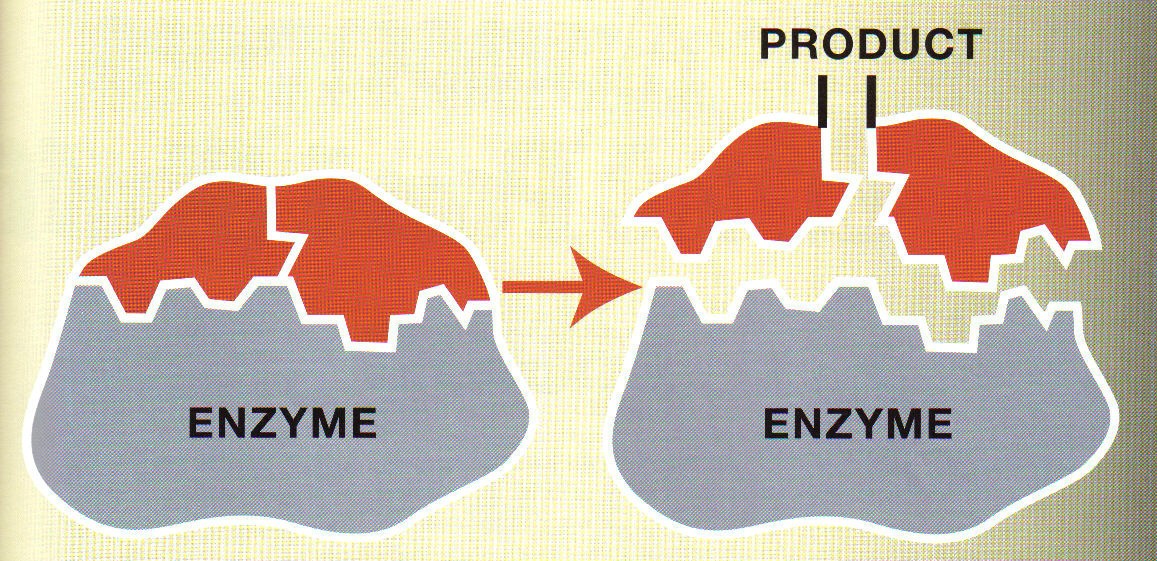
After the enzyme and substrate bind together and perform the reaction, what does the substrate become?
a)
a substrate
b)
an enzyme
c)
a product
d)
an active site
207.

What happens when enzymes are heated to a high temperature?

a)

The enzymes die.

b)

The shapes of the enzyme are altered denature

c)

The enzymes' amino acid sequence changes.

d)

The enzymes remain the same