

wayground logo

Free Printable Worksheets

Font size

S
M
L
XL
Worksheets

End of Module Quiz

Total questions: 46

Worksheet time: 31mins

Name
Class
Date
1.

What does it mean to know a word?

4 lines
2.

Which of the following languages influenced English the least?

a)

Latin

b)

Arabic

c)
French
d)

Germanic languages

3.

Which synonym of beautiful has the connotation of suggesting femininity or delicacy?

a)

lovely

b)

pretty

c)

charming

d)

attractive

4.

What part of speech is used for names, places, things, and ideas?

(a)  

5.

What part of speech is used to describe a noun?

a)
verb
b)
adverb
c)
preposition
d)
adjective
6.

What is not an effective way of learning new vocabulary?

a)

Memorising without understanding the context or usage of the words

b)

Using memory strategies

c)

Using cognitive strategies

d)

Using flashcards

7.

What is the Ebbinghaus Forgetting Curve?

a)
A theory that describes the decrease in memory retention over time
b)
A theory that has no impact on memory retention
c)
A theory that describes the increase in memory retention over time
d)
A theory that explains how memories are formed
8.

Why is it helpful to try to make a personal connection to a word you are trying to learn?

a)
It has no impact on memory retention
b)
It can help with memory retention and understanding.
c)
It can make the word more confusing
d)
It can lead to forgetting the word faster
9.

What are collocations?

a)
Words that are only used in formal writing
b)
Words that are rarely used together
c)
Words that are often used together and sound natural to native speakers
d)
Words that have opposite meanings
10.

Which word collocates best with 'read'?

a)

concentratedly

b)

carefully

c)

thoroughly

d)

mindful

11.

Which word collocates with profit?

a)

margin

b)

earnings

c)
loss
d)
debt
12.

Which words collocate more strongly with football?

a)

match

b)

pitch

c)

game

d)

field

13.

How would you correct the following sentence? I have to make an exam tomorrow

a)

Take an exam

b)

Fill an exam

c)

Complete an exam

d)

Perform an exam

14.

Correct the mistake in:  Can you please close the light?

a)
Can you please open the light?
b)
Can you please turn on the TV?
c)
Can you please close the window?
d)
Can you please turn off the light?
15.

Which of the following is not a common academic collocation?

a)
Running shoes
b)

Impose constraints

c)
Research paper
d)

highly controversial

16.

What is not an example of formal register?

a)

legal register

b)

medical register

c)

academic register

d)
Slang
17.

What is familiar register?

a)
A traditional dance
b)
A type of computer memory
c)
Casual and informal language or style of communication
d)
A popular brand of clothing
18.

What is an example of pet-directed familiar register?

a)
Using a high-pitched voice and simple language to communicate with a pet
b)
Whispering to the pet in a monotone voice
c)
Using complex vocabulary and long sentences to communicate with the pet
d)
Speaking in a foreign language to the pet
19.

What is academic writing NOT?

a)

precise

b)

biased

c)

minimal

d)

impersonal

20.

What is an example of personal language use?

a)
Speaking in a foreign language
b)
Using slang or informal language when speaking with friends
c)
Using formal language in a business meeting
d)
Using sign language to communicate with a deaf person
21.

What is an example of using emotional language?

a)
Reciting a scientific formula
b)
Listing ingredients in a recipe
c)
Explaining a mathematical equation
d)
Describing a heartbreaking story
22.

Replace the phrasal verb with a more academically suited synonym.
look into

a)
stare into
b)
glance at
c)
observe
d)
investigate
23.

Replace the phrasal verb with a more academically suited synonym.
Carry out

a)
Accomplish
b)
Conduct
c)
Execute
d)
Perform
24.

Replace the phrasal verb with a more academically suited synonym.
to deal with

a)

proceed

b)

resolve

c)

dismiss

d)

retreat

25.

What is hedging language?

a)
Words or phrases that emphasize the impact of a statement
b)
Words or phrases that make a statement more definitive
c)
Words or phrases that soften the impact of a statement or make it less definitive
d)
Language used to confuse the meaning of a statement
26.

What are reporting verbs?

a)
Verbs used to report the weather
b)
Verbs used to report a crime
c)
Verbs used to report a sports game
d)
Verbs used to report what someone else has said
27.

Which of these is not a reporting verb you can use in academic writing?

a)

said

b)

conclude

c)

maintain

d)
argue
28.

Where in the English language is the influence of Greek and Latin roots is most pronounced?

a)

in specialised and academic vocabulary

b)

in every day speech

c)

in slang

d)

in loan words

29.

What is a base word?

a)
A word that cannot be changed
b)
A word that is always a verb
c)
A word that has no meaning
d)
A word to which affixes can be added to create new words
30.

What is a prefix?

a)
A suffix added to a word
b)
A type of punctuation mark
c)
A group of letters added to the end of a word
d)
A group of letters added to the beginning of a word
31.

What does the morpheme 'bio' relate to?

a)
Biomechanics
b)
Life or living organisms
c)
Biology
d)
Biography
32.

What does the morpheme 'scope' refer to?

a)
Sleeping or resting
b)
Seeing or looking
c)
Running or jogging
d)
Eating or consuming
33.

What is an idiom?

a)
A phrase or expression with a figurative meaning different from the literal meaning
b)
A mathematical equation
c)
A type of flower
d)
A type of insect
34.

What is a phrasal verb?

a)
A form of punctuation
b)
A musical instrument
c)
A type of noun
d)
A combination of a verb and a preposition or adverb
35.

What is the difference between a metaphor and a simile?

a)
A metaphor directly compares two unlike things, while a simile uses 'like' or 'as' to compare two unlike things.
b)
A metaphor is a figure of speech, while a simile is a type of analogy
c)
A metaphor compares two similar things, while a simile compares two opposite things
d)
A metaphor is used in poetry, while a simile is used in prose
36.

What does the idiom ' Running on fumes' mean?

a)
To have an abundance of energy and resources
b)
To stop doing something when you have plenty of energy and resources
c)
To conserve energy and resources for later use
d)
To continue doing something even though you have very little energy or resources left
37.

What does the idiom 'burning the midnight oil' mean?

a)
working late into the night
b)
sleeping early
c)
cooking dinner
d)
taking a nap
38.

What does it mean to be 'on the fence'?

a)
Undecided or neutral
b)
Standing on an actual fence
c)
Being extremely certain
d)
Having a strong opinion
39.

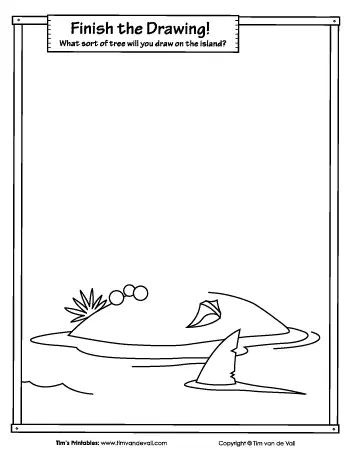
Money doesn't grow on trees. Draw the idiom
40.

Academic writing is explicit. What does explicit mean?

a)

Clear and leaves little room for interpretation

b)
Confusing and convoluted
c)
Implicit and unclear
d)
Vague and ambiguous
41.

Make this sentence impersonal:  In this essay, I will argue that we can stop global warming.

a)
In this essay, it will be argued that global warming can be stopped.
b)
In this essay, I will argue that you can stop global warming.
c)
In this essay, I will argue that global warming cannot be stopped.
d)
In this essay, we will argue that I can stop global warming.
42.

What is not an example of hedging language?

a)
Using qualifiers like 'maybe' or 'possibly'
b)

may, could, can

c)
Using conditional language like 'could' or 'might'
d)
Using direct and assertive language
43.

Complete the idiom.
Once in a (a)   moon.

44.

Complete the idiom.
Actions speak louder than (a)  

45.

Complete the idiom.
Every cloud has a (a)   lining

46.

I found the Vocabulary Enhancement module useful

a)

Not useful

b)

Somewhat useful

c)

useful

d)

very useful
