
 Worksheets
Muscles
Total questions: 54
Worksheet time: 33mins

____________ attaches to actin to form the cross bridge.
Troponin
Tropomyosin
Myosin
Calcium

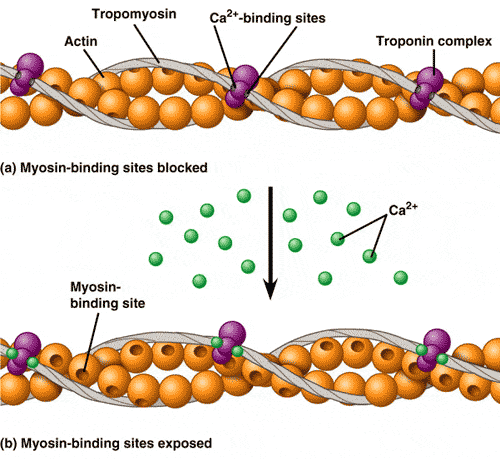
What part of the muscle fiber stores Ca ions and releases them when stimulated?
T tubule
Sarcolemma
Nucleus
Sarcoplasmic reticulum
What is the name of the location where the neuron and muscle fiber meet?
Sarcoplasm
Sacolemma
Neuromuscular junction
Axon terminal
Which of these occurs first during a muscle contraction?
The nerve signal reaches the neuromuscular junction
Ach is released and opens Na ion channels
The sarcomere shortens
The myosin binds to the actin
Which of these occurs last during a muscle contraction?
The nerve signal reaches the neuromuscular junction
Ach is released and opens Na ion channels
The sarcomere shortens
The myosin binds to the actin

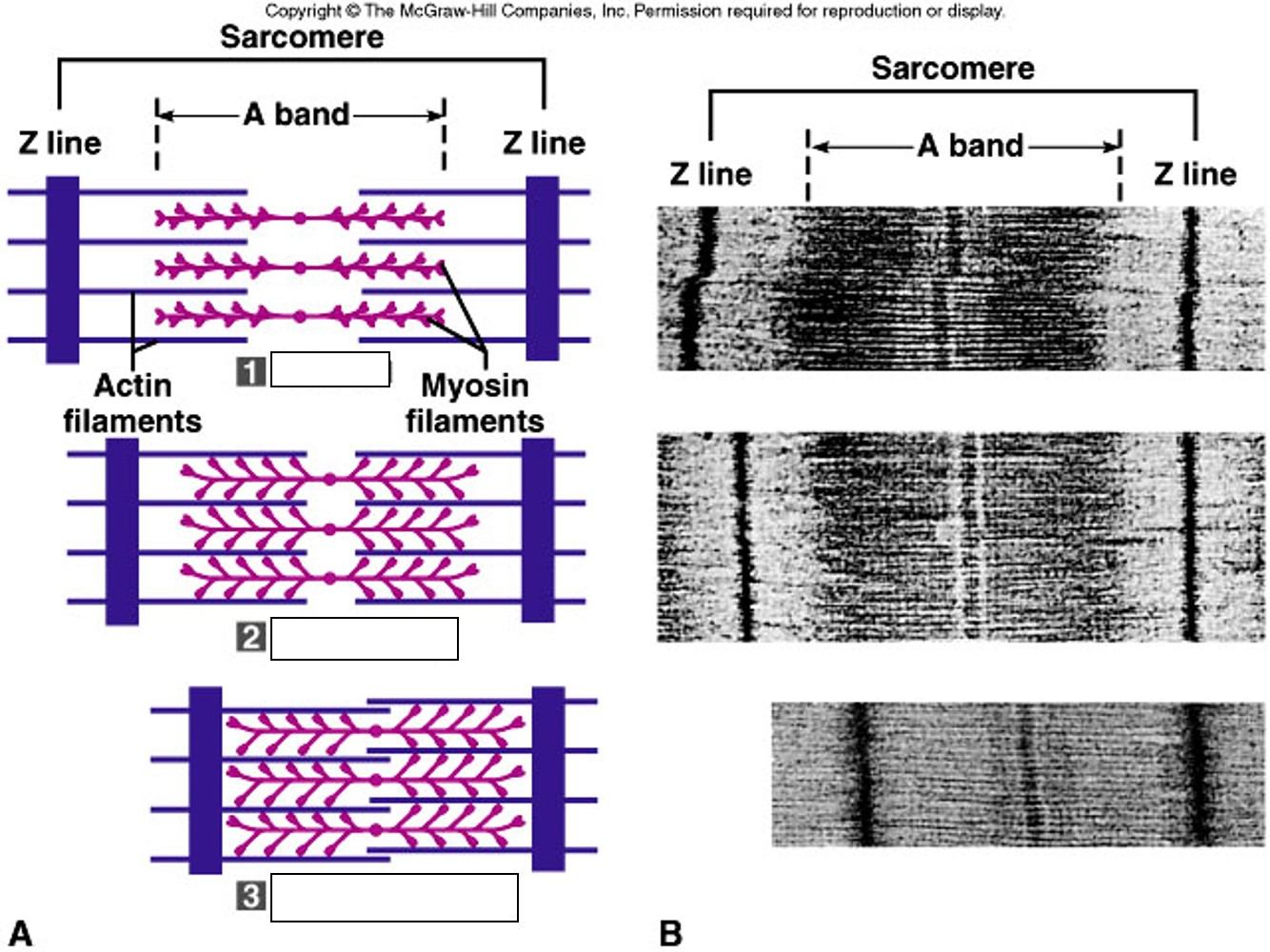
What is necessary for the myosin to release the actin?
ATP
Calcium
ADP
Sodium
When a muscle is in a contracted position, what is the relationship between actin filaments?
They are on top of one another
They are beside each other
They are close to each other
They are far apart from each other
When a muscle is relaxed and in a lengthened position, what is the relationship between actin filaments?
They are on top of one another
They are beside each other
They are close to each other
They are far apart from each other
Skeletal Muscle contraction is initiated when the ________ sends a message to the muscle cell.
Muscle cell
Gland
Neuron
None of the above
moving the foot in an upward position is
hyperextension
dorsiflexion
plantar flexion
Moving your leg away from the mid line is
circumduction
adduction
abduction
Chronic widespread pain, numbness and tingling in arms could be
muscular dystrophy
fibromyalgia
atrophy

What type of muscle tissue is this?
Cardiac
Smooth
Skeletal
Meat Muscle

What type of muscle tissue is this?
Cardiac
Smooth
Skeletal
Meat Muscle

What type of muscle tissue is this?
Cardiac
Smooth
Skeletal
Meat Muscle

This type of muscle is?
Voluntary
Involuntary

This type of muscle is?
Voluntary
Involuntary

This type of muscle is?
Voluntary
Involuntary

Where would this type of muscle be found?
Heart
Internal Organs
Attached to the Skeleton

Where would this type of muscle be found?
Heart
Internal Organs
Attached to the Skeleton

Where would this type of muscle be found?
Heart
Internal Organs
Attached to the Skeleton
Myofibrils are composed primarily of
actin and myosin
ATP and ADP
Troponin
Tropomyosin
The botulinus toxin that causes botulism acts by
preventing the release of acetylcholine
promoting the release of acetylcholine
Preventing decomposition of acetylcholine
none of the above
The enzyme cholinesterase causes acetylcholine to
be secreted from the motor end plate.
form cross bridges.
bind to actin.
decompose.
Which cell organelle provides energy for muscle contraction?
lysosome
nucleus
endoplasmic reticulum
mitochondria
A person who has a disease that inhibits the production of cholinesterase would have what kind of symptoms?
prolonged muscle contraction
flacid muscles
inability to speak
paralyzed
pointing foot toward the ground
dorsiflexion
plantarflexion
inversion
eversion

The lateral motion TOWARDS the midline is called ______.
adduction
abduction
circumduction
opposition


Name this movement
adduction
abduction
flexion
extension

Name this movement
extension
flexion
adduction
abduction
Muscles that oppose one another are
synergist
hateful
prime movers
antagonists
is the:
A muscle that helps another muscle perform a particular function effectively.
Tendon
Prime Mover
Cross-bridge
Synergist
Muscle contributes to homeostasis by
generating heat to balance the loss of heat from the body surface.
synthesizing vitamin D.
producing blood cells.
storing minerals.

