
Font size
 Worksheets
Unit 3 | Models of Bonding and Structure
Total questions: 33
Worksheet time: 35mins
Which two elements would NOT form an ionic bond?
calcium and lithium
calcium and oxygen
lithium and oxygen
calcium and carbon
A sodium ion has a charge of
-1
-2
+1
+2
Fill in the blank: A charged particle that forms when an atom gains or loses electrons is called a(n)
(a)
What is the correct molecular formula of Calcium Chloride?
CaCl
Ca2Cl
CaCl2
Ca3Cl2
An example of a covalent compound is
sodium floride
calcium chloride
carbon dioxide
all of the above
In all covalent bonds, valence electrons are
lost
gained
shared equally
shared
A compound that contains one nitrogen atom and two oxygen atoms is named
oxygen nitride
dioxygen nitride
nitrogen dioxide
nitrogen monoxide
What is the chemical formula for the compound containing one nitrogen atom and two oxygen atoms?
O2N
N2O
NO
NO2
True or False: covalent bonds form only between atoms of different elements
True
False
Chemical bonds always involve
ions
protons
metals
electrons
The chemical formula for carbon dioxide is
CO
C2O
CO2
C2O2

Which is the correct molecular structure for carbon dioxide?


Which of these statements best describes a dative covalent bond?
A pair of electrons shared between two atoms where each atom has donated one electron.
A pair of electrons shared between two atoms where one atom has donated two electrons.
Two pairs of electrons shared between two atoms where each atom has donated one electron.
Two pairs of electrons shared between two atoms where each atom has donated two electrons.
Match the following shapes to their Names

Trigonal Planar

Tetrahedral

Trigonal Pyrimidal

Linear

Bent
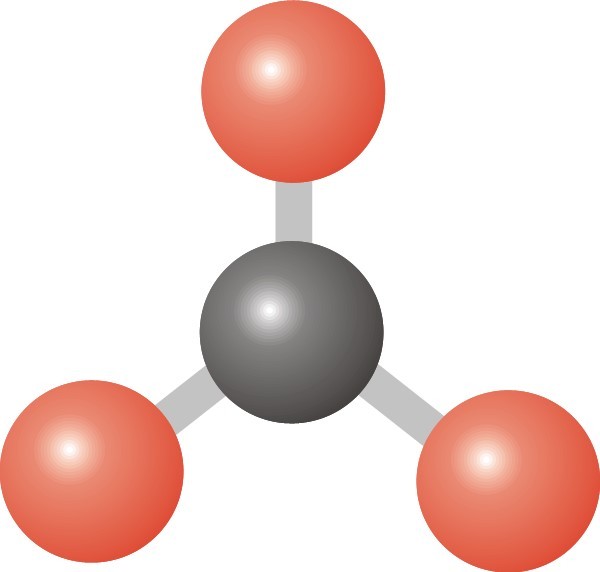
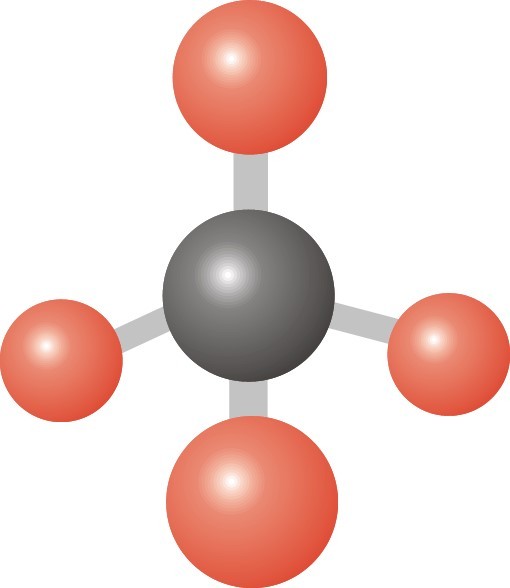

What molecular geometry would PH3 have?
Trigonal Pyramidal
Trigonal Bipyramidal
Bent
Linear


The VSEPR theory states that elections will
try to move as far apart as possible
form the fewest bonds possible
have an equal number of bonds on all atoms
Have larger bond angles to accommodate larger elements

When determining molecular geometry, how many electron groups are around the central atom of this structure?
1
2
3
4
Ionic compounds conduct electricity when dissolved in water. Which statement below best explains the property?
Ions are free to move.
Electrons are free to move.
Bonds are strong.
There are weak intermolecular forces of attraction.

Why do ionic compounds have high melting and boiling points?
Their ions are free to move.
Their ions are held in fixed positions.
They have many strong bonds which require a large amount of heat energy to overcome these strong bonds.
They have weak bonds which require a little amount of heat energy to overcome these weak bonds.

Select all the true statements:
Each outer shell electron in Cl is represented by a cross.
In Na, the total charge is -2.
Na+ and Cl- are held together by electrostatic attraction.
Na+ has a full outer shell of electrons.

The following properties are all characteristics of ionic compounds EXCEPT
solid at room temperature
soft
crystal lattice structure
conduct electricity when dissolved in water

Why do atoms form bonds?
to increase their potential energy by filling up their valence shell
to lower their potential energy by filling up their valence shell
to increase their atomic number

