
 Worksheets
Age of Jackson Review
Total questions: 41
Worksheet time: 45mins
Why did President Andrew Jackson oppose the Second Bank of the US?
He believed it was inefficient & poorly managed
He thought it was unconstitutional & favored the wealthy
He considered it an obstacle to industrial progress & expansion
He believed it favored the rights of states over the federal government
The years of the (a) Presidency are often referred to as the "Era of Good Feelings" because the US desired unity and had a sense of national purpose.
Which of the TWO following best characterize the Jackson Presidency?
Justice for
American Indian groups
Political machines control elections
Greater democracy for the common man
Wealthy industrialists control domestic policies
Increased suffrage for white males

The US foreign policy illustrated in this cartoon was intended to -
prevent further European colonization in the Western Hemisphere
deter Spain from inciting revolution in former US colonies
encourage European powers to invest in Latin America
keep the war between France and Spain from spreading to Latin America
Match the event to the proper presidency.
Led US during the War of 1812
James Madison
Increased levels of voter participation
Andrew Jackson
Won election through a corrupt bargain
John Q. Adams
Warned European countries against colonization
James Monroe
During the 1830s, public servants and officials were widely perceived to be unqualified. What practice reinforced this perception?
The public voting for candidates based on religious affiliations
The president rewarding political supporters with appointments to desirable positions
The federal government recruiting volunteers to serve abroad as ambassadors
Legislators awarding government contracts to the lowest bidders
The Cherokee responded to the state of Georgia's attempts to remove them by -
pleading their case against Georgia in court
declaring war against the Georgia government
moving peacefully from Georgia to the West
signing a treaty allowing them to stay in Georgia
How did the Supreme Court's decision in Worcester v. Georgia affect Native Americans?
The ruling gave the state authority over relations with American Indians
The state ignored the ruling and distributed Cherokee lands to white settlers
More American Indian tribes decided to grant licenses to missionaries to live on tribal lands
Reservation policies were overturned and replaced with land grants to individuals
Many historians consider Andrew Jackson's election as president to be a major shift in American politics that is sometimes referred to as the "Revolution of 1828." Why would his election be considered a "revolution?"
Jackson was unknown before 1828
Jackson was the first general ever elected to public office
Jackson was elected to the office by the largest majority in presidential elections
Jackson's election represented a shift of political power from elites to the common people
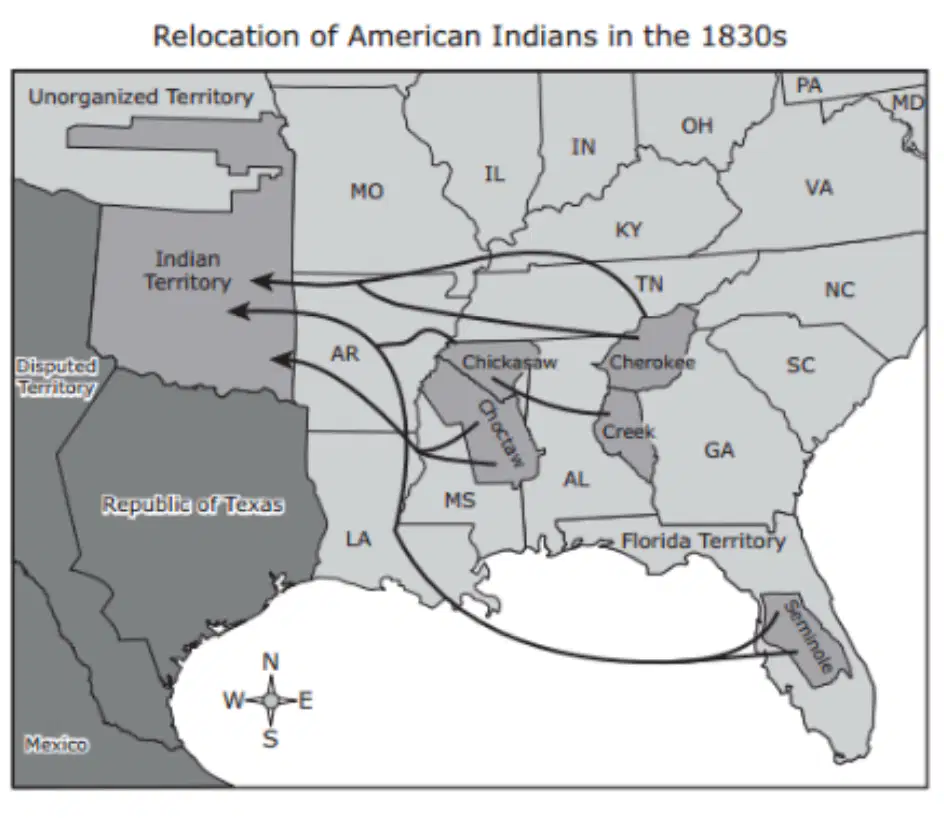
What was a major reason for the federal government's involvement in the relocations depicted on this map?
To persuade American Indians to become farmers
To gain access to important rivers
To punish American Indians who were allies of the British
To acquire valuable agricultural land and natural resources

Which sentence best completes the diagram?
The supply of British goods decreases
Congress ends the European embargo
Exports to Great Britain increase
Congress reduces tariffs
Which state that has a circle on it was the main destination of the Native Americans who were forced to relocate as part of the Trail of Tears?

These speakers are debating an issue that eventually became known as the -
Monroe Doctrine
Nullification Crisis
Missouri Compromise
Three-Fifths Compromise
How did the War of 1812 contribute to the expansion of industry in the United States?
The disruption of trade forced the development of US manufacturing
The burning of DC led to a nationwide construction boom
The new US Navy increased the confidence of overseas trading expeditions
The presence of British troops in New York led to factory construction in the South

The proclamation excerpt above was issued during which of these historical events?
Shay's Rebellion
The War of 1812
The Nullification Crisis
The Civil War
Which issue did the Democratic Party support following the presidential campaign of Andrew Jackson?
Abolition of slavery
Nullification of laws
Funding for industrialization
Elimination of the National Bank
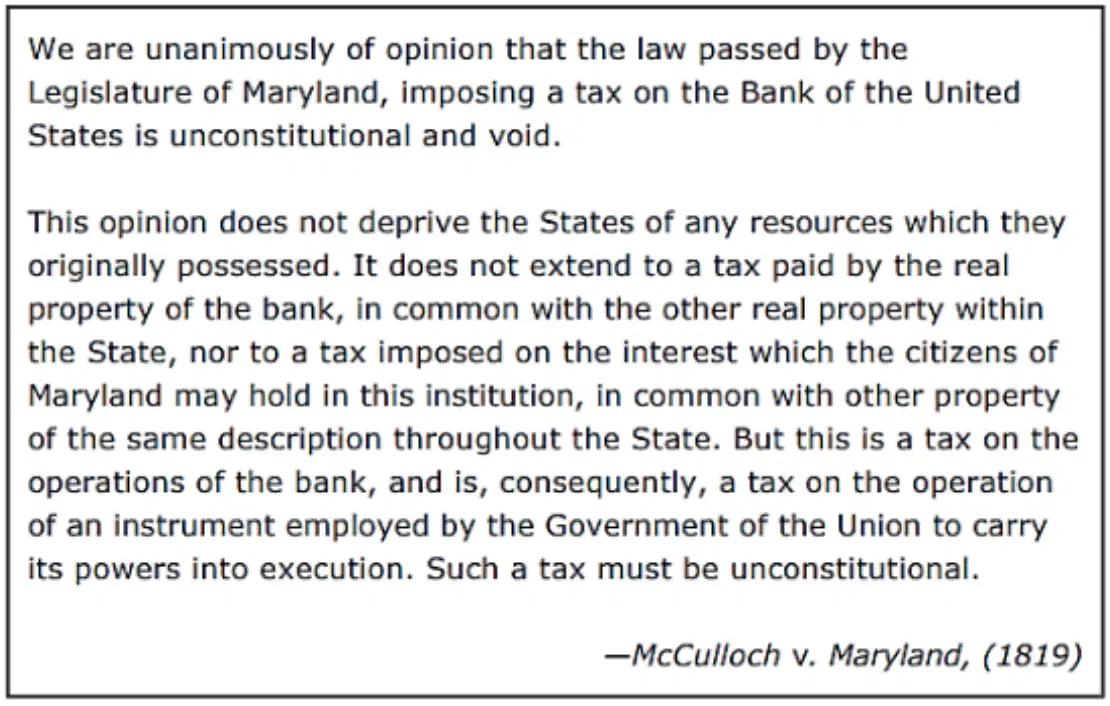
How did this decision affect federal institutions?
Only the federal government could regulate banks
The federal government did not have the right to create a national bank
Maryland's state powers included the right to tax the bank, but the federal government would receive the funds
Maryland's state powers did not include the right to levy taxes on institutions created by the federal government
Which issue was debated in Gibbons v Ogden?
The status of slaves living in free territories
The regulation of interstate commerce by federal or state laws
The constitutionality of tariffs
The seperation of powers among the branches of government
The headline above notes a case that clarified the constitutional powers of the (a)
Andrew Jackson's election victory in 1828 depended on support from
the rich and well-born.
Native Americans.
the common people.
states' rights supporters.
Jackson's practice of rewarding political supporters with government jobs became known as
the spoils system.
Jacksonian democracy.
mudslinging.
a corrupt bargain.

The long walk for many Native Americans who were forced out of their homelands was called the --
Native Walk
Trail of Natives
Trail of Tears
Removal Trail
Americans relocated many Native Americans for the purpose to obtain more --
Land
Money
Taxes
Tariffs
The act, or law, was created in order to remove Native Americans from their homelands and force them West.
Alien and Sedition Acts
No More Natives Act
Citizens Only Act
Indian Removal Act

Andrew Jackson was seen as a national hero after defeating the British at what battle?
Battle of New Orleans
Battle of Yorktown
Battle of Little Big Horn
Battle of Saratoga

Which of the following is most associated with the formation of the Democratic Party?
The election of Andrew Jackson as president
The use of protective tariffs
The impeachment of President Andrew Johnson
The abolition movement
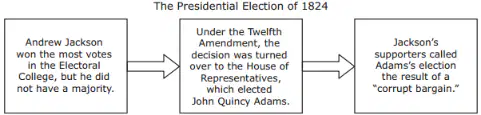
What was one effect of these events on the 1828 presidential election?
Votes were cast by secret ballot.
Property qualifications for voting were strengthened.
Poll taxes were reduced.
Voter participation increased.
What was the issue in Worcester v. Georgia?
The taxation of Cherokee lands
The use of subsistence farming by the Cherokee people
The sovereignty of the Cherokee nation
The abandonment of the Cherokee culture by its people
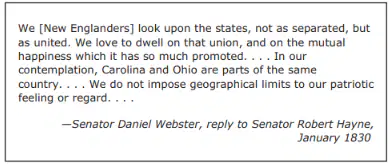
In this reply, Daniel Webster is reacting to —
the inability of citizens to elect Supreme Court justices
an attempted nullification of a federal law by a state
a proposal to revise the amendment process of the U.S. Constitution
the federal seizure of private land for transportation networks

What led to the conflict referred to in this excerpt?
The passage of the Dawes Act
The Louisiana Purchase
The adoption of Indian removal policies
The Battle of Tippecanoe
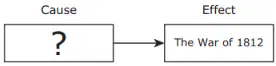
Which action completes this graphic organizer?
French naval attacks on U.S. harbors
British invasions of countries allied with the United States
French embargoes on trade with the United States
British impressment of U.S. sailors
What was one result of the election of Andrew Jackson in 1828?
Renewal of the charter of the Bank of the United States
Elimination of the spoils system
Ratification of the Fifteenth Amendment
Increased levels of voter participation

