
Font size
 Worksheets
Overpopulation and Environmental Impacts Quiz
Total questions: 14
Worksheet time: 15mins
What is the impact of overpopulation on natural resources?
Conservation and preservation
Increase in natural resources
No impact on natural resources
Depletion and environmental degradation
How does overpopulation affect wildlife?
It has no impact on wildlife
It can lead to habitat destruction, competition for resources, and increased human-wildlife conflict.
It leads to better conservation efforts
It reduces human-wildlife conflict
What is a major consequence of overpopulation on pollution?
Improved air quality
No impact on pollution
Increased pollution levels
Decreased pollution levels
How does overpopulation contribute to climate change?
No impact on carbon emissions and deforestation
Increased demand for resources and energy, leading to lower carbon emissions and afforestation
Increased demand for resources and energy, leading to higher carbon emissions and deforestation
Decreased demand for resources and energy, leading to lower carbon emissions and reforestation
What are the effects of overpopulation on water resources?
Depletion of water resources and water scarcity
Improvement in water quality
No impact on water resources
Increase in water resources and abundance
How does overpopulation impact air quality?
It has no impact on air quality
It leads to increased air pollution due to higher levels of industrial activities and energy consumption.
It leads to decreased air pollution
It improves air quality
What is the relationship between overpopulation and deforestation?
Deforestation leads to overpopulation
Overpopulation has no impact on deforestation
Overpopulation leads to increased demand for resources, which can result in deforestation.
Overpopulation reduces the demand for resources, resulting in deforestation
How does overpopulation affect biodiversity?
It leads to a decline in biodiversity.
It increases biodiversity
It only affects a specific species
It has no impact on biodiversity
What is the impact of overpopulation on food production?
Increased food production and abundance
Stabilized food production and consistent supply
No impact on food production
Decreased food production and potential shortages
How does overpopulation contribute to waste generation?
Increased consumption and production of goods
Reduced use of resources
Lower demand for waste management services
Decreased consumption and production of goods
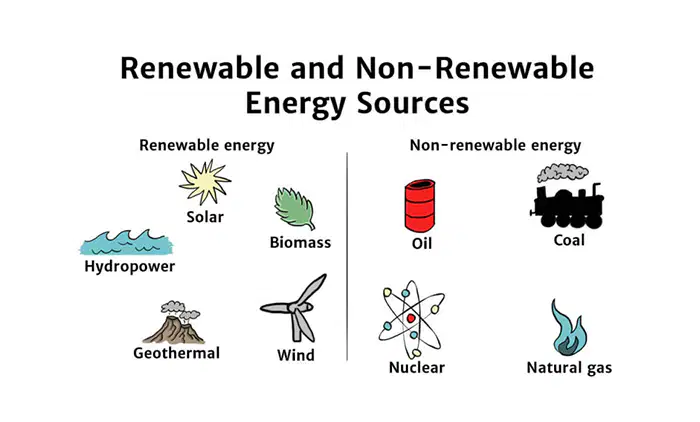
Renewable and Nonrenewable Resources
Renewable resources such as solar power, hydropower, and windmills are sources of energy that can be replenished naturally. They are considered environmentally friendly and sustainable. On the other hand, nonrenewable resources like coal, oil, and gas are finite and take millions of years to form. They are major contributors to air and water pollution.
Coal, Oil, and Gas
Coal, oil, and gas are nonrenewable resources that have been the primary sources of energy for many years. They are relatively inexpensive and easy to transport, but their extraction and use have significant environmental impacts, including greenhouse gas emissions and habitat destruction.
Solar Power
Solar power is a renewable energy source that harnesses the sun's energy to generate electricity. It is clean, abundant, and can be used in remote areas. However, the initial cost of installing solar panels can be high, and their efficiency can be affected by weather conditions.
Hydro-power
Hydro-power, also known as water power, is a renewable energy source that uses the energy of flowing or falling water to generate electricity. It is reliable, produces no greenhouse gases, and can provide irrigation and water supply. However, the construction of dams for hydropower can have negative impacts on ecosystems and communities.
Windmill
Windmills, or wind turbines, are renewable energy sources that convert the kinetic energy of the wind into electricity. They are cost-effective, produce no emissions, and can be installed on a small scale. However, they can be noisy and have visual impacts on the landscape.
Nuclear Power
Nuclear power is a nonrenewable energy source that uses nuclear reactions to generate electricity. It produces large amounts of energy with minimal greenhouse gas emissions. However, nuclear power plants pose risks of accidents, radioactive waste disposal, and nuclear proliferation.
Which of the following are examples of nonrenewable resources?
Coal
Oil
Gas
Solar energy
What are some potential negative impacts of hydropower on ecosystems and communities?
Which of the following have been the primary sources of energy for many years?
Coal
Solar
Oil
Gas
What are some drawbacks of using solar power to generate electricity?
Windmills convert the kinetic energy of the wind into (a)
Nuclear power produces large amounts of energy with minimal (a) emissions, but poses risks of accidents, radioactive waste disposal, and nuclear proliferation.
Which of the following is an environmentally friendly and sustainable resource?
Coal
Solar power
Natural gas
Nuclear power
How has the growing population impacted the Yamuna River ?
How does air pollution affect the marble of the Taj Mahal?
How does pollution in the Yamuna River affect aquatic life?

